
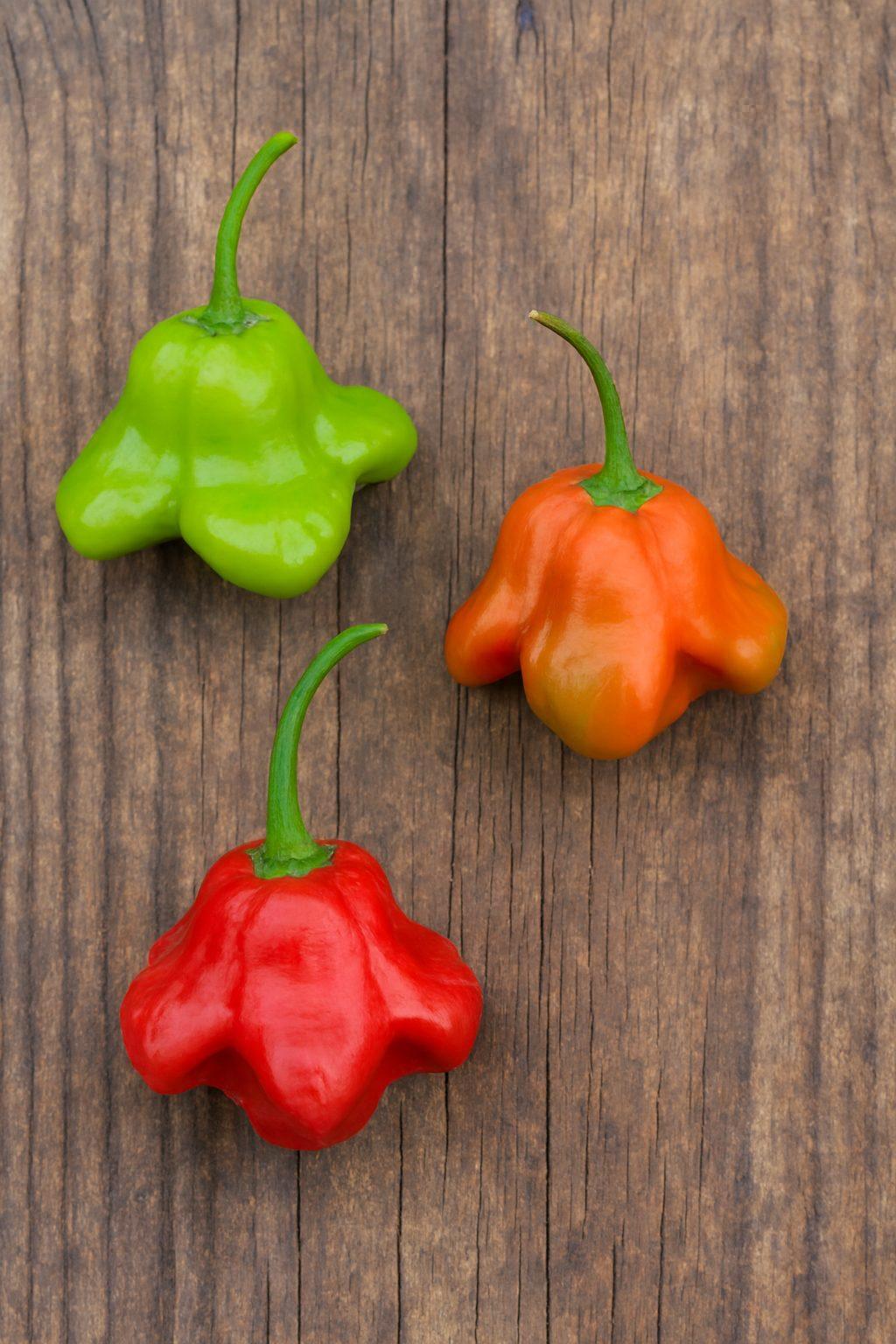
Description
Product Name: Madhatter
Cultivar Name: Madhatter
Species: Capsicum baccatum
Common Names: MadHatter, Bishop’s Crown Hybrid, AAS Madhatter
Type: Stable Hybrid
Origin & Lineage
Geographic Origin:
Madhatter is a modern hybrid cultivar developed in the United States by PanAmerican Seed, a company known for breeding ornamental and edible varieties suited to North American climates. It was introduced to the public in 2017 after winning the All-America Selections (AAS) Edible – Vegetable Award. The cultivar is a refined descendant of the South American Bishop’s Crown pepper, which originates from Peru and Bolivia and belongs to the Capsicum baccatum species.
The Madhatter was bred to retain the whimsical shape and fruity flavor of its ancestor while reducing its heat and improving its adaptability to temperate growing zones. It is now cultivated across North America, Europe, and South Africa, where it is valued for its ornamental appeal, culinary versatility, and high productivity.
Cultural Significance:
Madhatter peppers are recognized for their distinctive shape—resembling a bishop’s miter or a flying saucer—and their sweet, citrus-forward flavor. They are widely grown in home gardens, urban farms, and culinary landscapes. Their mild heat and crisp texture make them accessible to a broad range of palates, including children and spice-sensitive consumers.
In edible landscaping, Madhatter peppers are used as dual-purpose ornamentals, offering both visual interest and culinary utility. Their prolific fruiting and unique appearance have made them a favorite among heirloom collectors, chefs, and gardeners seeking novelty without sacrificing flavor.
Lineage / Hybridizer History
Parentage:
Hybrid of Bishop’s Crown (Capsicum baccatum) × proprietary low-heat selection
Breeders selected for:
• Miter-shaped pods with three-lobed symmetry
• Sweet, fruity flavor with citrus and floral notes
• Mild heat for broader culinary use
• High yield and early maturity
• Adaptability to North American and temperate climates
Stabilization Status:
Fully stabilized hybrid cultivar. Released commercially by PanAmerican Seed in 2017. Open-pollinated and true to type across generations.
Heat Profile
Scoville Rating (SHU): 500–1,000 SHU
Perceived Heat: Mild
Heat Characteristics:
Madhatter delivers a gentle warmth that is three to sixteen times milder than a jalapeño. The heat is concentrated in the seed tissue and varies slightly depending on ripeness and growing conditions. It is suitable for raw consumption and family-friendly dishes.
Flavor Profile
Tasting Notes:
Sweet, fruity, and citrusy with floral undertones. The flavor intensifies as the pods ripen from green to red. The thin walls provide a crisp bite when eaten fresh and a smoky depth when roasted.
Aftertaste / Finish:
Clean, slightly tangy finish with lingering sweetness
Ideal Pairings:
• Fresh salads and crudités
• Pickled pepper rings for sandwiches and charcuterie
• Roasted and stuffed with cheese or grains
• Salsas with mango, pineapple, or tomato
• Stir-fries and pasta dishes
• Creamy dips and aioli infusions
Fruit Characteristics
Shape:
Three-lobed, flattened pods with a miter-like appearance
Size:
5–7 cm wide, 3–4 cm tall
Color Stages:
• Immature: Bright green
• Ripe: Vivid red
• Overripe: May deepen to crimson
Wall Thickness:
Thin to medium
Texture & Skin:
Smooth, glossy skin with crisp flesh. Ideal for raw and cooked applications.
Plant Details
Growth Habit:
Bushy and upright
Plant Height & Width:
Height: 90–120 cm
Width: 90–120 cm
Foliage:
Bright green, ovate leaves with open canopy
Flower Color:
White with greenish-yellow spots at petal base
Days to Maturity:
65–90 days from transplant
Yield:
High — typically 40–50 pods per plant under optimal conditions
Madhatter plants are vigorous and ornamental, often used in container gardens, raised beds, and edible landscapes. Their wide canopy and prolific fruiting make them ideal for small-space cultivation.
Cultivation Information
Seed Count per Pack: 10 seeds
Germination Time: 7–14 days (Germinating Chilli Seeds)
Optimal Germination Temp: 26–32°C (Essential guide to ideal temperatures and humidity for chilli seed germination)
Light Requirements: Filtered sun
Soil Preferences:
• pH: 6.0–7.0
• Rich, well-draining loam (Easy DIY soil mixes)
• Benefits from compost and potassium-rich feeding
Watering:
Maintain consistent moisture. Avoid waterlogging. Mulch to retain soil moisture and suppress weeds.
Fertilization:
Apply balanced NPK fertilizer every 3–4 weeks. Supplement with calcium and magnesium during fruiting.
Pruning:
Pinch growing tips to encourage branching. Remove lower leaves to improve airflow and light penetration.
Storage Tips:
Store seeds in a cool, dry place. Refrigeration at 4–8°C extends viability. Avoid humidity and direct light.
Notable Compounds
Capsaicinoid Content:
Low — primarily trace capsaicin in seed tissue
Volatile Flavor Compounds:
Limonene, linalool, and esters contribute to citrus and floral aroma
Pigments:
Red coloration driven by capsanthin and beta-carotene
Nutritional Value:
High in vitamin C and antioxidants. Contains dietary fiber and trace minerals.
Culinary & Cultural Use
Traditional Uses:
Not traditionally used due to its modern hybrid origin. Popular in North American and South African cuisine for pickling, stuffing, and roasting.
Raw vs Cooked Flavor:
Raw: Crisp, sweet, and refreshing
Cooked: Intensified sweetness with smoky depth
Regional Dishes:
• Pickled Madhatter rings for sandwiches and burgers
• Roasted and stuffed peppers with cheese or rice
• Fruit salsas with citrus and herbs
• Stir-fried vegetable medleys
• Creamy dips and pepper-infused sauces
Storage / Drying / Preserving Tips:
• Ideal for pickling and roasting
• Can be frozen whole or sliced
• Suitable for drying into flakes or powder
• Preserves well in vinegar or oil infusions


Reviews
There are no reviews yet.