
Description
Product Name: Cabai Burung Ungu Chilli Seeds
Cultivar Name: Cabai Burung Ungu
Species: Capsicum frutescens
Common Names: Purple Bird Pepper, Cabai Ungu, Purple Bird’s Eye
Type: Heirloom / Ornamental
Origin & Lineage
Geographic Origin: Cabai Burung Ungu, or “Purple Bird Pepper,” is a naturally selected landrace heirloom native to Malaysia, with possible historical ties to Indonesia. The cultivar’s name reflects both its upright fruiting habit—reminiscent of birds perched on branches—and its striking purple coloration, which shifts dramatically through orange, crimson, and red as the pods mature.
This variety likely emerged through generational selection in home gardens, where growers favored plants with compact growth, vivid fruit color, and reliable heat. While formal documentation is scarce, its consistent presence in Malaysian seed exchanges and local markets suggests a deep-rooted cultural and agricultural history. Its adaptation to humid tropical climates, tolerance for container growing, and ornamental appeal have made it a favorite in both rural and urban settings.
Some sources speculate that Cabai Burung Ungu may have originated as a natural hybrid between C. frutescens and C. annuum, given its crisper fruit skin and slightly sweeter taste than typical frutescens varieties. However, its dominant traits—upright pods, persistent calyx, and floral structure—align most closely with Capsicum frutescens, the species that includes other Southeast Asian staples like Thai Bird’s Eye and Malagueta.
Cultural Significance: Cabai Burung Ungu is cherished across Southeast Asia for its dual role as a culinary ingredient and ornamental plant. In Malaysian and Indonesian kitchens, it’s used in:
- Sambals and spice pastes, where its heat and color add vibrancy
- Soups and stir-fries, often added whole for visual flair and slow-release heat
- Pickles and infused oils, leveraging its pungency and aesthetic appeal
Its compact, bushy growth and multi-colored pods make it ideal for balcony gardens, bonsai-style displays, and container cultivation, especially in urban environments. The plant’s flowers—often streaked with yellow and green—add to its visual intrigue, and its ability to fruit prolifically in tight spaces has earned it a reputation as a “chili for all spaces”.
Beyond its culinary use, Cabai Burung Ungu is often grown as a symbol of abundance and resilience, especially in community gardens and permaculture projects. Its adaptability and beauty make it a favorite among chili collectors and ornamental growers worldwide.
Lineage / Hybridizer History: Cabai Burung Ungu is an open-pollinated, stable landrace within the Capsicum frutescens species. While no formal hybridizer is credited, the variety likely emerged through informal selection by home growers, who favored traits like:
- Upright pod orientation
- Color-shifting fruit maturation
- Compact, branching growth
- High heat (estimated ~80,000 SHU) with a clean, fruity burn
Some researchers and growers have noted possible genetic influence from C. annuum or C. baccatum, based on flower morphology and fruit texture. For instance:
- The crisper skin and slightly sweet flavor resemble annuum traits
- The yellow-green streaks on the flowers hint at baccatum influence
However, these features are not definitive, and the cultivar is widely accepted as a frutescens landrace, shaped by natural cross-pollination and human selection rather than formal breeding programs.
Its genetic stability and consistent phenotype across generations suggest that Cabai Burung Ungu has been cultivated and refined over decades, if not centuries, in Southeast Asia. Today, it’s available through specialty seed vendors and chili preservation networks, often listed under its Malay name or the English translation “Purple Bird Pepper.”
Heat Profile
Scoville Rating (SHU): 50,000–100,000 SHU
Perceived Heat: Very Hot
Heat Characteristics: Sharp, clean, and citrusy. The burn is immediate and focused, with a lingering warmth that enhances soups, sambals, and stir-fries.
Flavor Profile
Tasting Notes: Bright and tangy with notes of citrus peel and green herbs. The flavor is crisp and aromatic, especially when used fresh.
Aftertaste / Finish: Lingering heat with a slightly floral finish. No bitterness, just a clean, spicy echo.
Ideal Pairings:
- Sambal belacan and sambal oelek
- Coconut-based curries
- Pickled with garlic and vinegar
- Stir-fried with greens and tofu
- Crushed into noodle broths or soups
Fruit Characteristics
Shape: Small, upright, bullet-shaped pods
Size: 2–3 cm long, 0.8–1.2 cm diameter
Color Stages:
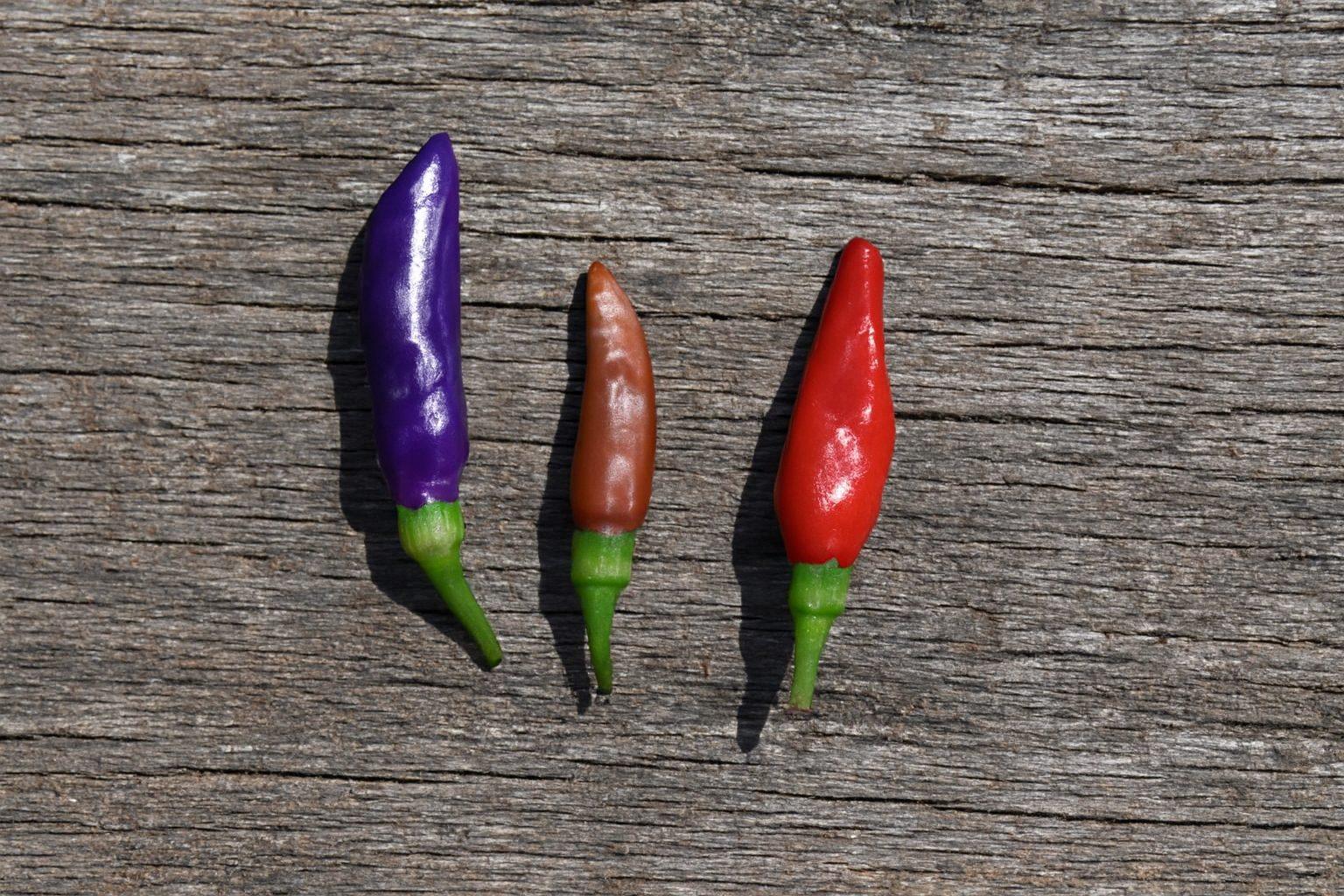
- Immature: Glossy deep purple
- Mid-stage: Orange-purple to dusky crimson
- Ripe: Bright red
Wall Thickness: Thin
Texture & Skin: Smooth and glossy; dries well for flakes or powder
Plant Details
Growth Habit: Compact and bushy; ideal for containers
Plant Height & Width:
Height: 45–60 cm
Width: 40–50 cm
Foliage: Dark green with occasional purple veining
Flower Color: White with greenish-yellow centers
Days to Maturity: 90–120 days from transplant
Yield: Moderate – typically 50–80 pods per plant under optimal conditions
Cultivation Information
Seed Count per Pack: 5 or 10 seeds
Germination Time: 10–21 days (Germinating Chilli Seeds)
Optimal Germination Temp: 25–30°C (Essential guide to ideal temperatures and humidity for chilli seed germination)
Light Requirements: Filtered sun
Soil Preferences:
- pH: 6.0–6.8
- Well-draining, fertile soil (Easy DIY soil mixes)
- Benefits from compost and consistent warmth
Storage Tips:
Store Cabai Burung Ungu seeds in a cool, dry place. Refrigeration at 4–8°C extends viability. Avoid humidity and direct light.


Reviews
There are no reviews yet.