
Description
Product Name: T Rex Yellow
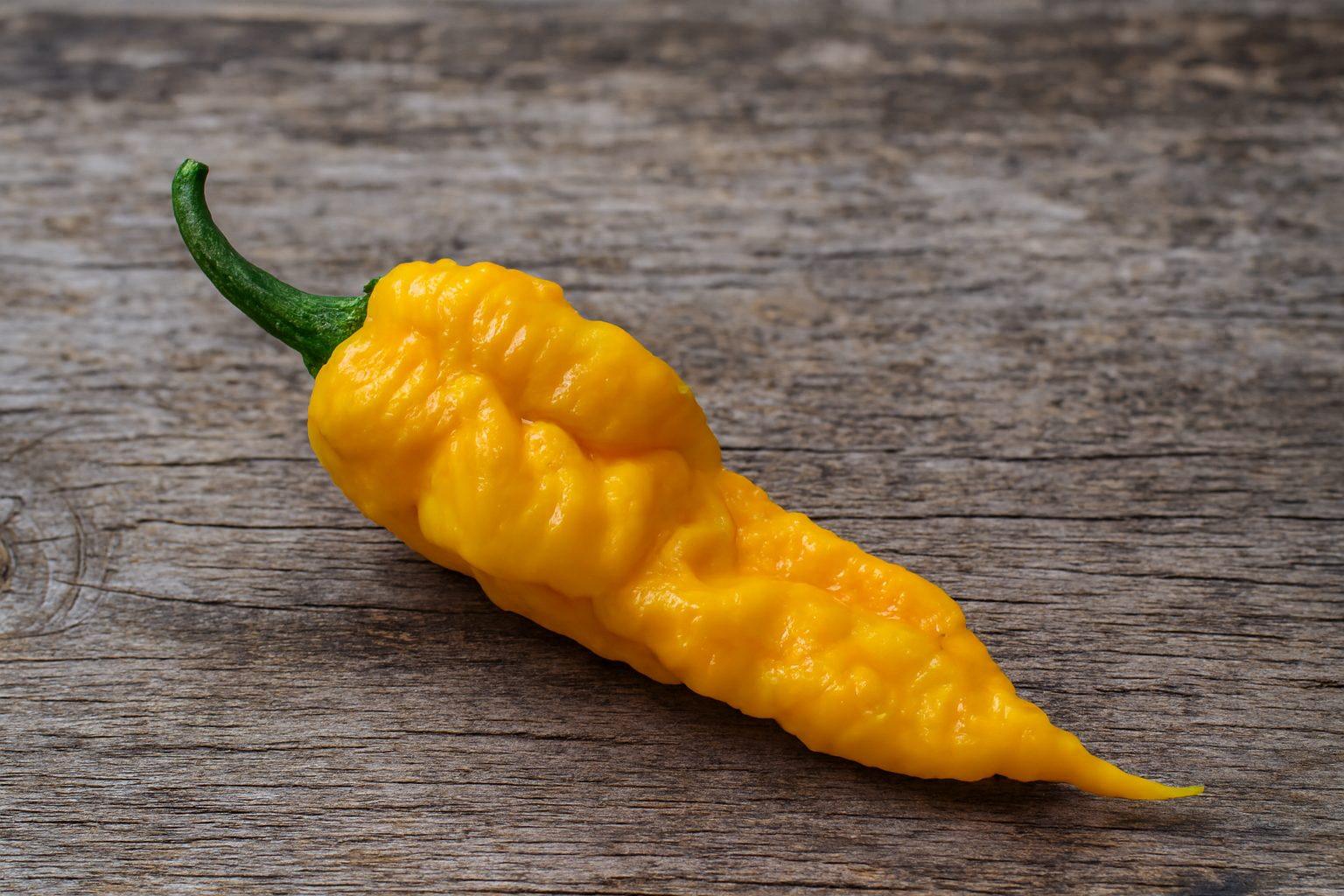
T Rex Yellow is a visually arresting and ferociously hot chili cultivar belonging to the Capsicum chinense species. This superhot variety is a stabilized yellow phenotype derived from a cross between the Trinidad Douglah and Bhutlah Yellow, both of which are renowned for their blistering heat and complex flavor profiles. T Rex Yellow is distinguished by its twisted, gnarled pods that resemble prehistoric claws—hence its name—and its radiant yellow coloration that matures from green to a glowing golden hue. With heat levels that rival the Carolina Reaper and a citrus-forward flavor, this cultivar has earned its place among elite superhots for growers, collectors, and sauce artisans alike.
- Cultivar Name: T Rex Yellow
- Species: Capsicum chinense
- Common Names: Dinosaur Claw Pepper (informal), T-Rex Yellow
- Type: Hybrid
Origin & Lineage
Geographic Origin:
T Rex Yellow was developed in the United States through selective breeding of high-heat cultivars. It emerged as a stabilized off-phenotype from the T Rex Mustard seed line around 2018, gaining attention for its vibrant yellow coloration and monstrous pod structure. The parent cultivars—Trinidad Douglah and Bhutlah Yellow—originate from Trinidad and the United States respectively, both known for producing peppers with extreme pungency and thick-walled fruit.
Cultural Significance:
While T Rex Yellow does not have documented folkloric or ritual use, its lineage is steeped in Caribbean culinary tradition. The Trinidad Douglah is a staple in pepper sauces and meat rubs across Trinidad and Tobago, while Bhutlah derivatives are often used in extreme heat sauces and competitive eating. T Rex Yellow carries forward this legacy with a modern twist, offering ornamental appeal and culinary firepower. Its name and appearance have made it a favorite among collectors and growers seeking dramatic visual impact and formidable heat.
Lineage / Hybridizer History:
This cultivar is the result of open-pollinated selection rather than commercial hybridization. Growers isolated the most robust orange-yellow plants from the T Rex Mustard line and continued refining the phenotype until traits such as pod shape, color, and heat became reliably repeatable. The cross between Trinidad Douglah and Bhutlah Yellow was chosen for its potential to produce thick-walled, high-yielding pods with extreme heat and complex flavor. Although the variety is still considered semi-stable, it has shown consistent performance across multiple growing seasons.
Heat Profile
Scoville Rating (SHU):
Estimated between 1,000,000 and 1,500,000 SHU
Perceived Heat:
Superhot (500,000 or more SHU)
Heat Characteristics:
T Rex Yellow delivers an aggressive, fast-acting burn that begins with a sharp sting on the tongue and quickly spreads to the throat and sinuses. The heat builds in waves, often intensifying after the initial bite. Growers describe the burn as “terminally scorching,” with a lingering sting that can last up to 20 minutes. The thick flesh of the pods contains high concentrations of capsaicinoids, making this variety suitable for sauces and powders that require sustained intensity.
Flavor Profile
Tasting Notes:
Despite its ferocity, T Rex Yellow offers a bright, citrus-forward flavor with notes of lemon zest, tropical fruit, and floral undertones. The sweetness inherited from Bhutlah Yellow balances the earthy depth of the Douglah parentage, creating a layered taste experience. When used fresh, the pods deliver a crisp bite with aromatic complexity.
Aftertaste / Finish:
The finish is tangy and slightly bitter, with lingering citrus oils and a faint metallic edge. When dried or fermented, the flavor concentrates into a smoky, savory profile that enhances its versatility in spice blends and sauces.
Ideal Pairings:
- Fermented superhot sauces
- Citrus-based marinades
- Tropical fruit chutneys
- Dry rubs for grilled meats
- Infused oils for roasted vegetables
Fruit Characteristics
Shape:
Twisted, gnarled pods with heavy wrinkling and occasional stingers; resembles a folded scorpion pepper
Size:
Approximately 10 cm long, 2.5–3 cm diameter
Color Stages:
Immature: green → Ripe: bright yellow
Wall Thickness:
Thick
Texture & Skin:
Blistered and heavily wrinkled with a glossy surface; pods are firm and dense.
Plant Details
Growth Habit:
Bushy
Plant Height & Width:
Height: 90–120 cm
Width: 60–80 cm
Foliage:
Dark green, slightly pubescent
Flower Color:
White
Days to Maturity:
110–120 days from transplant
Yield:
High – typically 60–80 pods per plant under optimal conditions.
Cultivation Information
Seed Count per Pack:
5 or 10 seeds (Presoaking Chilli Seeds)
Germination Time:
7–14 days (Germinating Chilli Seeds)
Optimal Germination Temp:
25–30°C (Essential guide to ideal temperatures and humidity for chilli seed germination)
Light Requirements:
Filtered sun
Soil Preferences:
Prefers well-drained soil rich in organic matter; pH range 6.0–6.8 (Easy DIY soil mixes)
Storage Tips:
Store seeds in airtight containers in a cool, dry place. Refrigeration is recommended for long-term viability.
Notable Compounds
Capsaicinoid Content:
High concentrations of capsaicin and dihydrocapsaicin, contributing to its superhot classification
Volatile Flavor Compounds:
Limonene (citrus aroma), vanillin (sweetness), and trace geraniol (floral) have been suggested based on flavor profile comparisons
Anthocyanins / Pigments:
No purple pigmentation observed; the cultivar expresses uniform yellow coloration without variegation.
Culinary & Cultural Use
Traditional Uses:
- Superhot chili sauces
- Infused oils
- Dry rubs and powders
- Fermented chili pastes
Raw vs Cooked Flavor:
Raw pods deliver a crisp, fruity bite with overwhelming heat. When roasted or grilled, the bitterness softens and the citrus notes deepen. Pickling is uncommon due to the pod’s thick skin and extreme heat, but fermentation enhances its complexity and aroma.
Regional Dishes:
While T Rex Yellow is not tied to any traditional regional dish, it has been used in modern fusion recipes such as:
- Yellow Reaper-style barbecue sauces
- Caribbean jerk marinades
- Citrus-infused chili oils
- Artisan spice blends featuring yellow superhots
Storage / Drying / Preserving Tips:
- Air-dry whole pods in a shaded, ventilated area
- Use a dehydrator at low heat to preserve volatile compounds
- Ferment chopped pods with salt for 2–4 weeks for mash-based sauces
- Store dried pods in vacuum-sealed bags to retain flavor and potency


Reviews
There are no reviews yet.