
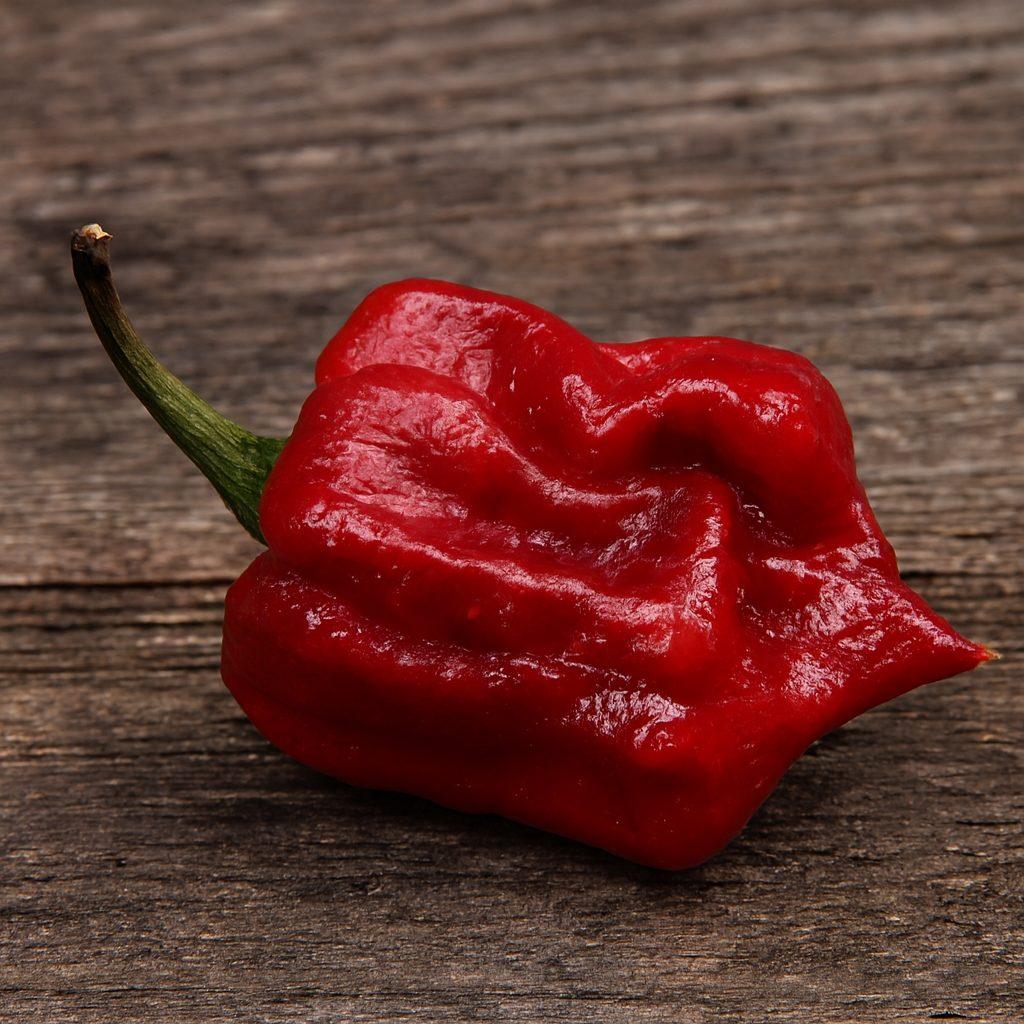
Description
Product Name: Reaper x Puma Chilli Seeds
Cultivar Name: Reaper x Puma
Species: Capsicum chinense
Common Names: Reaper Sbagliato (variant), Reaper Puma
Type: Hybrid
Origin & Lineage
Geographic Origin: The Reaper x Puma hybrid was developed in Italy, with its earliest known stabilization attributed to Emanuele Addis, a respected grower known for his work on the Leopard Reaper. This cultivar merges two formidable genetic lines: the Carolina Reaper, bred in South Carolina by Ed Currie, and the Pimenta Puma, a visually striking and intensely hot variety with deep purple foliage. Though the Carolina Reaper originated in the United States, the hybridization and refinement of this cross occurred in Mediterranean climates, where growers sought both ornamental appeal and extreme pungency.
Cultural Significance: While neither parent cultivar holds indigenous ritual significance, the Carolina Reaper has become a cultural icon in the global chili community. Its notoriety as a Guinness World Record holder for heat has made it a staple in extreme culinary challenges, hot sauce competitions, and viral media. The Puma pepper, though lesser known, is admired for its ornamental foliage and vivid fruit transitions. Together, the Reaper x Puma hybrid represents a fusion of aesthetic and culinary ambition, often grown by collectors and enthusiasts seeking high-impact visual and flavor experiences. It is increasingly featured in boutique hot sauces and artisan spice blends.
Lineage / Hybridizer History:
- Carolina Reaper: Created by Ed Currie of PuckerButt Pepper Company, this superhot was bred from a Pakistani Naga and a Caribbean La Soufrière pepper.
- Pimenta Puma: A Brazilian-origin cultivar known for its purple-black foliage and 300,000–400,000 SHU heat.
The Reaper x Puma cross was stabilized over multiple generations, with the Reaper Sbagliato Red variant emerging as a standout phenotype. This line exhibits large, wrinkled pods with purple-black flushes that ripen to deep red. The hybrid is now grown across Europe and North America, with Reaper x Puma seeds distributed by specialty vendors such as Atlantic Pepper Seeds and SpacePeppers.
Heat Profile
Scoville Rating (SHU): 1,500,000–2,000,000 SHU
Perceived Heat: Superhot (500,000 or more SHU)
Heat Characteristics: The Reaper x Puma delivers an aggressive, fast-building heat that begins with a sharp sting and escalates into a deep, lingering burn. The capsaicinoid concentration is highest in the placenta and locules, resulting in a heat that can cause abdominal discomfort and numbness if consumed raw. Despite its intensity, the burn is not one-dimensional; it evolves over time, peaking within 30 seconds and persisting for several minutes. This cultivar should be handled with gloves and caution, especially during processing.
Flavor Profile
Tasting Notes:
Reaper x Puma Initial flavor notes include a deceptive sweetness, followed by floral and citrus undertones. The Puma parent contributes a fruity brightness, while the Reaper’s earthy depth anchors the profile. When used fresh, the pods offer a complex bouquet that is quickly overtaken by heat.
Aftertaste / Finish:
The finish is oily and pungent, with residual bitterness if overripe. Roasting enhances the smoky and caramelized aspects, while fermentation brings out tangy, umami-rich layers.
Ideal Pairings:
- Fermented hot sauces with tropical fruits
- Smoked meat rubs and marinades
- Ultra-hot chili pastes for stews and curries
- Infused oils for controlled heat applications
- Powdered spice blends for dry rubs and seasoning
Fruit Characteristics
Shape: Irregular, bulbous, often with scorpion-like tails
Size: 5–7 cm long, 2.5–3 cm diameter
Color Stages: Immature: purple/black → Ripe: deep red with black flushes
Wall Thickness: Thin
Texture & Skin: Wrinkled, blistered, pockmarked.
Plant Details
Growth Habit: Bushy
Plant Height & Width: 80–100 cm tall × 60–80 cm wide
Foliage: Dark green with purple-black variegation
Flower Color: White with purple accents
Days to Maturity: 100–130 days from germination
Yield: Moderate – 40 to 70 pods per plant under optimal conditions.
Cultivation Information
Seed Count per Pack: 5 or 10 seeds (Presoaking Chilli Seeds)
Germination Time: 10–20 days (Germinating Chilli Seeds)
Optimal Germination Temp: 25–30°C (Essential guide to ideal temperatures and humidity for chilli seed germination)
Light Requirements: Filtered sun
Soil Preferences:
- pH: 6.2–7.0
- Well-drained loamy soil with compost enrichment
- Mulching recommended for moisture retention (Easy DIY soil mixes)
Storage Tips:
Store Reaper x Puma seeds in airtight containers at 4–8°C. Avoid humidity and direct light. Silica gel packets may be used to extend viability.
Notable Compounds
Capsaicinoid Content:
- Capsaicin
- Dihydrocapsaicin
These compounds account for over 90% of the pepper’s pungency. Their concentration in this hybrid rivals commercial pepper sprays, necessitating careful handling.
Volatile Flavor Compounds:
- Limonene (citrus brightness)
- Geraniol (floral aroma)
- Hexanal (green, grassy notes)
These compounds contribute to the pepper’s aromatic complexity, especially when used fresh or fermented.
Anthocyanins / Pigments: The purple-black coloration in immature pods and foliage is due to anthocyanin expression, particularly under high UV exposure. This pigmentation is inherited from the Puma parent and may vary with temperature and light intensity.
Culinary & Cultural Use
Traditional Uses:
- Ultra-hot sauces and extracts
- Fermented chili pastes
- Powdered spice blends
- Infused oils for controlled dosing
Raw vs Cooked Flavor: Raw Reaper x Puma pods deliver a sharp, fruity punch followed by overwhelming heat. Roasting softens the texture and deepens the flavor, while fermentation enhances complexity and reduces bitterness. Pickling is rarely used due to the pepper’s thin walls and extreme heat.
Regional Dishes:
- “The Last Dab” style sauces (inspired by Hot Ones)
- Artisan barbecue rubs
- Trinidad-style pepper sauces
- Italian Calabrian-style fermented blends
- South African peri-peri variants (extreme adaptations)
Storage / Drying / Preserving Tips:
- Dry pods whole in a dehydrator at 45°C for 24–48 hours
- Slice pods to accelerate drying
- Store in vacuum-sealed bags or airtight jars
- Ferment chopped pods with 2% salt brine for 2–4 weeks
- Freeze whole pods in airtight containers for up to 12 months


Reviews
There are no reviews yet.