
Description
Product Name: Reaper Cream
- Cultivar Name: Reaper Cream
- Species: Capsicum chinense
- Common Names: White reaper
- Type: Hybrid
Origin & Lineage
Geographic Origin:
The fascinating Reaper Cream variant originally emerged within the United States, developed through intensive selective breeding efforts within the hyper-hot chilli cultivation community. This rare phenotype traces its root lineage directly back to the classic red Carolina Reaper, which was bred by Ed Currie of the PuckerButt Pepper Company in Rock Hill, South Carolina. While the original crimson variant captured international fame, this cream-colored selection was stabilized by independent growers who isolated rare color mutations across subsequent generations.
Cultural Significance:
Lineage / Hybridizer History:
The foundational lineage of the parent strain involves an intentional cross between a fiery Pakistani Naga pepper and a heavily pungent Red Habanero originating from the Caribbean island of Saint Vincent. The specific Reaper Cream expression was achieved either through a natural recessive color mutation isolated during the stability trials of the standard Reaper or via an intentional outcross with a light-pigmented superhot, such as the Jay’s Peach Ghost Scorpion or a specialized White Habanero variant. Because early-generation seeds can sometimes exhibit slight variations, continuous stabilization is meticulously carried out by master growers to ensure that the iconic gnarled skin and wicked stinger tail are preserved alongside the beautiful off-white color.
Heat Profile
Scoville Rating (SHU):
Estimated between 1,500,000 and 2,000,000 SHU
Perceived Heat:
Superhot (500,000 or more SHU)
Heat Characteristics:
Flavor Profile
Tasting Notes:
Beyond the initial, terrifying wall of heat, the Reaper Cream rewards the courageous palate with a remarkably sophisticated flavor profile that surpasses its red predecessor. Distinct notes of bright lemongrass, crisp green apple, and white floral undertones are consistently reported by connoisseurs. It completely lacks the heavy, bitter, and overly chemical back-notes that often plague red superhots, rendering a much cleaner and more refreshing epicurean experience.
Aftertaste / Finish:
Ideal Pairings: This cultivar pairs beautifully with tropical fruits, particularly mango, passionfruit, and white peach, allowing for the creation of exceptional sweet-and-sour hot glazes. It also complements creamy bases, coconut milk curries, citrus infusions, garlic-heavy seafood marinades, and premium white balsamic vinegars.
Fruit Characteristics
Shape:
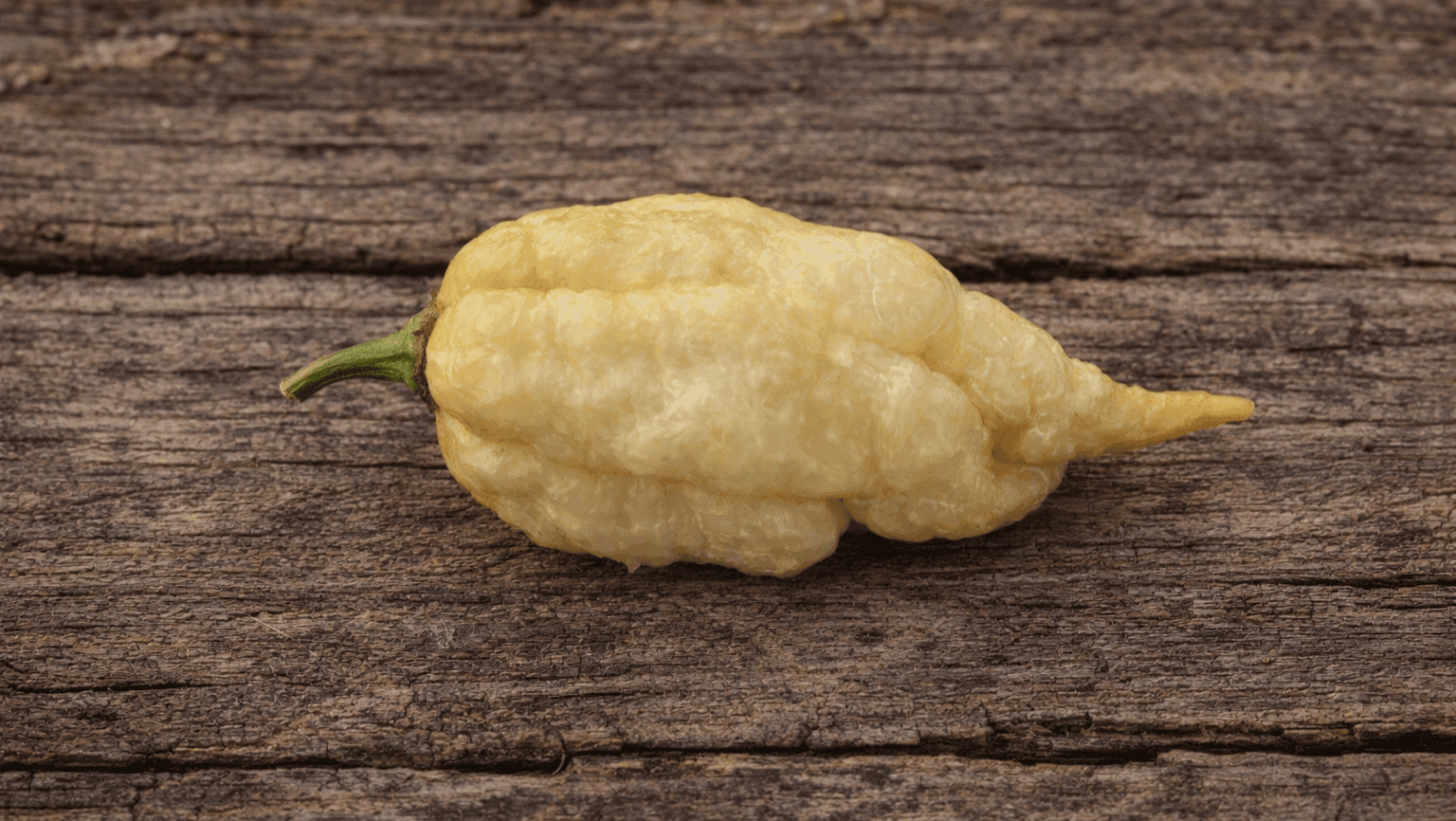
The pods display an incredibly aggressive, knobby, and heavily convoluted morphology. They are deeply wrinkled and furrowed, with some fruits exhibiting the infamous, sharp, sickle-shaped scorpion tail or stinger protruding prominently from the bottom
Size:
Approximately 4–5 cm long, 2–3 cm diameter
Color Stages:
Immature: deep lime green → Intermediate: pale yellowish-ivory → Ripe: stunning, uniform cream to off-white finish, occasionally showing a soft translucent pearl sheen under bright sunlight.
Wall Thickness:
Medium
Texture & Skin:
Extremely bumpy, blistered, wrinkled, and uneven, conveying an ominous visual warning that perfectly mirrors its internal chemical potency.
Plant Details
Growth Habit:
Highly robust, bushy, and heavily branched, creating a dense canopy that provides excellent sun-scald protection for the developing pods.
Plant Height & Width:
Height: 90–120 cm
Width: 60–90 cm
Foliage: Dense, rich dark green leaves that are broad, ovate, and show very light, fine pubescence along the primary stems and nodes.
Flower Color:
Brilliant white, often bearing five to six petals with pale greenish-yellow anthers.
Days to Maturity:
100–120 days from transplant
Yield: Moderate to High – an individual, well-nourished plant can yield anywhere from 40 to 60 highly uniform, gnarled pods over a full, warm growing season.
Cultivation Information
Seed Count per Pack:
5 or 10 seeds (Presoaking Chilli Seeds)
Germination Time:
7–14 days (Germinating Chilli Seeds)
Optimal Germination Temp:
25–30°C (Essential guide to ideal temperatures and humidity for chilli seed germination)
Light Requirements:
Filtered sun
Soil Preferences:
- pH: 6.0–6.8
- Well-drained loamy soil
- High organic matter content (Easy DIY soil mixes)
Storage Tips:
Store seeds in airtight containers in a cool, dry place. Silica gel packets may be used to reduce moisture. Avoid refrigeration unless seeds are vacuum-sealed.
Notable Compounds
Capsaicinoid Content:
The inner placental tissue and embryonic walls of this variety are saturated with extreme concentrations of capsaicin and dihydrocapsaicin, which completely dwarfs the levels found in standard culinary peppers.
Volatile Flavor Compounds:
High concentrations of aliphatic esters, limonene, and linalool are present within the fruit walls, producing the characteristically clean, citrus-forward, and sweet floral aromatics that define its olfactory profile.
Anthocyanins / Pigments:
Due to a specific genetic variation that suppresses the synthesis of capsanthin and standard red carotenoids, the pods are devoid of red coloration, allowing the pristine pale cream internal and external pigments to remain completely dominant.
Culinary & Cultural Use
Traditional Uses:
The Reaper Cream is utilized extensively in modern gourmet hot sauce manufacturing, extreme culinary exhibitions, specialized fermentation vats, and custom spicy dry rubs designed for high-end barbecue applications.
Raw vs Cooked Flavor:
When consumed raw, the pepper delivers a intensely crisp, juicy crunch accompanied by immediate, biting heat and electric citrus notes. When subjected to light cooking, simmering, or gentle roasting, the volatile sugars are caramelized, which rounds out the flavor and yields a smoother, slightly more integrated, and deeply complex heat delivery.
Regional Dishes: While too intense for standard daily cooking, it has become the star ingredient in contemporary specialty dishes, including artisanal white wine vinegar hot sauces, fiery tropical mango-habanero style relishes, and the famous boutique Cream Reaper Chilli Ice Cream, where the cooling fats of the dairy elegantly contrast the volcanic punch of the capsaicin.
Storage / Drying / Preserving Tips:
- Air-dry whole pods in shaded, ventilated areas to preserve color and potency
- Use dehydrators at low temperatures to retain volatile compounds
- Ferment in 2–3% salt brine for 4–6 weeks to develop complex flavor profiles
- Store dried pods in vacuum-sealed bags or glass jars with desiccants
- Grind into flakes or powder for long-term spice blends


Reviews
There are no reviews yet.