
Description
Purple Cayenne x
Product Name: Purple Cayenne x
Purple Cayenne x (Unknown Pollen Donor) is a visually arresting and moderately hot hybrid cultivar within the Capsicum annuum species. This naturally occurring cross combines the ornamental elegance of the Purple Cayenne with the unpredictable traits of an unidentified pollen donor, resulting in a pepper that is both genetically intriguing and horticulturally rewarding. Though its lineage remains partially obscured, the cultivar has gained traction among collectors and growers for its vivid pigmentation, slender fruit, and balanced heat. It is suitable for culinary use, ornamental display, and experimental breeding.
Cultivar Name: Purple Cayenne x (Unknown Pollen Donor)
Species: Capsicum annuum
Common Names: Purple Cayenne Hybrid
Type: Hybrid, Ornamental
Origin & Lineage
Geographic Origin:
The Purple Cayenne parent is believed to have originated from selections made in the United States and Europe, with ornamental breeding lines dating back to the early 20th century. The unknown pollen donor introduces an element of mystery, though phenotypic traits suggest it may belong to the Capsicum annuum complex, possibly a compact ornamental or culinary type. The Purple Cayenne x was first observed in South African by Tony Lague when growing normal purple Cayennes.
Cultural Significance:
Purple Cayenne peppers have long been admired for their aesthetic value, often grown in patio containers and urban gardens for their striking violet pods and purplish foliage. In culinary contexts, cayenne-type peppers are traditionally used in spice blends, hot sauces, and medicinal tinctures. While the hybrid lacks documented ritual use, its Ornamental appeal and culinary versatility have made it a favorite among growers seeking both beauty and function.
Lineage / Hybridizer History:
The Purple Cayenne x emerged from open-pollinated Purple Cayenne plants exposed to ambient pollen sources, resulting in a spontaneous cross. The exact pollen donor remains unidentified, but the hybrid exhibits traits such as increased pod girth, altered pigmentation patterns, and slightly modified growth habit. It is currently considered an unstable F4 generation, with ongoing selection required to stabilize its phenotype.
Heat Profile
Scoville Rating (SHU): 30,000–50,000 SHU
Perceived Heat: Hot (15,000 to 50,000 SHU)
Heat Characteristics:
The heat of Purple Cayenne x builds quickly, presenting a sharp, linear burn that peaks within seconds and lingers on the tongue and lips. It is concentrated in the placental tissue and inner membranes, and while not overwhelming, it commands respect in raw applications. When dried or roasted, the heat becomes more rounded and slightly smoky, making it ideal for spice blends and infused oils.
Flavor Profile
Tasting Notes:
Fresh pods offer a grassy, slightly acidic bite with undertones of green apple and citrus. As they mature, the flavor deepens into a mildly smoky and earthy profile, reminiscent of traditional cayenne but with added complexity.
Aftertaste / Finish:
The finish is clean and slightly bitter, with a lingering warmth that pairs well with acidic or fatty ingredients. When pickled, the bitterness is softened, and the tangy brine enhances the fruit’s natural brightness.
Ideal Pairings:
- Tomato-based sauces and salsas
- Grilled meats and charcuterie
- Pickled vegetables and antipasti
- Infused vinegars and oils
- Dry rubs for poultry and lamb
Fruit Characteristics
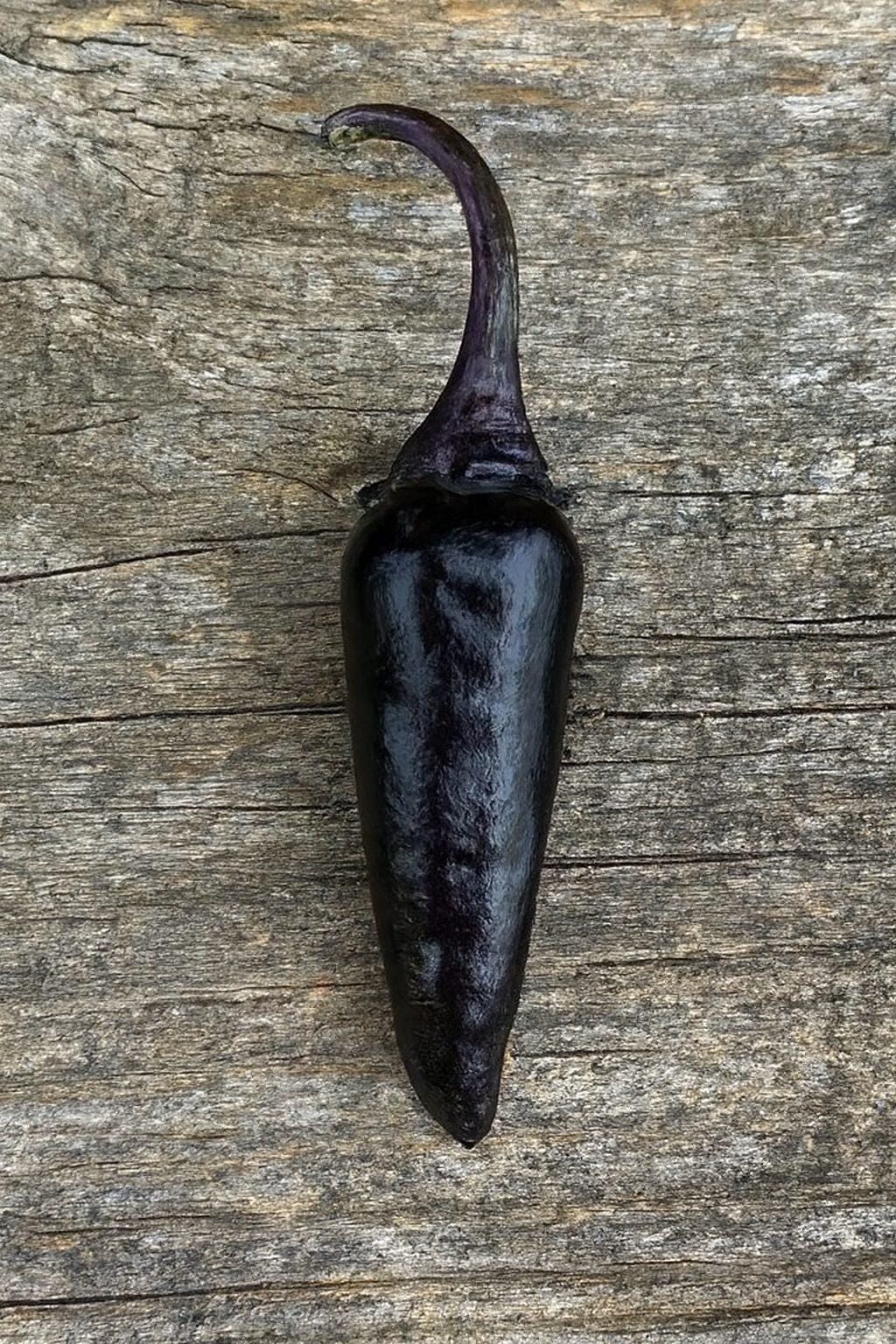
Shape: Slender, elongated, often slightly curved with a tapered tip
Size: 5–7 cm long, 1–1.5 cm diameter
Color Stages:
- Immature: green
- Ripe: deep purple → dark red
Wall Thickness: Thin
Texture & Skin: Wrinkled and glossy; may blister slightly when roasted
Plant Details
Growth Habit: Bushy
Plant Height & Width: 45–60 cm tall, 30–45 cm wide
Foliage: Dark green with purplish stems; slight pubescence observed
Flower Color: Lavender to pale purple
Days to Maturity: 85–100 days from germination
Yield: Moderate – typically 40–70 pods per plant under optimal conditions
Cultivation Information
Seed Count per Pack: 5 or 10 seeds (Presoaking Chilli Seeds)
Germination Time: 7–14 days (Germinating Chilli Seeds)
Optimal Germination Temp: 25–30°C (Essential guide to ideal temperatures and humidity for chilli seed germination)
Light Requirements: Filtered sun
Soil Preferences:
- pH: 6.2–6.8
- Well-drained loamy or sandy soil
- High organic matter content (Easy DIY soil mixes)
Storage Tips:
Store Purple Cayenne x seeds in airtight containers in a cool, dry environment. For long-term viability, refrigeration at 4–8°C is recommended. Avoid exposure to moisture and direct sunlight.
Notable Compounds
Capsaicinoid Content:
- Capsaicin
- Dihydrocapsaicin
These compounds are responsible for the pepper’s pungency and metabolic effects, with concentrations varying based on ripeness and environmental stress.
Volatile Flavor Compounds:
- Limonene (citrus aroma)
- 2-isobutyl-3-methoxypyrazine (green, vegetal note)
- Vanillin (trace levels in dried pods)
Anthocyanins / Pigments:
The purple coloration is attributed to anthocyanin expression, particularly delphinidin and petunidin derivatives. These pigments are influenced by light exposure, temperature, and genetic factors, and may fade during cooking.
Culinary & Cultural Use
Traditional Uses:
While the hybrid lacks documented traditional use, its cayenne lineage suggests suitability for:
- Ají-style sauces
- Fermented salsas
- Pickled relishes
- Dry spice blends and rubs
Raw vs Cooked Flavor:
Raw Purple Cayenne x pods deliver a crisp, grassy bite with bright acidity. Cooking enhances sweetness and reduces bitterness, especially when roasted or grilled. Pickling intensifies the tang and softens the heat.
Regional Dishes:
- Salsa de chile cayena (Latin American)
- Hot vinegar infusions (Southern U.S.)
- Chakalaka-style relishes (South African fusion)
- Spicy stir-fries (Asian fusion)
Storage / Drying / Preserving Tips:
- Air-dry whole pods in a shaded, ventilated area
- Use dehydrators at 45–50°C for consistent drying
- Store dried pods in glass jars with desiccant packs
- For fermentation, submerge sliced pods in 2% salt brine for 2–3 weeks, then refrigerate

Reviews
There are no reviews yet.