

Description
Product Name: Pimenta Jolokia Peach Fire
Pimenta Jolokia Peach Fire is a visually arresting and intensely pungent Capsicum chinense hybrid that merges the blistered morphology of Bhut-shaped pods with the vibrant peach coloration inherited from its complex lineage. This cultivar is celebrated for its superhot intensity, floral-fruity aroma, and ornamental appeal. Though still considered genetically unstable, it has gained traction among collectors and artisanal sauce makers for its unique flavor profile and dramatic appearance. Pimenta Jolokia Peach Fire is ideal for fermentation, roasting, and high-impact culinary applications where heat and aromatic complexity are essential.
- Cultivar Name: Pimenta Jolokia Peach Fire
- Species:Capsicum chinense
- Common Names: PJ Peach Fire
- Type: Hybrid
Origin & Lineage
Geographic Origin:
Pimenta Jolokia Peach Fire was first stabilized in Europe, with early selections traced to Italy and Spain. The cultivar emerged from a grow-out of Bhut Jolokia crossed with Pimenta de Neyde, a Brazilian variety known for its dark pigmentation and floral aroma. The original seeds were distributed by AISPES and Pepper Italia, with early phenotypes showing red and black ripening stages. The peach variant was later isolated and refined by growers such as Enrico Lai and Towns-End Chili & Spice, who documented its emergence from burnt orange and peach-toned selections.
Cultural Significance:
While Pimenta Jolokia Peach Fire does not have documented folkloric or ritual use, its lineage carries cultural weight. Bhut Jolokia, one of its progenitors, originates from Assam, India, where it has been used in traditional cooking and medicine. Pimenta de Neyde, on the other hand, is a Brazilian cultivar often grown for its ornamental value and unique pigmentation. The hybrid continues this legacy by offering a modern interpretation of ancestral heat and floral complexity, now featured in artisanal hot sauces, competitive chili-eating events, and ornamental garden displays.
Lineage / Hybridizer History:
Pimenta Jolokia Peach Fire is a cross between:
- Bhut Jolokia (Ghost Pepper): Known for its elongated shape and slow-building superhot burn.
- Pimenta de Neyde: A Brazilian variety with dark purple pigmentation and floral aroma.
The Pimenta Jolokia Peach Fire was first logged by AISPES and refined by growers such as Enrico Lai, who tracked the peach/pink variants emerging from red and black phenotypes in 2015–2017. The cultivar is currently considered unstable, with ongoing efforts to stabilize its traits through selective breeding. Most plants express consistent traits, including peach ripening, Bhut-like pod shape, and superhot pungency.
Heat Profile
Scoville Rating (SHU):
Estimated around 1,000,000 SHU
Perceived Heat:
Superhot (500,000 or more SHU)
Heat Characteristics:
The burn delivered by Pimenta Jolokia Peach Fire is sharp, immediate, and long-lasting. It begins with a stinging sensation on the tongue and lips, followed by a wave of heat that spreads to the throat and sinuses. The intensity builds rapidly and can persist for several minutes, often described as “molten” or “unrelenting.” Despite its aggression, the burn is clean and does not obscure the pepper’s underlying flavor, making it suitable for sauces that require both intensity and nuance.
Flavor Profile
Tasting Notes:
Pimenta Jolokia Peach Fire offers a bright, fruity flavor with floral and citrus undertones. The initial taste is sweet and tangy, followed by a deep earthiness that complements its heat. Unlike many superhots, it retains a juicy character that makes it ideal for fresh salsas and fermented blends.
Aftertaste / Finish:
The finish is long and warming, with residual bitterness and a lingering floral note. When roasted or grilled, the sweetness intensifies and a mild smokiness emerges.
Ideal Pairings:
- Fermented superhot sauces with mango or pineapple
- Roasted chili pastes for red meat and game
- Pickled blends with garlic and vinegar
- Infused oils and spicy jams for novelty applications
- Dry rubs for smoked meats and barbecue
Fruit Characteristics
Shape:
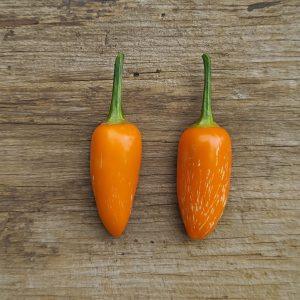
Bhut-shaped, elongated with slight tapering and blistered surface
Size:
4–5 cm long, 2 cm diameter
Color Stages:
- Immature: green
- Ripe: peach to burnt orange
Wall Thickness:
Medium
Texture & Skin:
Wrinkled and blistered; skin is firm and rugged.
Plant Details
Growth Habit:
Bushy
Plant Height & Width:
90–120 cm tall, 60–80 cm wide
Foliage:
Dark green, slightly pubescent
Flower Color:
White
Days to Maturity:
90–100 days from transplanting
Yield:
Moderate to high – typically 60–100 pods per plant under optimal conditions.
Cultivation Information
Seed Count per Pack:
5 or 10 seeds (Presoaking Chilli Seeds)
Germination Time:
10–14 days (Germinating Chilli Seeds)
Optimal Germination Temp:
25–30°C (Essential guide to ideal temperatures and humidity for chilli seed germination)
Light Requirements:
Filtered sun
Soil Preferences:
Well-drained loamy soil with pH between 6.0 and 6.8; enriched with compost or aged manure (Easy DIY soil mixes)
Storage Tips:
Store seeds in airtight containers in a cool, dry place. Silica gel packets may be used to reduce humidity and extend viability.
Notable Compounds
Capsaicinoid Content:
Extremely high concentrations of capsaicin and dihydrocapsaicin contribute to its superhot classification. These compounds are concentrated in the placental tissue and inner walls of the pod.
Volatile Flavor Compounds:
Limonene and esters are present in trace amounts, contributing to the fruity and floral aroma. Vanillin-like compounds may emerge during roasting or fermentation.
Anthocyanins / Pigments:
No significant anthocyanin expression in ripe pods; pigmentation is dominated by carotenoids such as beta-carotene and capsanthin, responsible for the peach hue. However, purple veining in stems may occur under cooler conditions, suggesting residual anthocyanin activity from the Pimenta de Neyde lineage.
Culinary & Cultural Use
Traditional Uses:
Though Pimenta Jolokia Peach Fire is a modern cultivar, it has been adopted into artisanal hot sauce production and competitive chili-eating events. Its intense heat and layered flavor make it suitable for:
- Ají-style sauces
- Fermented chili pastes
- Salsas with smoked ingredients
- Dry rubs and infused oils
- Gourmet chili jams and chutneys
Raw vs Cooked Flavor:
Raw pods deliver a sharp, fruity heat with floral undertones. Cooking—especially roasting or grilling—enhances the sweetness and introduces a smoky depth. Fermentation amplifies the complexity and softens the bitterness, making it ideal for layered sauces.
Regional Dishes:
- Caribbean-style pepper sauces
- Mexican-style mole with chili infusion
- South African braai rubs with dried PJ Peach Fire flakes
- Southeast Asian chili jams
- Latin American-style fermented chili pastes
Storage / Drying / Preserving Tips:
- Air-dry whole pods in shaded, ventilated areas to preserve flavor and pigmentation
- Slice and dehydrate for faster drying and powder production
- Ferment with garlic and salt for chili paste
- Vacuum seal dried pods to prevent oxidation and flavor degradation



Reviews
There are no reviews yet.