
Description
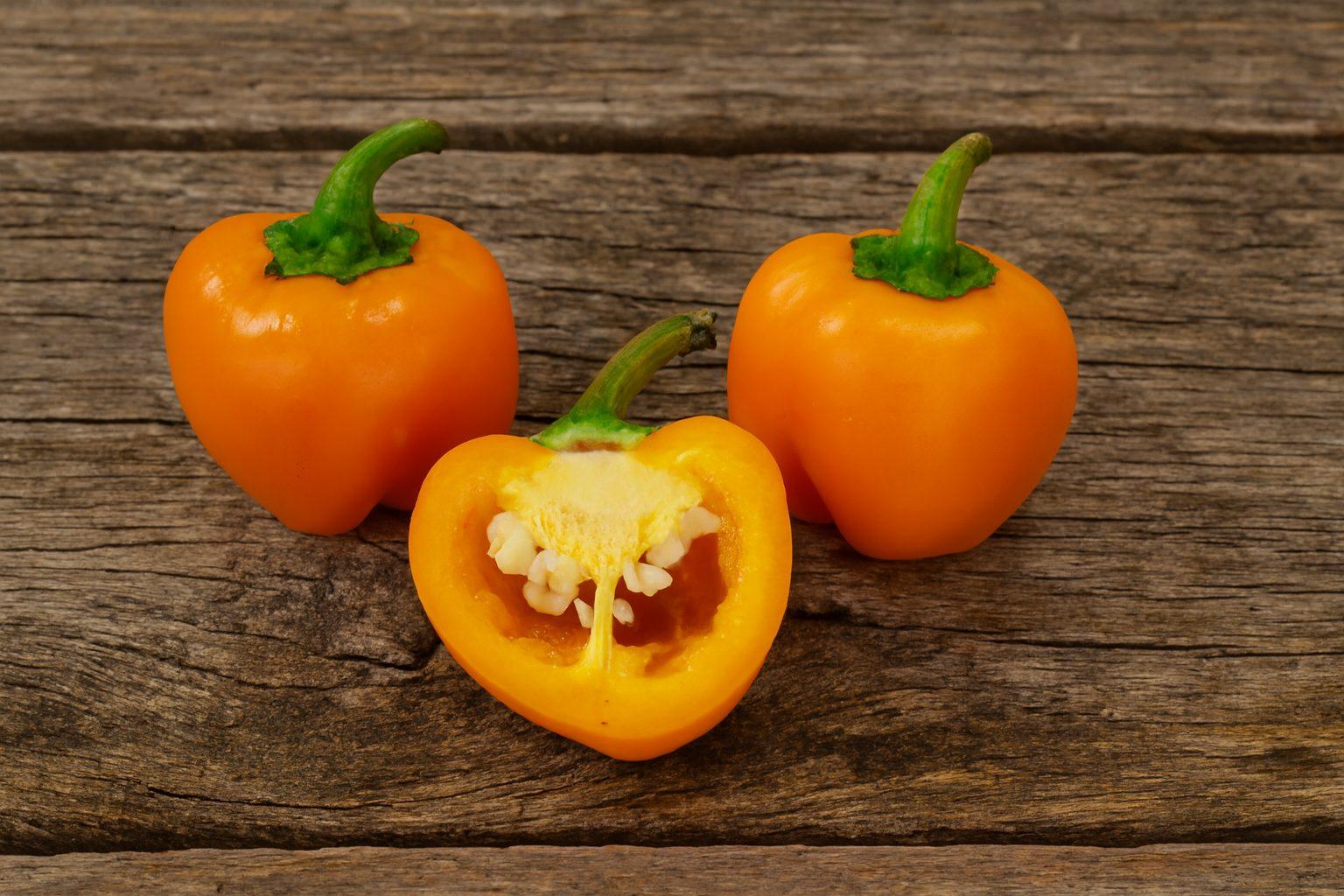
Product Name: Mini Bell Orange
Cultivar Name: Mini Bell Orange
Species: Capsicum annuum
Common Names: Orange Mini Bell, Sweet Orange Baby Bell, Patio Bell Orange
Type: Heirloom
Origin & Lineage
Geographic Origin: Mini Bell Orange peppers are a compact cultivar developed through selective breeding of Capsicum annuum lines in the United States. While their exact origin is not attributed to a single breeder, they are believed to be a refinement of traditional bell pepper genetics, optimized for small size, sweetness, and container growth. The cultivar gained popularity in the late 20th century through heirloom seed exchanges and urban gardening movements.
Mini bell peppers trace their lineage to Central and South American landraces, where Capsicum annuum was first domesticated over 6,000 years ago. Spanish and Portuguese explorers introduced bell peppers to Europe in the 16th century, where they were further diversified. The miniaturized form was later stabilized in North America for ornamental and culinary use.
Cultural Significance:
Mini Bell Orange peppers are celebrated for their ornamental charm and culinary versatility. Their petite size, vibrant orange color, and sweet flavor make them ideal for:
• Urban gardens and patio containers
• Child-friendly snacking and lunchbox additions
• Stuffed appetizers and hors d’oeuvres
• Decorative harvest baskets and seasonal displays
Their popularity reflects a broader cultural shift toward compact, high-yield cultivars suited for small-space gardening and fresh, whole-food snacking.
Lineage / Hybridizer History
Parentage:
Derived from traditional bell pepper lines (Capsicum annuum), selectively bred for miniature size, sweetness, and early maturity
Breeders selected for:
• Small, uniform pod size
• Bright orange coloration
• Thick, crunchy walls
• Mild, sweet flavor with no heat
• Compact plant structure for container growth
Stabilized Traits:
Stable heirloom cultivar. Widely available through commercial seed catalogs and heirloom vendors.
Heat Profile
Scoville Rating (SHU):
0 SHU
Perceived Heat: None
Heat Characteristics:
Mini Bell Orange peppers contain no capsaicin and are considered completely sweet. They are suitable for all ages and culinary applications where heat is not desired.
Flavor Profile
Tasting Notes:
Sweet, crisp, and juicy. Notes of apple and melon with a clean finish. Flavor intensifies when roasted or grilled.
Aftertaste / Finish:
Mild and refreshing with no bitterness
Ideal Pairings:
• Stuffed with cream cheese, hummus, or grains
• Sliced into salads and wraps
• Roasted for sweet chutneys and relishes
• Pickled with garlic and herbs
• Served raw on crudité platters
Fruit Characteristics
Shape:
Blocky, bell-shaped with smooth shoulders
Size:
3–4 cm tall, 3–4 cm wide
Color Stages:
• Immature: Pale green
• Ripe: Bright orange
• Overripe: May deepen to burnt orange
Wall Thickness:
Thick
Texture & Skin:
Smooth, glossy, and firm with crisp flesh
Plant Details
Growth Habit:
Compact and bushy; ideal for containers and raised beds
Plant Height & Width:
Height: 60–80 cm
Width: 40–60 cm
Foliage:
Bright green, ovate leaves
Flower Color:
White
Days to Maturity:
80–100 days from transplant
Yield:
High – typically 50–100 pods per plant under optimal conditions
Cultivation Information
Seed Count per Pack: 10 seeds
Germination Time: 7–14 days (Germinating Chilli Seeds)
Optimal Germination Temp: 26–32°C (Essential guide to ideal temperatures and humidity for chilli seed germination)
Light Requirements: Filtered sun
Soil Preferences:
• pH: 6.0–6.8
• Rich, well-draining loam (Easy DIY soil mixes)
• Benefits from compost and balanced NPK feeding
Storage Tips:
Store seeds in a cool, dry place. Refrigeration at 4–8°C extends viability. Avoid humidity and direct light.
Notable Compounds
Capsaicinoid Content:
None
Volatile Flavor Compounds:
Linalool, methyl anthranilate, and esters contribute to fruity aroma
Pigments:
Orange coloration driven by carotenoids such as beta-carotene and capsanthin
Culinary & Cultural Use
Traditional Uses:
Not traditionally used due to modern hybrid origin. Popular in contemporary cuisine for snacking, stuffing, and decorative plating.
Raw vs Cooked Flavor:
Raw pods are crisp and sweet. Roasting enhances caramelization and depth. Pickling adds tang and preserves texture.
Regional Dishes:
• Mediterranean-style stuffed peppers
• American-style crudité platters
• South African pickled pepper jars
• Asian stir-fries with sesame and ginger
Storage / Drying / Preserving Tips:
• Best enjoyed fresh or pickled
• Can be frozen whole or sliced
• Not ideal for drying due to high moisture content


Reviews
There are no reviews yet.