

Description
Product Name: Jays x Pink Tiger Chilli Seeds
Cultivar Name: Jays x Pink Tiger
Species: Capsicum chinense
Common Names: Jays x Pink Tiger
Type: Hybrid
Origin & Lineage
Geographic Origin:The Jays x Pink tiger was developed through hybridization efforts in the United States, specifically by Steve Bender at Innovation Acre. It merges genetics from two renowned peppers: Jay’s Peach Ghost Scorpion (a superhot variety with peach‑orange pods) and the Pink Tiger (an Italian hybrid created from Bhut Jolokia and Pimenta de Neyde). The result is a semi‑stable hybrid that continues to fascinate growers with its unpredictable yet captivating traits.
Cultural Significance: The Pink Tiger parent line is celebrated for its ornamental brilliance, with pods resembling miniature abstract artworks. In Italy, it became a showcase pepper for edible landscaping and culinary plating. By crossing it with Jay’s Peach Ghost Scorpion, breeders created a cultivar that not only dazzles visually but also delivers blistering heat. It is often grown by collectors who value both aesthetics and potency, and it has found a niche in fermentation jars, hot sauces, and decorative garden beds.
Lineage / Hybridizer History:
- Jay’s Peach Ghost Scorpion: Originating from Jay Weaver’s breeding work, known for peach‑colored pods and extreme heat.
- Pink Tiger: Developed in Italy by Mojo Pepper and Semi Strani di Carlo Martini, combining Bhut Jolokia and Pimenta de Neyde.
- Jays x Pink Tiger: Hybridized by Steve Bender at Innovation Acre, semi‑stable with ongoing trait variation.
Heat Profile
Scoville Rating (SHU): 800,000–1,100,000 SHU
Perceived Heat: Super Hot
Heat Characteristics:The burn is immediate and aggressive, with a creeping intensity that lingers. It combines the floral sting of Bhut Jolokia with the sharp bite of Jay’s Peach Ghost Scorpion, making it suitable only for experienced chilli consumers.
Flavor Profile
Tasting Notes: Fruity and floral, with subtle perfumed undertones.
Aftertaste / Finish: A lingering heat that softens into a slightly smoky, bitter finish.
Ideal Pairings: Works well in fermented hot sauces, fiery salsas, and marinades where fruitiness balances extreme heat.
Fruit Characteristics
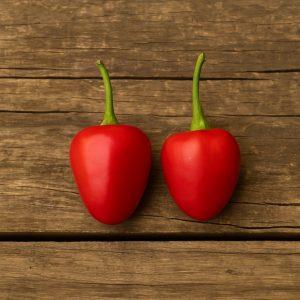
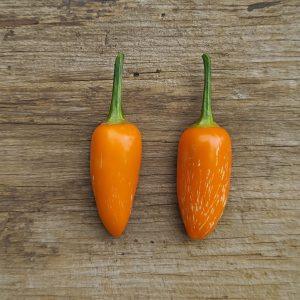
Shape: Elongated, slightly wrinkled pods with occasional striping.
Size: 4–6 cm long, 2–3 cm diameter.
Color Stages: Immature: deep purple → Transition: pink/peach → Ripe: blazing orange‑red.
Wall Thickness: Thin to medium.
Texture & Skin: Bumpy, sometimes blistered, with occasional panda‑style pigmentation.
Plant Details
Growth Habit: Bushy, compact.
Plant Height & Width: 80–100 cm tall, 60–80 cm wide.
Foliage: Dark green to nearly black, pubescent.
Flower Color: White to pale purple.
Days to Maturity: 120–150 days from germination.
Yield: Moderate, with 40–60 pods per plant under optimal conditions.
Cultivation Information
Seed Count per Pack: 5 or 10 seeds
Germination Time: 10–14 days (Germinating Chilli Seeds)
Optimal Germination Temp: 25–30°C (Essential guide to ideal temperatures and humidity for chilli seed germination)
Light Requirements: Filtered sun
Soil Preferences:
- pH: 6.0–6.5
- Well-draining potting mix with compost (Easy DIY soil mixes)
- Benefits from calcium and potassium supplements
Storage Tips: Store Jays x Pink tiger seeds in a cool, dry place. Refrigeration at 4–8°C extends viability. Avoid moisture and direct light.
Notable Compounds
Capsaicinoid Content: High levels of capsaicin and dihydrocapsaicin, responsible for its superhot rating.
Volatile Flavor Compounds: Fruity esters and floral terpenes, with occasional smoky notes.
Anthocyanins / Pigments: Strong purple coloration in immature pods and foliage due to anthocyanin expression from the Pimenta de Neyde lineage.
Culinary & Cultural Use
Traditional Uses: While not tied to ancient traditions, it is widely used in modern hot sauces, extreme salsas, and fermentation projects.
Raw vs Cooked Flavor: Raw Jays x Pink tiger pods deliver sharp floral heat; roasting or grilling enhances smoky undertones while slightly mellowing fruitiness.
Regional Dishes: Incorporated into artisanal hot sauces in Italy and the United States, often blended with tropical fruits to balance intensity.
Storage / Drying / Preserving Tips: Best preserved through dehydration at low temperatures to retain color and heat. Fermentation in brine also enhances flavor complexity and preserves anthocyanin pigments.


Reviews
There are no reviews yet.