
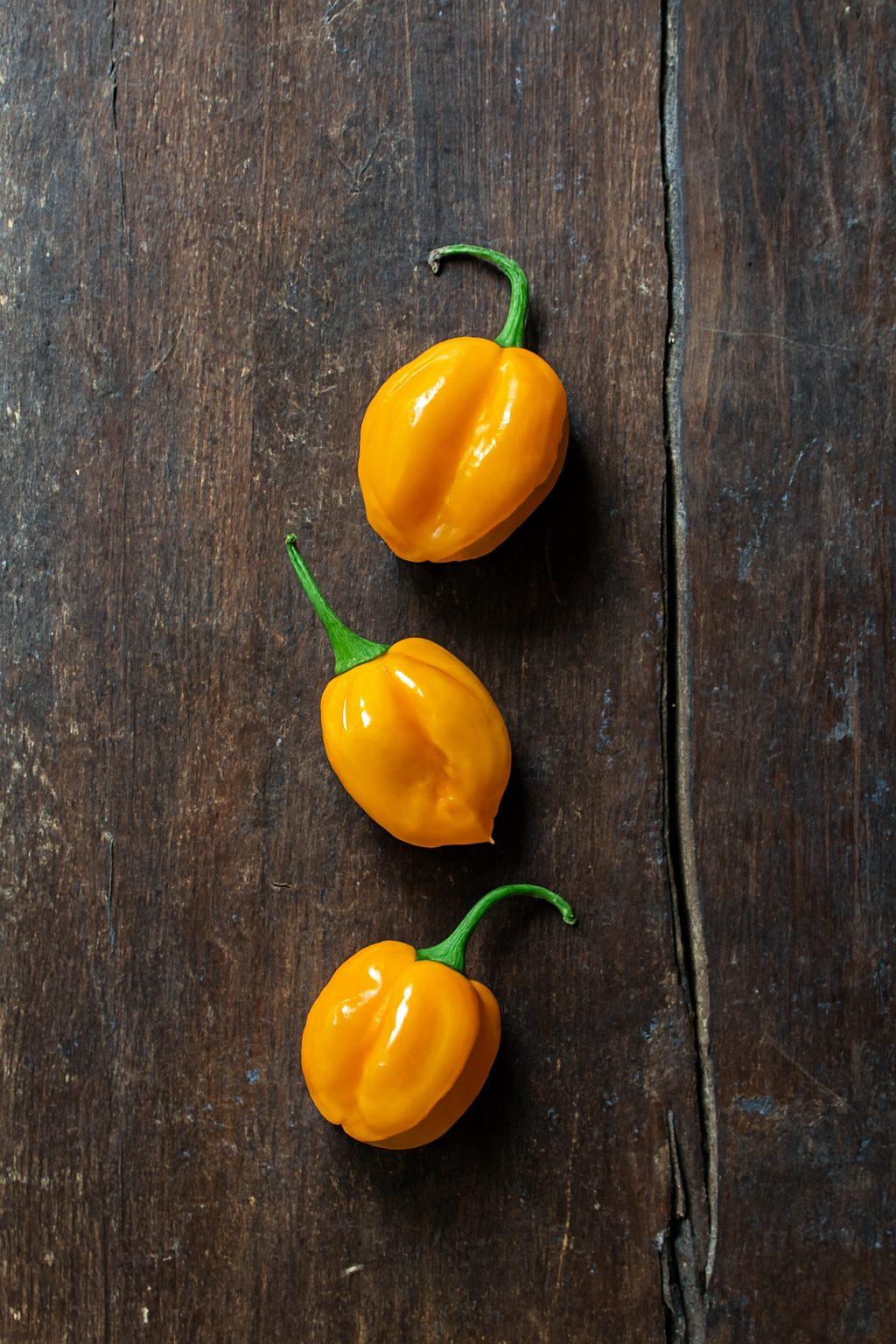
Description
Product Name: Hainan Yellow Lantern
Cultivar Name: Hainan Yellow Lanter
Species: Capsicum chinense
Common Names: Yellow Emperor Chili, Hainan Yellow Lantern, Chinese Yellow Habanero
Type: Heirloom Landrace
Origin & Lineage
Geographic Origin:
Native to Hainan Island, the southernmost province of China. This tropical island is known for its volcanic soil, humid climate, and biodiversity. The Hainan Yellow Lantern is endemic to the island’s southwestern and southeastern coastal regions, where it has been cultivated for generations.
Cultural Significance:
Revered locally as the “辣王” (King of Spice), this pepper is a cornerstone of Hainanese cuisine, particularly in seafood dishes and fermented sauces. It is also known as the Yellow Emperor Chili (黄帝椒), a name that reflects its regal status in regional culinary traditions.
Historical Notes:
Though native to China, the species Capsicum chinense is originally from the Americas. The Hainan Yellow Lantern likely arrived via maritime trade routes, then adapted to the island’s climate and soil over centuries, developing its distinct phenotype and flavor profile.
Lineage / Breeder History
Parentage:
Unspecified Capsicum chinense landrace; closely related to Habanero and Scotch Bonnet
Hybridizer:
Naturally selected and stabilized by local farmers and agricultural institutes. In 2009, the Tropical Vegetable Research Centre of the Chinese Tropical Agriculture Institute bred a high-yielding variant that produces up to 10× more fruit than the original.
Selected Traits:
• Bright yellow lantern-shaped pods
• Thick flesh with fruity aroma
• High heat with tart finish
• Strong chinense aroma
• Ideal for fermentation and sauce production
Stabilization Status:
Stable. Expresses consistently across generations. Minor variation in pod size and shape may occur depending on soil and climate.
Heat Profile
Scoville Rating (SHU): 250,000–350,000 SHU
Perceived Heat: Very Hot To Extremely Hot
Heat Characteristics:
Immediate and intense burn with nasal and throat impact. Heat builds rapidly and lingers for 15–30 minutes. Comparable to Red Savina and Caribbean Red Habanero.
Flavor Profile
Tasting Notes:
Fruity and floral with notes of mango, green papaya, and citrus peel. The thick flesh delivers a juicy burst followed by a sharp, tart finish.
Aftertaste / Finish:
Lingering heat with a slightly bitter tail and fermented umami when processed
Ideal Pairings:
• Fermented seafood sauces
• Pickled chili condiments
• Stir-fried crab and tiger fish
• Golden beef soup with enoki mushrooms
• Pumpkin-based chili sauces
Fruit Characteristics
Shape:
Lantern-shaped pods with rounded base and slight taper
Size:
5 cm long, 3 cm wide
Color Stages:
• Immature: Pale green
• Mid-stage: Golden yellow
• Ripe: Bright yellow
Wall Thickness:
Thick
Texture & Skin:
Glossy, smooth skin with juicy, crisp flesh. Ideal for fermentation, pickling, and sauce production.
Plant Details
Growth Habit:
Bushy and upright
Plant Height & Width:
Height: 60–90 cm
Width: 50–70 cm
Foliage:
Dark green, ovate leaves with dense canopy
Flower Color:
White
Days to Maturity:
100–120 days from transplant
Yield:
High — 500–5,000 kg per mu (Chinese acre) depending on cultivar
Hainan Yellow Lantern plants thrive in tropical and subtropical climates, making them ideal for greenhouse cultivation or warm outdoor environments. Their prolific fruiting and thick canopy make them suitable for commercial farming and sauce production.
Cultivation Information
Seed Count per Pack: 10 seeds
Germination Time: 10–14 days (Germinating Chilli Seeds)
Optimal Germination Temp: 26–32°C (Essential guide to ideal temperatures and humidity for chilli seed germination)
Light Requirements: Filtered sun
Soil Preferences:
• pH: 6.0–6.8
• Rich, well-draining volcanic loam or coco-perlite mix (Easy DIY soil mixes)
• Benefits from calcium, potassium, and magnesium supplementation
Watering:
Maintain consistent moisture. Avoid waterlogging. Mulch recommended.
Fertilization:
Apply balanced NPK fertilizer every 2–3 weeks. Supplement with micronutrients during flowering and fruiting.
Support:
Staking recommended for mature plants due to heavy fruit load
Pruning:
Pinch early growth to encourage branching. Remove lower leaves to improve airflow.
Storage Tips:
Store seeds in a cool, dry place. Refrigeration at 4–8°C extends viability. Avoid humidity and light exposure.
Notable Compounds
Capsaicinoid Content:
High — primarily capsaicin and dihydrocapsaicin
Volatile Flavor Compounds:
Limonene, geraniol, and esters contribute to fruity aroma
Pigments:
High carotenoid content; contributes to vibrant yellow color
Nutritional Value:
Rich in vitamin C, potassium, and antioxidants
Culinary & Cultural Use
Traditional Uses:
Used in Hainanese cuisine for sauces, pickles, and seafood dishes. The pepper is often fermented into Yellow Lantern Chili Sauce, a staple condiment in southern Chinese cooking.
Raw vs Cooked Flavor:
Raw: Juicy, fruity, and tart
Cooked: Mellowed sweetness with intensified aroma
Regional Dishes:
• Golden Soup with Shaved Beef
• Stir-fried crab with yellow chili paste
• Pickled lantern chili with garlic and vinegar
• Fermented pumpkin-chili sauce
• Seafood hot pot with yellow chili oil
Storage / Drying / Preserving Tips:
• Thick walls make drying slower; best suited for fermentation or pickling
• Pickles well in vinegar or brine
• Can be frozen whole or sliced
• Suitable for oil infusions and fermented sauces



Reviews
There are no reviews yet.