
Description
Product Name: Golden Reaper
Cultivar Name: Golden Reaper
Species: Capsicum chinense
Common Names: Golden Carolina Reaper, Yellow Reaper Variant, Reaper Gold
Type: Unstable Hybrid
Origin & Lineage
Geographic Origin: The Golden Reaper was developed in the United States as a color variant of the Carolina Reaper, the world-renowned superhot bred by Ed Currie of the PuckerButt Pepper Company in South Carolina. While the original Reaper is a cross between a Pakistani Naga and a La Soufrière Habanero from Saint Vincent, the Golden Reaper emerged from selective breeding of peach and yellow phenotypes, likely involving Peach Carolina Reaper and other light-colored superhot lines.
This cultivar is not officially released by PuckerButt but has gained popularity through boutique seed vendors and collector networks. Growers in South Africa, Europe, and New Zealand have reported successful cultivation of Golden Reaper variants, often noting differences in pod shape, color intensity, and heat level across generations.
Cultural Significance:
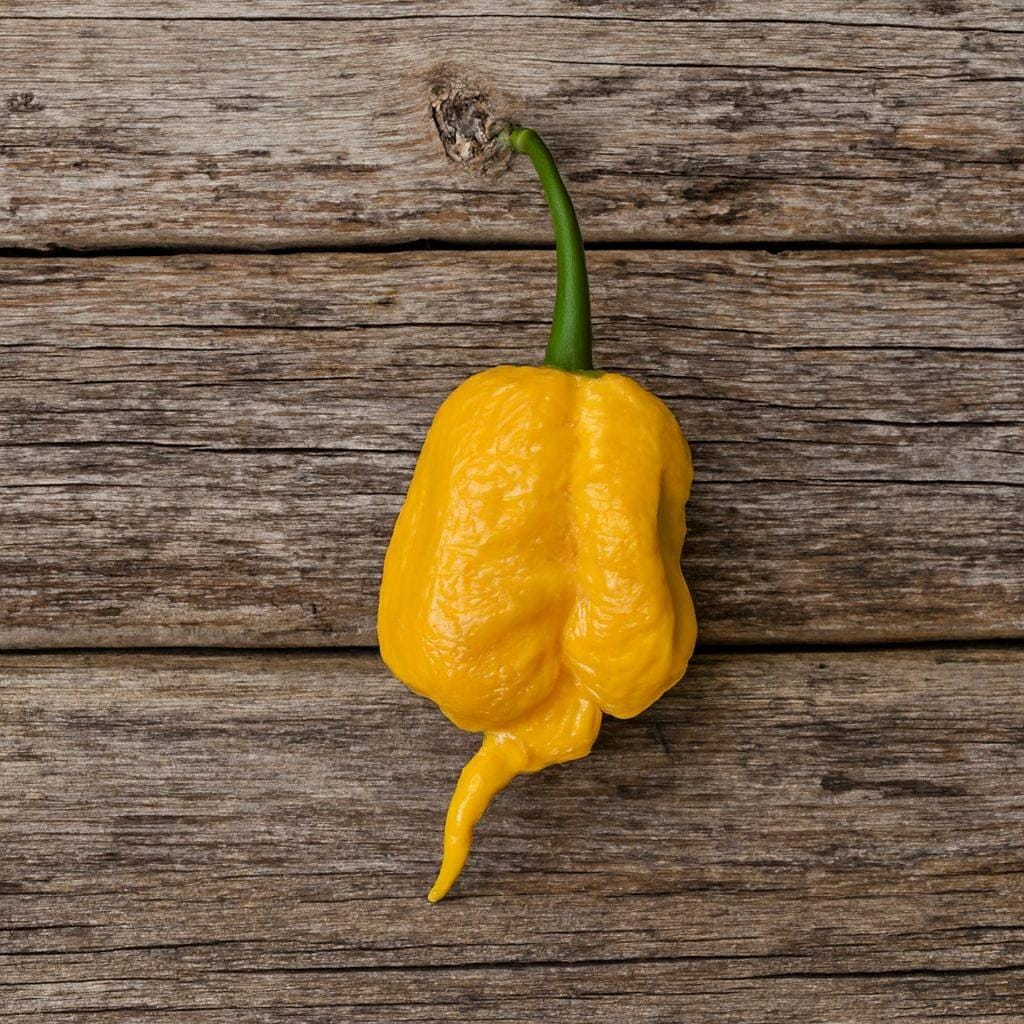
The Golden Reaper is celebrated for its visual appeal and extreme heat. Its golden-mustard hue and blistered skin make it a standout in ornamental gardens and superhot grow-outs. The cultivar is favored by artisan sauce makers for its tropical flavor notes and by collectors for its rarity and aesthetic impact.
Its burn profile is intense and layered:
• The initial sting is sharp and immediate
• The heat builds slowly, activating the throat and sinuses
• The burn lingers, often described as “molten” and “creeping”
This makes it ideal for:
• Ultra-hot sauces with tropical fruit bases
• Fermented blends with citrus, tamarind, or molasses
• Powder and flake production for extreme spice blends
• Heat challenges and social media content
Flavor-wise, the Golden Reaper offers a sweet, fruity aroma with hints of citrus and floral undertones. Its pods are typically gnarled and wrinkled, often with a scorpion-like tail, and ripen from green to golden yellow.
Its popularity reflects a broader fascination with botanical extremity, culinary experimentation, and visual storytelling in the pepper community.
Lineage / Hybridizer History
Parentage:
• Carolina Reaper: Capsicum chinense; Guinness-certified superhot with fruity sweetness and explosive heat
• Peach Carolina Reaper or Yellow Reaper lines: Capsicum chinense; lighter pigmentation and tropical flavor
Breeders selected for:
• Golden-mustard coloration
• High capsaicin concentration
• Wrinkled pod texture with stinger tails
• Flavor balance between sweetness, citrus, and fire
Stabilization Status:
Unstable hybrid, typically in F4–F6 generations. Traits may vary across plants, including pod shape, color depth, and heat intensity.
Heat Profile
Scoville Rating (SHU):
1,500,000–2,000,000 SHU
Perceived Heat: Superhot
Heat Characteristics:
Aggressive and long-lasting. The burn begins with a sharp sting and intensifies over time, spreading across the palate and into the throat. Not suitable for casual use—gloves and ventilation are recommended during handling.
Flavor Profile
Tasting Notes:
Fruity, tropical, and slightly floral. Notes of citrus, mango, and apricot are present beneath the heat.
Aftertaste / Finish:
Lingering fire with a dry, sweet finish and subtle bitterness
Ideal Pairings:
• Fermented sauces with pineapple, tamarind, or guava
• Extreme hot sauces for collectors and heat challenges
• Pickled with garlic and vinegar
• Infused oils for heat-forward marinades
• Powdered for ultra-hot spice blends
Fruit Characteristics
Shape:
Wrinkled, gnarled pods with frequent stinger tails
Size:
4–6 cm long, 2–3 cm wide
Color Stages:
• Immature: Green
• Ripe: Golden yellow
• Overripe: May deepen to mustard or ochre
Wall Thickness:
Medium
Texture & Skin:
Deeply blistered and contorted; glossy and firm
Plant Details
Growth Habit:
Bushy and upright
Plant Height & Width:
Height: 90–120 cm
Width: 60–80 cm
Foliage:
Dark green, slightly crinkled leaves
Flower Color:
White
Days to Maturity:
100–120 days from transplant
Yield:
Moderate – typically 30–50 pods per plant under optimal conditions
Cultivation Information
Seed Count per Pack: 10 seeds
Germination Time: 7–14 days (Germinating Chilli Seeds)
Optimal Germination Temp: 26–32°C (Essential guide to ideal temperatures and humidity for chilli seed germination)
Light Requirements: Filtered sun
Soil Preferences:
• pH: 6.2–6.8
• Rich, well-draining loam (Easy DIY soil mixes)
• Benefits from compost and potassium-rich feeding
Storage Tips:
Store seeds in a cool, dry place. Refrigeration at 4–8°C extends viability. Avoid humidity and direct light.
Notable Compounds
Capsaicinoid Content:
Extremely high levels of capsaicin and dihydrocapsaicin; heat concentrated in placenta and seeds
Volatile Flavor Compounds:
Limonene, vanillin, and pyrazines contribute to fruity and smoky aroma
Pigments:
Golden coloration driven by carotenoids such as capsanthin and capsorubin
Culinary & Cultural Use
Traditional Uses:
Not used traditionally due to its modern hybrid origin. Primarily grown for artisan sauces, fermentation, and heat-forward culinary experimentation
Raw vs Cooked Flavor:
Raw pods are fruity and floral with overwhelming heat. Cooking softens bitterness and enhances depth. Fermentation adds complexity and balance.
Regional Dishes:
• Caribbean-style pepper mashes
• Southeast Asian sambals with tropical fruit
• Mexican-style mole-inspired blends
• Artisan hot sauces with layered burn
Storage / Drying / Preserving Tips:
• Ideal for fermentation and sauce-making
• Can be dried whole or sliced
• Powdered form retains heat and flavor for seasoning blends



Reviews
There are no reviews yet.