
Description
Easter Egg Radish Seeds
Cultivar Details
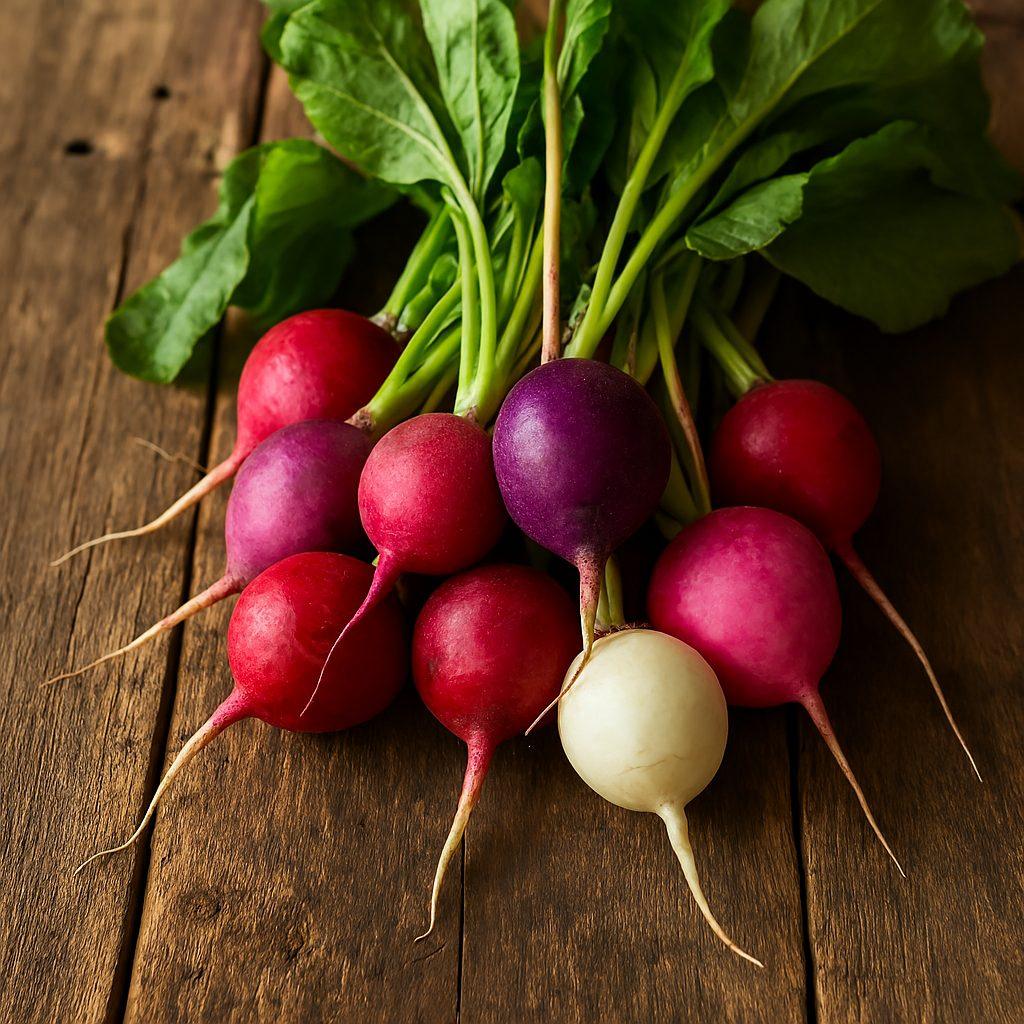
Easter Egg Radish is an eye-catching, fast-maturing salad radish cultivar prized for its multicolored bulbs, crisp texture, and dependable germination. It produces a mix of round to slightly oval roots in shades of white, pink, red, and purple, creating a visually striking harvest that elevates market stalls, farmers’ markets, and home gardens. This open-pollinated variety is favored for uniform size, tender flesh, and a consistent bite that appeals to chefs, home cooks, and growers seeking high-turnover, high-appeal crops.
Origin and Lineage
Easter Egg Radish descends from traditional European and Asian radish lines selected for rapid growth, attractive coloration, and flavor balance. Over successive generations, growers stabilized this mixture to maintain a predictable blend of colours and reliable days-to-harvest. As an open-pollinated heirloom mix, it can be saved by careful seed stewards who isolate flowering plants and follow selection protocols to preserve true-to-type traits. Consequently, Easter Egg Radish links heritage seed stewardship with modern small-scale market demands.
Flavor and Culinary Profile
Easter Egg Radish offers a crisp, peppery bite that mellows when roasted, grilled, or lightly sautéed. Raw, it provides a refreshing crunch and a bright, slightly peppery finish that lifts salads, slaws, and crudité platters. When lightly pickled, the radishes retain vivid colour while gaining a tangy complexity that complements charcuterie and hearty mains. Moreover, leaves are edible and tender when young, adding mild, mustardy greens to soups and stir-fries. Overall, this cultivar balances visual drama with versatile culinary potential.
Plant Characteristics
Easter Egg Radish Plants form compact rosettes of lanceolate, medium-green leaves that support rapid root development. Roots are generally 2–4 cm in diameter for optimal marketable baby radishes and may reach slightly larger sizes if left longer in the ground. The root skin is smooth and brightly pigmented; flesh remains crisp and white or faintly tinted depending on the colour variety. Plants display strong vigor in well-prepared beds and tolerate close spacing, enabling succession plantings and high-density production systems.
Seed Pack Details
Easter Egg Radish Seed packs contain 30 seeds. Seeds are untreated and open-pollinated.
Germination and Propagation
Easter Egg Radish germinates quickly, typically within 3–7 days under optimal conditions. Sow seeds thinly at 1–2 cm depth and keep soil consistently moist to encourage even emergence. For staggered harvests, succession sow every 7–10 days. While radishes are easily direct-sown for best root development, transplanting is possible when seedlings are handled gently; however, root distortion can occur if seedlings are disturbed. Pre-soaking is generally unnecessary but may speed germination in cool soils.
Soil and Water Requirements
The Easter Egg Radish prefers loose, fertile, well-drained soil with a pH range of 6.0–7.0. Heavy, compacted soils should be amended with compost and sand to promote straight roots and minimize stress. Consistent moisture is crucial; provide even watering to avoid woody, pithy roots and split skin. Mulching conserves moisture, stabilises soil temperatures, and reduces weed pressure. Avoid over-fertilisation with high nitrogen, which can produce lush tops at the expense of root development.
Light and Climate Requirements
Easter Egg Radish thrives in full sun but tolerates light afternoon shade in hot climates. Cool-season crops perform best when daytime temperatures range between 10°C and 20°C. In temperate regions, sow in early spring and autumn for peak texture and flavour, while mild winter areas can support year-round production with appropriate shade and irrigation. Rapid growth in cooler weather enhances colour intensity and reduces the tendency to bolt.
Crop Calendar and Days to Harvest
Expect harvestable baby Easter Egg Radishes in as little as 21–30 days from sowing, while larger roots mature at 30–45 days depending on conditions. For continuous supply, sow successions every 7–10 days during the growing season. In commercial settings, plan staggered sowings across beds to create daily or weekly harvest windows and optimise labour. Early-morning harvests preserve crispness and extend shelf life.
Yield and Harvest Notes
Yields vary by spacing and management but typically range from 1.5–3 kg per square metre in well-maintained beds. Harvest when roots are uniformly sized and skin is taut; gentle lifting or twisting avoids damage. Trim tops to 1–2 cm above the bulb for market presentation and to extend storage. For baby radish markets, harvest at the smaller end of the size range to maximise tenderness and visual appeal.
Pests, Diseases and Management
Common pests include flea beetles, root maggots, and aphids. Employ integrated pest management practices: row covers for seedling protection, beneficial insect habitat, and targeted organic controls when thresholds are exceeded. Diseases such as downy mildew and Cercospora leaf spot can occur in damp conditions; maintain airflow through spacing, rotate crops, and avoid overhead watering. Seed sanitation and field hygiene reduce pathogen carryover between seasons.
Companion Planting and Ecological Use
Easter Egg Radish pairs well with lettuce, spinach, and peas as a quick-turn companion crop that breaks up soil crust and suppresses weeds. It is also an effective trap crop for flea beetles when planted near brassicas. Flowering radish bolsters pollinator resources; meanwhile, radish roots improve soil structure through bio-drilling when incorporated as a green manure in rotation systems.
Culinary, Medicinal and Nutritional Uses
Radishes are rich in vitamin C, potassium, and fiber, offering low-calorie nutritional benefits. The sharp, peppery compounds aid digestion in culinary traditions worldwide. Fresh, pickled, or roasted, Easter Egg Radish provides antioxidant pigments and breath‑cleansing flavours. Leaves are a source of micronutrients and can be cooked like other leafy greens for soups and sautés.
Preservation and Storage
Store trimmed radishes in a cool, high-humidity environment at 0–4°C to maintain crispness for 1–2 weeks. For longer storage, blanch and freeze slices or ferment whole or halved roots into quick pickles that retain colour and crunch. Always label preserved batches with harvest date and seed pack batch code for traceability in commercial and seed-saving operations.
Notable Compounds and Chemistry
Easter Egg Radish contains glucosinolates and isothiocyanates that contribute to its characteristic pungency and potential antimicrobial properties. Additionally, pigments such as anthocyanins and betalains provide antioxidant activity and the vibrant colours that make this cultivar particularly attractive for culinary and value-added products.


Reviews
There are no reviews yet.