
Description
Red Creole Onion Seeds
Cultivar Details
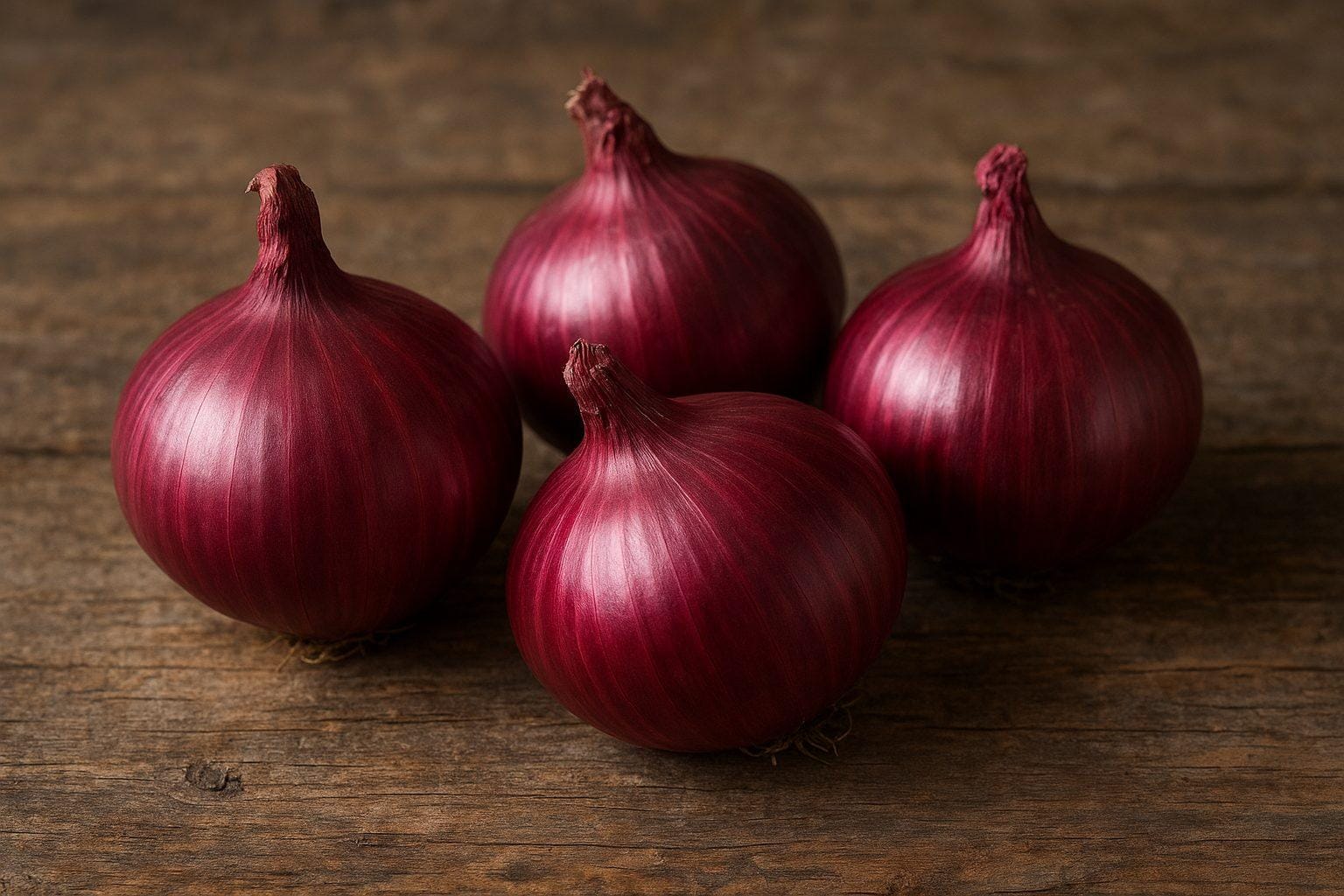
Red Creole Onion is an heirloom short-day red onion prized for its vibrant color, crisp texture, and robust storage life. This cultivar produces medium to large, slightly flattened globes with glossy, deep-purple skins and firm, mild-to-sharp flesh. It is valued by home gardeners, market growers, and culinary professionals for reliable bulb set, consistent sizing, and versatility across fresh, cooked, and preserved applications. The seeds offered are untreated, true-to-type, and ideal for both direct sowing and nursery starts.
Origin and Lineage
Red Creole Onion traces its lineage to Creole onions historically grown in Gulf Coast and southern port regions, where mild winters and humid summers shaped resilient, flavorful cultivars. Over generations, growers selected for color intensity, storage potential, and adaptability to warm climates. Consequently, Red Creole carries genetic traits that blend heat tolerance with excellent bulb formation under short-day conditions. Seed lines have been preserved through careful selection and seed-saving practices to maintain cultivar integrity and heirloom characteristics.
Flavor and Culinary Profile
Red Creole onions offer a bright, sweet-crisp bite when raw, transitioning to a mellow, richly savory profile when cooked. Their pungency is pronounced fresh, making them excellent in salsas, salads, and pickles where color and crunch are desired. When sautéed or roasted, they develop caramelized sweetness and complexity suited to braises, stews, and gratins. Because pigments concentrate near the skin, Red Creole delivers striking color to relishes and pickled condiments without overpowering other ingredients. Chefs prize this cultivar for its balance of sharpness and sweetness and for how well it holds texture during cooking.
Plant Characteristics
Red Creole Onion Plants form robust, upright tops with blue-green, waxy leaves that indicate good vigor and disease resistance. Bulb shape is generally flattened but uniform, with average mature diameters of 6–9 cm depending on spacing and fertility. Tops typically fall over naturally when bulbs reach physiological maturity, signaling the harvest window. Red Creole displays good neck closure for curing and is less prone to bolting in mild autumns. This cultivar responds well to fertility management and consistent irrigation, producing tight, well-formed bulbs under optimal conditions.
Seed Pack Details
- Contents: Approx. 100 untreated, open-pollinated Red Creole onion seeds per archival packet.
- Germination Rate: Typically ≥80% when stored and sown under recommended conditions.
Germination and Propagation
Red Creole Onion Seeds germinate reliably when soil temperatures are maintained between 15°C and 24°C. Germination usually occurs within 7–14 days depending on temperature and seed-soil contact. Seeds can be sown directly into the garden in autumn for overwintering bulbs in mild climates or started indoors 8–10 weeks before transplanting for cooler regions. When raised in trays, seedlings should be hardened off and transplanted at the 4–6 leaf stage. Spacing of 10–15 cm within rows and 30–40 cm between rows supports optimal bulb development and airflow.
Soil and Water Requirements
Red Creole Onion thrives in fertile, well-drained loamy soil with a pH of 6.0–7.0. Soil preparation should include generous organic matter such as compost or well-rotted manure to ensure steady nutrient release. Onions demand regular moisture during bulbing; therefore consistent irrigation is required to avoid split bulbs and irregular sizing. However, waterlogged conditions are detrimental and will promote rot and nutrient leaching. Mulching reduces surface evaporation, stabilizes soil temperature, and suppresses weeds, thereby improving bulb uniformity.
Light and Climate Requirements
The Red Creole Onion performs best in full sun with at least 6–8 hours of direct sunlight daily. Red Creole is adapted to short-day photoperiods, which initiate bulbing as day length shortens. It handles warm, humid conditions better than many long-day varieties, making it suitable for subtropical and Mediterranean climates. Conversely, extremely high temperatures during bulbing can reduce storage life, so timely planting and irrigation management are essential to preserve bulb quality.
Crop Calendar and Days to Harvest
- Sow indoors: 8–10 weeks before last frost for transplanting.
- Direct sow: Late summer to early autumn in milder zones.
- Transplant: After seedlings reach 4–6 true leaves and risk of frost has passed.
- Days to harvest: Typically 100–150 days from sowing depending on climate and whether bulbs are grown from sets or transplants.
- Harvest indicator: Tops naturally fall over and begin to yellow; bulbs are firm and necks are tight.
Yield and Harvest Notes
Under optimal care, expect consistent yields of medium to large bulbs per square metre, variable by spacing and fertility regimes. For fresh market sales, bulbs can be graded by size for premium pricing; for processing and pickling, smaller uniform bulbs are often preferred. After harvest, bulbs should be cured for 2–3 weeks in warm, dry, well-ventilated conditions to close necks and harden skins. Proper curing significantly extends storage life, which is typically 4–6 months under cool, dry conditions.
Pests, Diseases and Management
Common pests include onion thrips, onion maggots, and aphids. Integrated pest management strategies such as reflective mulches, sticky traps, and timely biological control can reduce pressure. Diseases of concern include downy mildew, purple blotch, and basal rot. Disease risk is minimized through crop rotation, raised beds for improved drainage, and avoiding overhead irrigation during humid periods. Resistant seed lines should be selected where local pressures are high, and seed beds must be monitored for early symptoms to allow rapid intervention.
Companion Planting and Ecological Use
Red Creole Onion benefits from companion plants such as carrots, beets, and chamomile, which can enhance flavor and reduce pest incidence. Avoid planting near legumes or peas that may compete for early-season nutrients. Onions act as a deterrent to many garden pests due to their sulfurous volatiles and can be interplanted as a protective barrier. Furthermore, their flowering stalks support pollinators and beneficial insects when allowed to bolt for seed or left to flower in a seed-saving rotation.
Culinary, Medicinal and Nutritional Uses
Red Creole onions are rich in vitamin C, flavonoids such as quercetin, and organosulfur compounds that contribute to antioxidant activity. They support immune health and add depth to countless culinary applications from raw salads and salsas to caramelized mains and preserved condiments. Medicinally, traditional uses emphasize their expectorant and circulatory-supporting properties, while modern nutrition highlights their role in heart health and anti-inflammatory diets.
Preservation and Storage
For best storage, cured bulbs are kept at 0–4°C with low humidity in a ventilated environment. Short-term storage can be achieved at cool room temperatures for several weeks. For long-term preservation, bulbs may be braided or stored in mesh bags to allow airflow. Pickling and fermenting are effective preservation methods that retain color and add shelf-stable utility for months.
Notable Compounds and Chemistry
Red Creole Onion contains high levels of flavonoids and sulfur-containing compounds such as allyl sulfides and thiosulfinates, which yield both health benefits and characteristic pungency. Anthocyanin pigments in the outer scales provide the vivid red-purple coloration and act as antioxidants. Thermal processing alters the profile of sulfur compounds, usually reducing pungency while enhancing perceived sweetness.

Reviews
There are no reviews yet.