
Description
Product Name: Deadpool
Cultivar Name: Deadpool
Species: Capsicum chinense
Common Names: Deadpool Pepper
Type: Hybrid
Origin & Lineage
Geographic Origin:
The Deadpool pepper is a modern superhot cultivar developed in the United States, though its popularity has spread rapidly across Europe and South Africa. It was bred by Jeff Remmert, a respected grower known for his work with extreme heat varieties. While the cultivar is not native to any specific region, its genetic roots trace back to the Caribbean and South Asia through its parent lines, which include the Naga Viper and Naga Bubblegum. These ancestral varieties were originally cultivated in the United Kingdom and India, respectively, and have contributed significantly to the global superhot chili movement.
Cultural Significance:
Although Deadpool is not associated with traditional culinary or ritual use, it has become a symbol of modern chili culture. Its name, inspired by the comic book antihero, reflects the pepper’s aggressive heat and unpredictable nature. In chili festivals and online communities, Deadpool is often showcased for its extreme pungency and dramatic pod morphology. It has also been used in competitive eating challenges and artisanal hot sauce production, where its intensity is both feared and celebrated.
Lineage / Hybridizer History:
Deadpool was developed by Jeff Remmert through selective breeding of superhot Capsicum chinense lines. The cultivar is believed to be a hybrid of Naga Bubblegum and Naga Viper, both of which are known for their high Scoville ratings and distinctive pod shapes. The breeding process involved isolating plants with desirable traits—such as wrinkled skin, stinger tails, and high capsaicinoid content—and stabilizing them over several generations. While the exact filial generation is not publicly documented, growers report moderate stability in pod shape and heat intensity, suggesting it is at least F4 or F5.
Heat Profile
Scoville Rating (SHU):
Estimated between 1,000,000 and 2,000,000 SHU. Some reports suggest it may exceed 2,000,000 SHU under optimal conditions.
Perceived Heat:
Superhot (500,000 or more SHU)
Heat Characteristics:
The burn from Deadpool is immediate and unforgiving. Unlike some superhots that build slowly, Deadpool delivers a frontal assault on the palate, with heat concentrated in both the flesh and placenta. The sensation is sharp, throbbing, and long-lasting, often described as overwhelming even by seasoned chili enthusiasts. When dried or fermented, the heat becomes more rounded but remains intense. Handling should always be done with gloves and protective eyewear, as the oils can cause skin irritation.
Flavor Profile
Tasting Notes:
Despite its aggressive heat, Deadpool offers a surprisingly complex flavor. The initial bite reveals fruity and floral notes, with hints of citrus and tropical fruit. These flavors are most noticeable when the pepper is used fresh or lightly roasted. The sweetness is subtle but present, providing a brief contrast before the heat dominates.
Aftertaste / Finish:
The finish is dry and slightly bitter, with lingering floral undertones. When fermented, the bitterness softens and the umami profile deepens. Roasting enhances the smoky character, while pickling preserves the fruitiness.
Ideal Pairings:
- Fermented hot sauces with mango or pineapple
- Roasted chili pastes for grilled meats
- Infused oils for spicy marinades
- Spicy chutneys and relishes
- Extreme heat blends for competitive sauces
Fruit Characteristics
Shape:
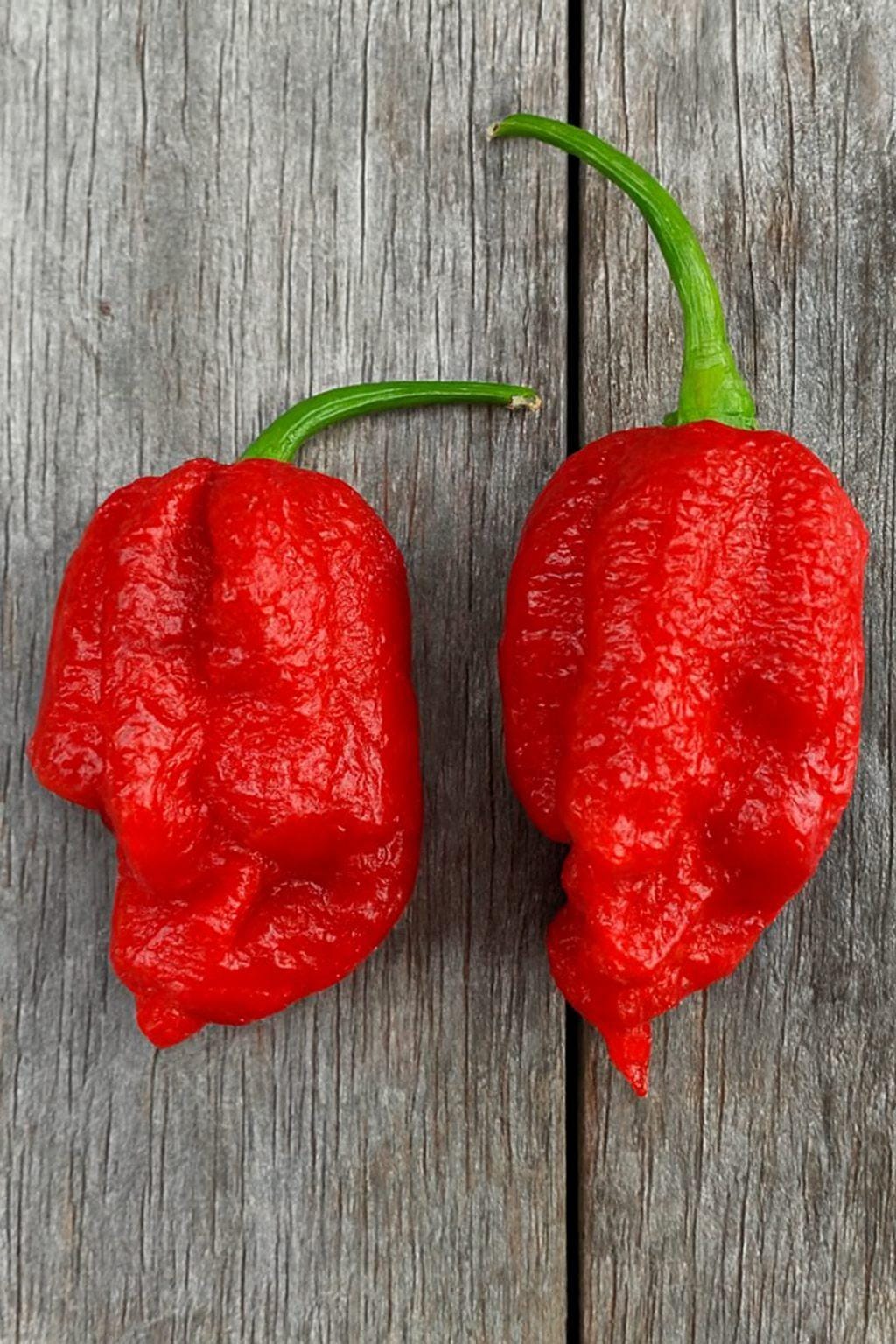
Twisted, wrinkled, and often featuring a stinger tail. The pods resemble a cross between the 7-Pot Brain Strain and Naga Viper.
Size:
Approximately 4–5 cm long, 2–2.5 cm in diameter
Color Stages:
Immature: green → Ripe: deep red
Wall Thickness:
Medium
Texture & Skin:
Bumpy and blistered, with pronounced folds and ridges. The skin is firm and slightly glossy when ripe.
Plant Details
Growth Habit:
Bushy and moderately compact. Plants tend to branch heavily and may require staking due to pod weight.
Plant Height & Width:
Height: 80–100 cm
Width: 60–90 cm
Foliage:
Dark green, slightly pubescent
Flower Color:
White with occasional purple striping under stress
Days to Maturity:
100–120 days from transplant
Yield:
Moderate to High – plants can produce 40–60 pods under optimal conditions. Yield may vary depending on climate and soil fertility.
Cultivation Information
Seed Count per Pack:
5 or 10 seeds (Presoaking Chilli Seeds)
Germination Time:
10–14 days (Germinating Chilli Seeds)
Optimal Germination Temp:
25–30°C (Essential guide to ideal temperatures and humidity for chilli seed germination)
Light Requirements:
Filtered sun
Soil Preferences:
Prefers well-draining soil with a pH of 6.2–6.8, enriched with compost and perlite for aeration (Easy DIY soil mixes)
Storage Tips:
Store seeds in airtight containers in a cool, dry environment. Refrigeration is recommended for long-term viability. Avoid exposure to humidity and direct light.
Notable Compounds
Capsaicinoid Content:
High concentrations of capsaicin and dihydrocapsaicin are present, contributing to the cultivar’s superhot classification. These compounds are responsible for the intense burn and potential endorphin release experienced during consumption.
Volatile Flavor Compounds:
Limonene and vanillin may be present in trace amounts, contributing to the fruity and floral aroma. These compounds become more noticeable when the pods are roasted or fermented.
Anthocyanins / Pigments:
No significant anthocyanin presence; the red coloration is primarily due to carotenoids such as capsanthin and capsorubin.
Culinary & Cultural Use
Traditional Uses:
Deadpool is not part of any traditional culinary canon but has found its place in modern hot sauce production and competitive chili events. Its extreme heat makes it suitable for small-batch sauces, infused oils, and spice blends intended for experienced consumers.
Raw vs Cooked Flavor:
Raw pods deliver a sharp, floral heat with fruity undertones. Cooking—especially roasting or grilling—enhances the sweetness and reduces bitterness. Fermentation deepens the flavor, introducing tang and umami. Pickling softens the heat and preserves the pod’s visual appeal.
Regional Dishes:
While no named dishes specifically feature Deadpool, it has been used in:
- Artisan hot sauces
- Spicy fruit chutneys
- Fermented chili pastes with garlic and mango
- Roasted chili rubs for jerk-style meats
Storage / Drying / Preserving Tips:
Due to its medium wall thickness, Deadpool dries effectively in dehydrators or low-humidity environments. For fermentation, pods should be sliced and submerged in brine with aromatics. Freezing is suitable for short-term preservation, though it may affect texture.



Reviews
There are no reviews yet.