
Description
Product Name: Albino Bullnose
Cultivar Name: Albino Bullnose
Species: Capsicum annuum
Common Names: Albino Bullnose, White Bullnose, Cream Bell
Type: Heirloom
Origin & Lineage
Geographic Origin:
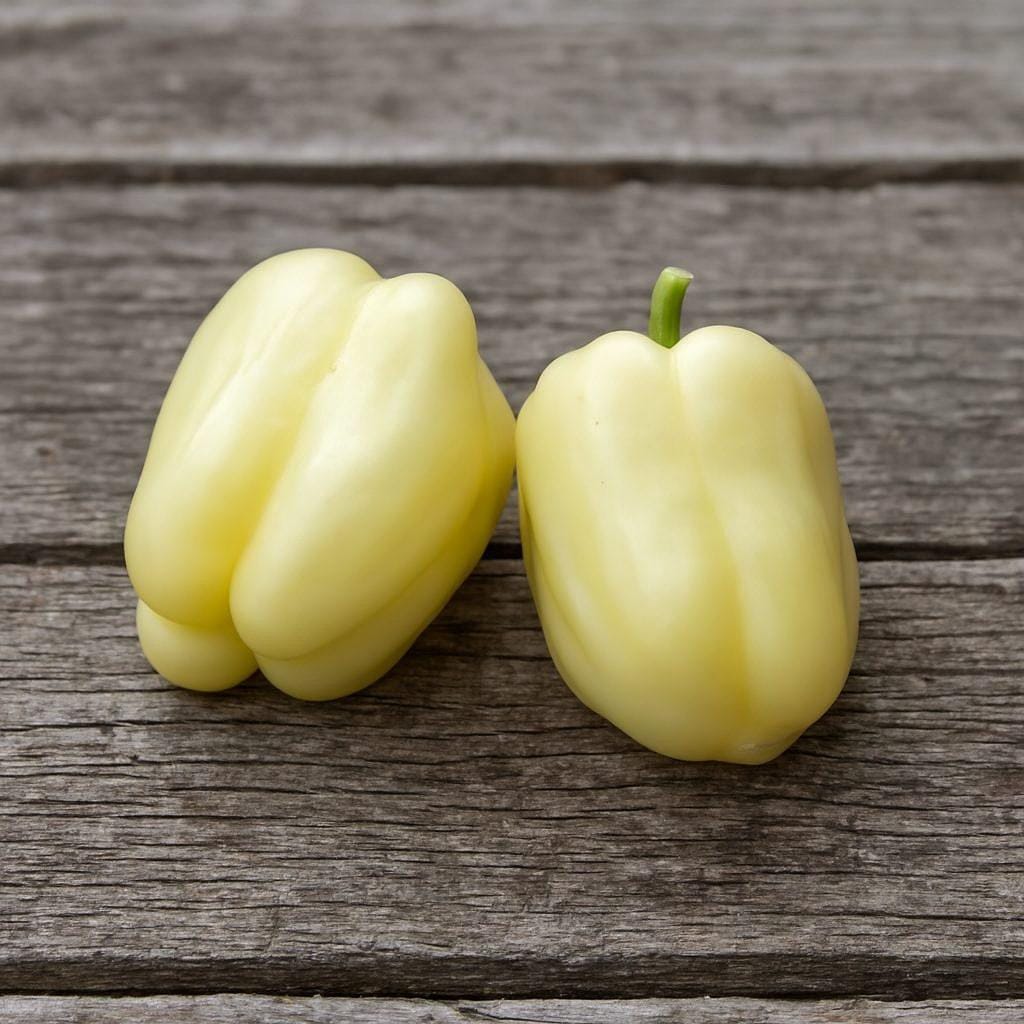
Albino Bullnose is a rare heirloom cultivar believed to have originated in the United States, though its precise lineage remains undocumented. It is a stabilized variant of the classic Bullnose bell pepper, historically grown in American gardens since the 18th century. The “albino” designation refers to its bone-white immature fruit, a trait that distinguishes it from standard bell types.
Cultural Significance:
This cultivar is favored by heirloom chefs and growers for its unusual coloration, compact growth habit, and mild, sweet flavor. It is often grown in small gardens and containers, and has gained popularity through seed exchanges and specialty catalogs such as Baker Creek Heirloom Seeds.
Lineage / Hybridizer History
Parentage:
Likely derived from Bullnose bell pepper selections; no known hybridization records
Hybridizer:
Unknown; maintained through open-pollinated seed saving
Selected Traits:
• Cream-colored immature fruit
• Thick-walled, blocky bell shape
• Mild sweetness with crisp texture
• Compact dwarf growth habit
• High ornamental and culinary value
Stabilization Status:
Stable heirloom. True to type across generations. Minor variation may occur due to open pollination.
Heat Profile
Scoville Rating (SHU): 0–50 SHU
Perceived Heat: None to trace
Heat Characteristics:
Albino Bullnose is a non-pungent sweet pepper, with no detectable heat for most palates. Occasionally, trace capsaicinoids may be present in the placenta, but the fruit is considered safe for sensitive eaters and children.
Flavor Profile
Tasting Notes:
Mild and sweet with hints of melon, green apple, and fresh corn. The flavor is clean and crisp, with a subtle tang that intensifies as the fruit ripens to orange-red.
Aftertaste / Finish:
Light vegetal finish with a faint citrus lift
Ideal Pairings:
• Raw in salads and slaws
• Stuffed with grains, cheese, or meats
• Roasted for soups and sauces
• Grilled for smoky sweetness
• Pickled in brine or vinegar
Fruit Characteristics
Shape:
Blocky bell with 3–4 lobes
Size:
7–10 cm long, 5–7 cm wide
Color Stages:
• Immature: Bone white to creamy ivory
• Mid-stage: Pale yellow to orange
• Ripe: Reddish-orange
Wall Thickness:
Thick
Texture & Skin:
Smooth, glossy skin with crisp, juicy flesh. Excellent for stuffing, roasting, and slicing.
Plant Details
Growth Habit:
Compact bush
Plant Height & Width:
Height: 55–75 cm
Width: 25–35 cm
Foliage:
Dark green, ovate leaves with tight canopy
Flower Color:
White
Days to Maturity:
65–85 days from transplant
Yield:
Moderate to high — typically 10–20 fruits per plant under optimal conditions
Albino Bullnose is well-suited to container gardening, raised beds, and small-space cultivation. Its compact size and ornamental fruit make it ideal for edible landscaping.
Cultivation Information
Seed Count per Pack: 10 seeds
Germination Time: 7–14 days (Germinating Chilli Seeds)
Optimal Germination Temp: 21–29°C (Essential guide to ideal temperatures and humidity for chilli seed germination)
Light Requirements: Filtered sun (6+ hours daily)
Soil Preferences:
• pH: 6.0–6.8
• Rich, well-draining loam (Easy DIY soil mixes)
• Benefits from compost and phosphorus-rich feeding
Watering:
Keep soil evenly moist. Avoid waterlogging. Mulch to retain moisture and suppress weeds.
Fertilization:
Apply low-nitrogen, high-phosphorus and potassium fertilizer every 2–3 weeks. Excess nitrogen may reduce fruiting.
Support:
Staking optional; fruit typically held above ground due to compact habit
Pruning:
Pinch early growth to encourage branching. Remove lower leaves to improve airflow.
Storage Tips:
Store seeds in a cool, dry place. Refrigeration at 4–8°C extends viability. Avoid humidity and light exposure.
Notable Compounds
Capsaicinoid Content:
Negligible
Volatile Flavor Compounds:
Hexenal, linalool, and esters contribute to fruity aroma
Pigments:
Coloration driven by carotenoids including beta-carotene and capsanthin
Nutritional Value:
High in vitamin C, vitamin A, and dietary fiber
Culinary & Cultural Use
Traditional Uses:
Used in American and European cuisine for fresh eating, stuffing, and roasting. Its pale color adds visual contrast to mixed pepper dishes.
Raw vs Cooked Flavor:
Raw: Crisp, juicy, and mildly sweet
Cooked: Intensified sweetness with softened texture
Regional Dishes:
• Cream pepper slaw with vinaigrette
• Stuffed Albino Bullnose with quinoa and feta
• Roasted pepper bisque
• Grilled pepper skewers with herbs
• Pickled rings for antipasto platters
Storage / Drying / Preserving Tips:
• Best used fresh or roasted
• Can be frozen whole or sliced
• Suitable for pickling
• Not ideal for drying due to thick walls


Reviews
There are no reviews yet.