
Description
Aji Naranja
Product Name: Aji Naranja
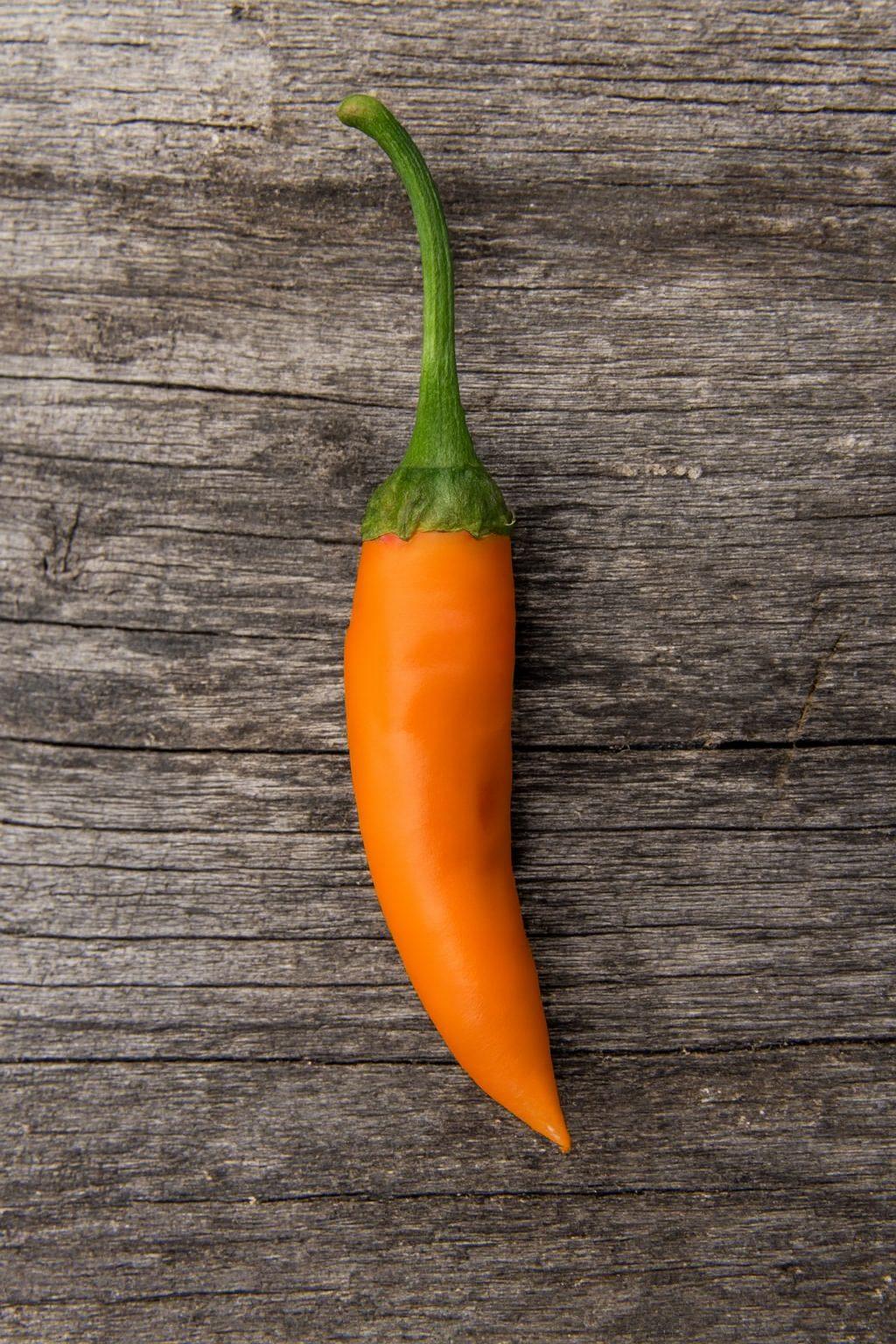
Aji Naranja is a semi-stable hybrid cultivar within the Capsicum baccatum species, known for its vivid orange pods, citrus-forward flavor, and moderate heat. This variety was developed through intentional backcrossing between an Ethiopian tree pepper and the well-known Aji Lemon, resulting in a pepper that retains the brightness of its lemon lineage while introducing new aromatic depth. Aji Naranja is prized for its culinary versatility, ornamental appeal, and reliable productivity, making it a standout choice for growers seeking both flavor and visual impact.
Cultivar Name: Aji Naranja
Species: Capsicum baccatum
Common Names: None
Type: Hybrid
Origin & Lineage
Geographic Origin:
Aji Naranja was created in South Africa, though its genetic roots trace back to South America. The Ethiopian tree pepper, one of its progenitors, is native to East Africa and known for its tall growth and pungent fruit. The Aji Lemon, its other parent, originates from Peru and is a staple in Andean cuisine. The hybridization and subsequent backcrossing were conducted by South African Hybridizer Tony Lague, who selected for citrus aroma, pod uniformity, and Lush foliage.
Cultural Significance:
While Aji Naranja itself is a modern cultivar, its parentage carries deep cultural weight. Aji Lemon is widely used in Peruvian dishes such as ají de gallina and papa a la huancaína, and Ethiopian peppers have long been incorporated into spice blends like berbere. The fusion of these lineages reflects a broader trend in global pepper breeding—where culinary heritage meets horticultural innovation. Though no ritual use is documented for Aji Naranja, its vibrant color and aromatic profile have made it a favorite in celebratory dishes and garden showcases.
Lineage / Hybridizer History:
Aji Naranja was developed by Tony Lague through a multi-generational breeding program. The initial cross combined an Ethiopian tree pepper with Aji Lemon, followed by a backcross to Aji Lemon to reinforce citrus notes and stabilize pod morphology. Currently classified as an F6 semi-stable hybrid, Aji Naranja continues to exhibit some phenotypic variation, particularly in pod size and foliage pigmentation. Nonetheless, its core traits—orange color, citrus aroma, and medium heat—remain consistent across most plants.
Heat Profile
Scoville Rating (SHU): 20,000–30,000 SHU
Perceived Heat: Medium (1,000 to 15,000 SHU)
Heat Characteristics:
Aji Naranja delivers a clean, ascending heat that builds gradually and fades evenly. The burn is concentrated in the placental tissue and inner walls, with minimal bitterness. When consumed raw, the heat is sharp but not overwhelming, making it suitable for fresh salsas and garnishes. Cooking tends to mellow the pungency, allowing the citrus notes to dominate. The heat is often described as “playful,” offering warmth without overpowering the palate.
Flavor Profile
Tasting Notes:
Bright citrus dominates the initial flavor, with notes of lemon zest, mandarin, and green apple. A subtle floral undertone emerges mid-palate, adding complexity to the fruit-forward profile. The flavor is crisp and refreshing, especially when harvested at peak ripeness.
Aftertaste / Finish:
The finish is clean and slightly tangy, with lingering citrus oils and a gentle heat that tapers off smoothly. No harsh bitterness is present, even in raw applications.
Ideal Pairings:
- Ceviche and seafood marinades
- Fresh salsas and pico de gallo
- Pickled vegetables and relishes
- Citrus-based sauces and dressings
- Grilled chicken and lamb rubs
Fruit Characteristics
Shape: Elongated, slightly curved pods with tapered tips
Size: 5–7 cm long, 1.5–2 cm diameter
Color Stages:
- Immature: green
- Ripe: vibrant orange
Wall Thickness: Medium
Texture & Skin: Smooth with occasional wrinkling near the stem; glossy finish
Plant Details
Growth Habit: Bushy
Plant Height & Width: 60–90 cm tall, 45–60 cm wide
Foliage: Dark green with occasional purplish veining; slight pubescence on stems
Flower Color: White with greenish-yellow corolla
Days to Maturity: 80–100 days from germination
Yield: Moderate – typically 50–80 pods per plant under optimal conditions
Cultivation Information
Seed Count per Pack: 5 or 10 seeds (Presoaking Chilli Seeds)
Germination Time: 7–14 days (Germinating Chilli Seeds)
Optimal Germination Temp: 25–30°C (Essential guide to ideal temperatures and humidity for chilli seed germination)
Light Requirements: Filtered sun
Soil Preferences:
- pH: 6.2–6.8
- Well-drained loamy soil
- High organic matter content (Easy DIY soil mixes)
Storage Tips:
Store Aji Naranja seeds in airtight containers in a cool, dry place. Refrigeration at 4–8°C is recommended for long-term viability. Avoid exposure to humidity and direct light.
Notable Compounds
Capsaicinoid Content:
- Capsaicin
- Dihydrocapsaicin
These compounds contribute to the pepper’s moderate pungency and metabolic effects.
Volatile Flavor Compounds:
Anthocyanins / Pigments:
While Aji Naranja does not exhibit purple coloration, its vivid orange hue is attributed to carotenoids such as beta-carotene and capsanthin. These pigments are influenced by light exposure and ripening conditions.
Culinary & Cultural Use
Traditional Uses:
Though Aji Naranja is a modern hybrid, its flavor profile aligns with traditional uses of Aji Lemon and other baccatum cultivars. It is commonly used in:
- Ají-style sauces
- Citrus-forward salsas
- Pickled relishes
- Fermented pepper pastes
Raw vs Cooked Flavor:
Raw Aji Naranja pods offer a crisp, citrusy bite with moderate heat. Cooking enhances sweetness and reduces acidity, especially when roasted or grilled. Pickling intensifies the tang and preserves the pepper’s brightness.
Regional Dishes:
- Ají de gallina (Peru) – substitute for Aji Amarillo
- Ceviche de camarón (South American coastal)
- Chakalaka (South African fusion)
- Ají criollo (Ecuadorian condiment)
Storage / Drying / Preserving Tips:
- Air-dry whole pods in a shaded, ventilated area
- Use dehydrators at 45–50°C for consistent drying
- Store dried pods in glass jars with desiccant packs
- For fermentation, submerge sliced pods in 2% salt brine for 2–3 weeks, then refrigerate



Reviews
There are no reviews yet.