
Description
Product Name: Peppapeach Stripey
Cultivar Name: Peppapeach Stripey
Species: Capsicum baccatum
Common Names: Peppapeach Stripey
Type: Hybrid
Origin & Lineage
Geographic Origin:
The geographic roots of the Peppapeach Stripey are traced directly back to the United States and the United Kingdom through modern micro-breeding networks. This specific variant was originally discovered as a spontaneous genetic expression within specialized domestic breeding environments. Although the foundational Capsicum baccatum species is natively indigenous to the Andean region of South America, this particular striped phenotype was stabilized and propagated through extensive agricultural selection within temperate Western climates.
Cultural Significance:
While the Peppapeach Stripey lacks ancient spiritual folklore due to its recent introduction to the agricultural scene, a profound modern subculture has rapidly embraced its existence. It has achieved significant status among competitive home gardeners, rare seed collectors, and artisan hot sauce creators. The variety represents the contemporary era of collaborative open-source breeding, where community observation replaces historical folklore. It serves as a modern visual showpiece in suburban permaculture designs and sustainable edible landscapes.
Lineage / Hybridizer History:
This stunning variety was discovered in 2021 by a dedicated horticulturist named Matt Leighton. While he was growing isolated Peppapeach seeds obtained from Refining Fire Chiles, a natural mutation spontaneously manifested itself. The parent variety itself was originally stabilized by the renowned breeder Chris Fowler under the initial name Peachadew. Following its initial discovery, selective stabilization was carefully conducted over several sequential generations by Matt Leighton alongside fellow grower Rich Blood and the team at Pepper Guru. Through systematic selection of heavily variegated pods, the recessive striping trait was successfully enhanced into a relatively reliable open-pollinated line.
Heat Profile
Scoville Rating (SHU):
Estimated between 1,000 and 5,000 SHU.
Perceived Heat:
Mild (50 to 1000 SHU) to Medium (1000 to 15000 SHU), depending on growing conditions and ripeness.
Heat Characteristics:
The capsaicin distribution of this variety delivers a distinct, slow-building Capsicum baccatum burn that concentrates around the internal placenta and structural pith. Instead of an aggressive or sharp prickle, a mellow, warming sensation is gently dispersed across the palate. Furthermore, an almost numbing quality is frequently noted by experienced testers. This ensures that the heat remains completely approachable, complementing the high sugar concentration rather than masking the underlying flavor layers.
Flavor Profile
Tasting Notes:
The flavor profile is highly celebrated for its extraordinary sweetness, which is frequently compared directly to the crisp, tart brightness of a Granny Smith apple. Pronounced top notes of tropical citrus and sweet honey dominate the initial bite. These characteristics are heavily supported by subtle undertones of white grape and summer apricot. A refreshing, watery juiciness is released instantly when the thick flesh is punctured.
Aftertaste / Finish:
Once the physical flesh is consumed, a long, clean finish lingers beautifully in the mouth. The sweetness slowly transitions into a pleasant, zesty tang, ensuring that the fruitiness remains vibrant for minutes. No bitter or soapy chemical notes are left behind, which makes it an exceptional candidate for fresh snacking.
Ideal Pairings:
- This pepper is perfectly paired with soft cheeses such as fresh goat milk chèvre, creamy brie, and artisanal ricotta. It works beautifully when diced into fresh tropical mango or pineapple salsas, or when introduced to delicate seafood dishes like ceviche and grilled white fish. Because of its structural wall thickness, it is highly recommended for pickling in sweet vinegars or stuffing with savoury pork sausage and herb-infused cream cheese.
Fruit Characteristics
Shape:
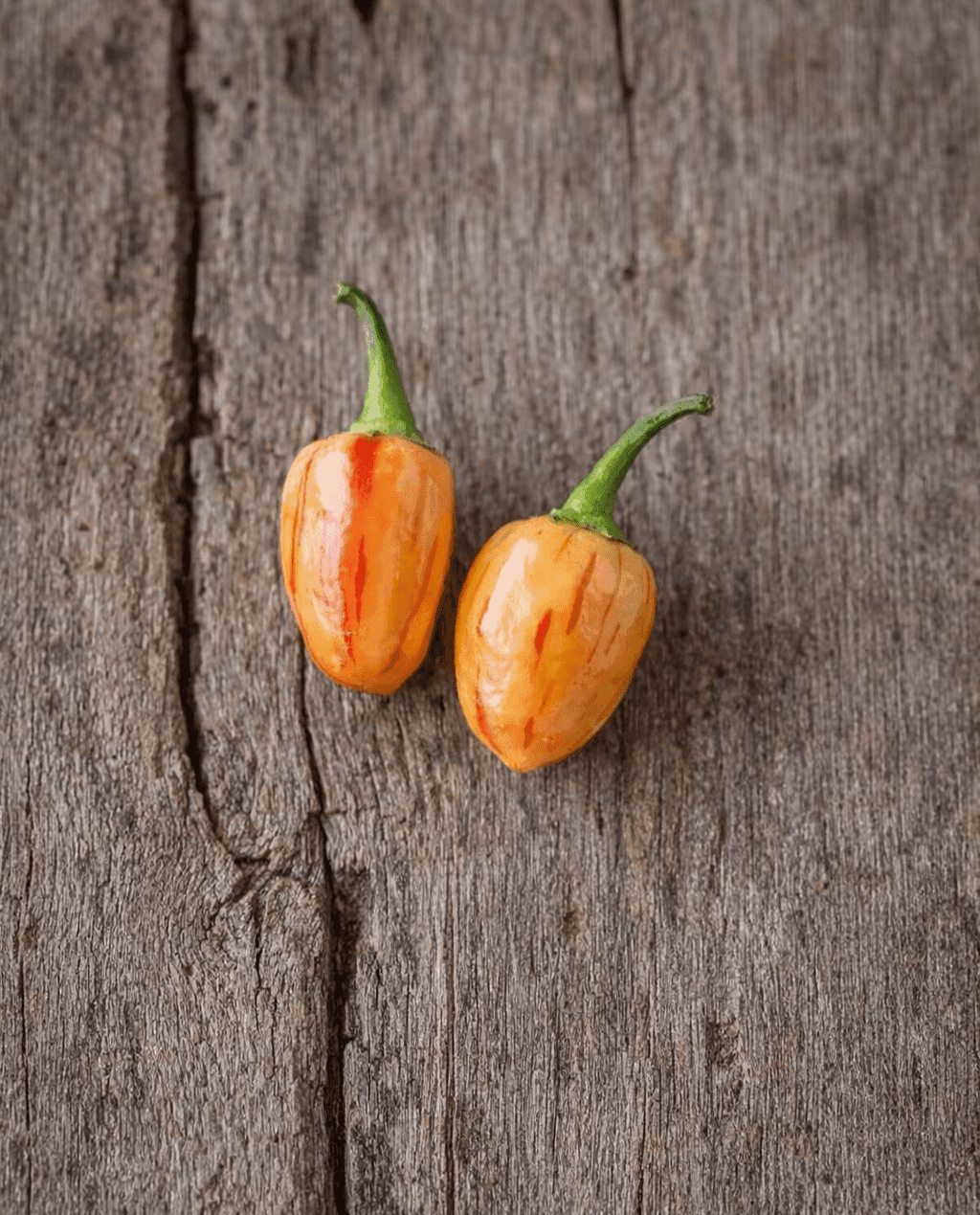
The pods exhibit an irregular, slightly elongated, and rounded pumpkin-like structure. They are frequently adorned with subtle vertical ribbing, gentle twisting, and a beautifully blunt apex.
Size:
Typically 3–7 cm long and 2.5–4 cm in diameter.
Color Stages:
Immature: pale light green → Intermediate: pastel yellow and soft peach-orange → Ripe: soft peach base adorned with intense, contrasting vertical red stripes, marbling, and digital-like crimson flecks.
Wall Thickness:
Thick
Texture & Skin:
The exterior skin is highly polished and smooth, yet it presents a slightly wavy or undulating surface texture. It maintains a substantial structural crunch that offers an incredibly satisfying physical pop when eaten fresh.
Plant Details
Growth Habit:
Tall and vine-like. The architectural structure of this plant is exceptionally robust, establishing massive base trunks to support extensive branching networks. Due to its sprawling, heavy vertical habit, heavy-duty staking, trellising, or external tomato cages must be utilized to prevent physical collapsing under the weight of ripening fruit.
Plant Height & Width:
1.8–2.4 metres tall and 1.2–1.8 metres wide when grown under optimal seasonal conditions
Foliage:
The plant produces abundant, dark green leaves that are largely glabrous but can display very light pubescence along the main structural nodes. The dense canopy serves as an excellent natural shield against sunscald for the heavy clusters of developing pods.
Flower Color:
White flowers with characteristic olive-green or soft yellow-brown markings on the interior corolla petals, which is a classic taxonomic feature of the Capsicum baccatum species.
Days to Maturity:
Approximately 95–120 days from transplant
Yield:
High – one plant has been documented to produce over 300 pods in a single season.
Cultivation Information
Seed Count per Pack:
5 or 10 seeds (Presoaking Chilli Seeds)
Germination Time:
7–14 days (Germinating Chilli Seeds)
Optimal Germination Temp:
25–30°C (Essential guide to ideal temperatures and humidity for chilli seed germination)
Light Requirements:
Filtered sun
Soil Preferences:
Prefers well-draining soil with a pH of 6.0–6.8, enriched with compost or organic matter (Easy DIY soil mixes)
Storage Tips:
Store Peppapeach Stripey seeds in airtight containers in a cool, dry place. Refrigeration is recommended for long-term viability. Avoid exposure to moisture and direct sunlight.
Notable Compounds
Capsaicinoid Content:
The chemical profile is characterized by a moderate concentration of capsaicin and a relatively low percentage of dihydrocapsaicin. This specific molecular balance is what creates the distinctively smooth, delayed warming sensation across the human nervous system rather than an immediate, sharp pain response
Volatile Flavor Compounds:
High concentrations of fruity esters, particularly hexyl acetate and various long-chain aldehydes, are synthesized within the pericarp walls. These specific compounds are directly responsible for creating the apple-like, citrusy aromatic bouquet that is released upon structural mechanical damage to the pod.
Anthocyanins / Pigments:
The unique peach base color is produced by a mixture of carotenoid pigments, specifically beta-carotene and lutein. The brilliant crimson striping and digital camo marbling are driven by a localized accumulation of anthocyanins and specific lycopene pathways. These traits are regulated by light-sensitive genes that express themselves intensely during the final stages of maturity.
Culinary & Cultural Use
Traditional Uses: Given its botanical classification, this pepper can be used as a direct substitute for traditional Peruvian Ají Amarillo or Ají Limo in various culinary preparations. It is highly valued for creating sweet gourmet hot sauces, micro-batch lacto-fermentations, artisanal fruit chutneys, and fresh, vibrant summer tableside salsas
Raw vs Cooked Flavor:
When consumed entirely raw, the crunchy texture and bright, tropical apple sweetness are fully highlighted. Conversely, when the pepper is lightly roasted or grilled over charcoal, the natural fruit sugars are quickly caramelized. This process transforms the crisp citrus notes into a deeper, rich smoky-honey complexity that incorporates a noticeably heightened perception of warmth
Regional Dishes:
This pepper has been successfully adapted into modern fusion recipes, including Striped Peppapeach Sweet Chili Glaze, artisan Peachadew Pepper Jelly, and stuffed cream-cheese poppers wrapped in crispy pancetta. It is also widely used in creative pickling recipes, where the visual striping patterns are preserved beautifully inside glass mason jars.
Storage / Drying / Preserving Tips:
Due to its medium wall thickness, Peppapeach Stripey dries well in dehydrators or low-humidity environments. For fermentation, pods should be sliced and submerged in brine with fruit or aromatics. Freezing is also effective for short-term preservation without significant flavor loss.



Reviews
There are no reviews yet.