
Description
Product Name: Scotch Bonnet Chocolate
Cultivar Name: Scotch Bonnet Chocolate
Species: Capsicum chinense
Common Names: Choc Scotch Bonnet
Type: Hybrid
Origin & Lineage
Geographic Origin:
The primary geographic roots of the Scotch Bonnet species are firmly planted in the lush Caribbean islands, with Jamaica serving as the epicenter of its cultural and agricultural development. Historically, Capsicum chinense varieties were domesticated across Central and South America before migrating across the Caribbean archipelago. The distinct Scotch Bonnet Chocolate variant emerged as a naturally occurring color mutation or specialized regional selection within these island microclimates. These precious seeds have been carefully preserved by dedicated growers who value the deeper, more complex characteristics of dark-fleshed pods over decades of selective cultivation.
Cultural Significance:
In Caribbean and West African societies, the Scotch Bonnet is far more than a simple food ingredient; it represents a foundational pillar of daily life, identity, and folklore. The pepper is woven into traditional Jamaican culinary history, acting as the irreplaceable backbone of authentic jerk seasonings, festive stews, and protective table sauces. In localized folklore across various West Indian islands, fiery peppers are traditionally thought to ward off negative spirits or malevolent energies when planted near the home’s entrance. The unique chocolate color variant is uniquely prized by modern craft hot sauce producers because it adds a visually striking, dark rustic hue and sophisticated flavor complexity to global hot pepper competitions.
Lineage / Hybridizer History:
The precise historical lineage of the Scotch Bonnet Chocolate stems from a natural genetic mutation of the original red or yellow Caribbean landraces. Rather than being bred in a corporate laboratory by a modern hybridizer, it was selected and stabilized over multiple generations by passionate island farmers. These ancestral seed lines have been maintained through open-pollination methods, establishing its classification as a true, stable heirloom cultivar. Because it is an open-pollinated heirloom rather than a commercial F1 hybrid, seeds harvested from isolated pods will reliably grow true-to-type, preserving the exact multi-generational traits of the parent plant.
Heat Profile
Scoville Rating (SHU): Estimated between 500,000–600,000 SHU
Perceived Heat: Superhot (500,000 or more SHU)
Heat Characteristics:
The heat delivered by this chocolate variant is characterized by an immediate, throat-coating sting that develops rapidly upon ingestion. While some superhot varieties creep up slowly, this pepper unleashes its capsaicin fire directly to the back of the mouth and palate. The burn is described as a sustained, lingering intensity that routinely remains active for 10 to 20 minutes depending on individual tolerance. It provides a serious kick that satisfies seasoned chilliheads without completely masking the underlying flavor layers.
Flavor Profile
Tasting Notes:
The flavor of the Scotch Bonnet Chocolate is exceptionally distinct, blending the traditional sweet, tropical fruitiness of Capsicum chinense with a pronounced savory earthiness. Sharp notes of apricot, plum, and subtle cherry are noticed first. This initial wave of sweetness is immediately grounded by a rich, dark, smoky undertone that mimics the flavor characteristics of roasted cacao or molasses.
Aftertaste / Finish:
The lingering finish is long, complex, and highly satisfying. Once the initial tongue-stinging burn begins to recede, a warm, woody smokiness is left behind on the palate. It provides a clean, dry chocolate-like aroma without any of the harsh bitterness found in other dark-colored pepper strains
Ideal Pairings:
- Meats: Smoked pork, goat stews, and slow-roasted beef brisket.
- Fruits: Mango salsa, grilled pineapple, and passionfruit glazes.
Savory dishes: Jamaican rice and peas, standard coconut milk curries, and rich tomato chili bases.
Fruit Characteristics
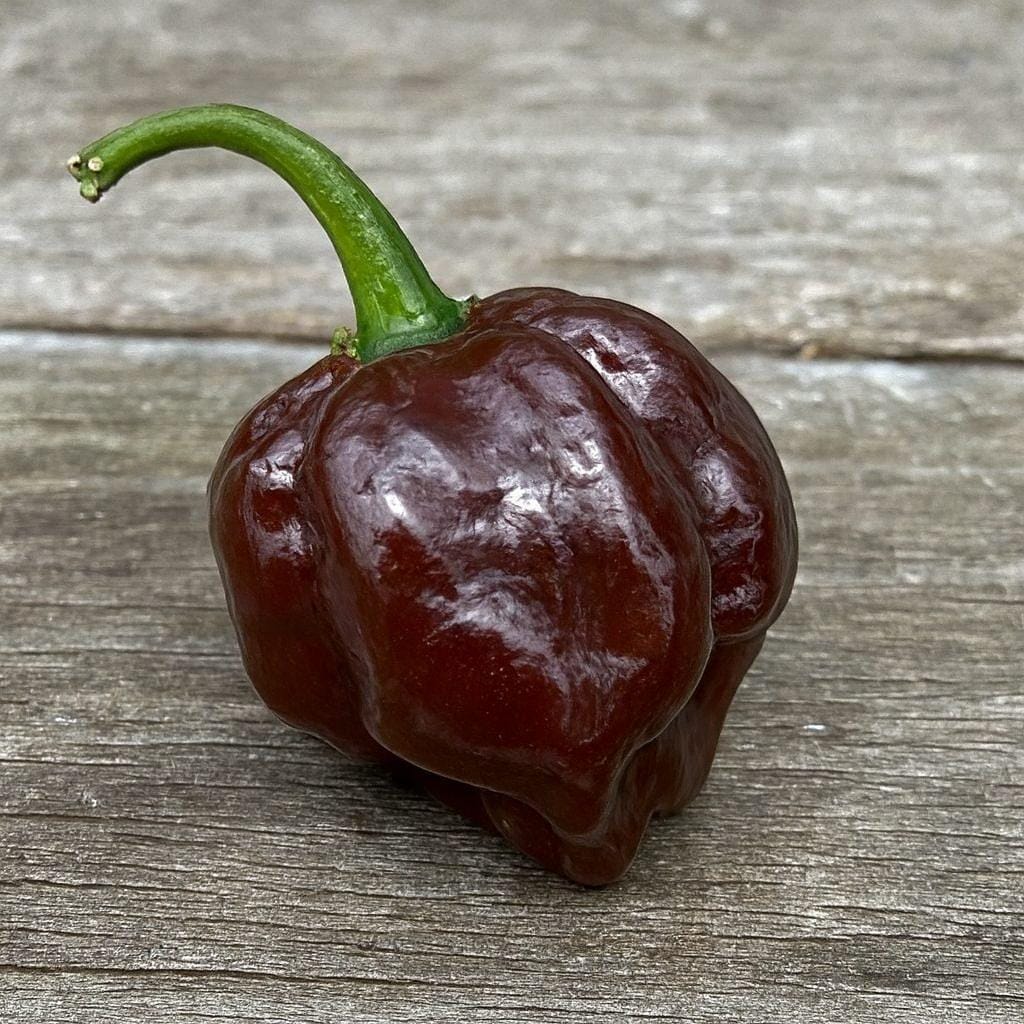
Shape: The pods display the signature squat, deeply crumpled, and lobed architecture that famously defines the true bonnet look. They are characterized by a compressed central axis, which creates a folded, multi-tiered lantern or “tam o’ shanter” appearance
Size: The fully grown pods generally measure 3 to 5 cm in length and 3.5 to 5 cm in diameter
Color Stages:
- Immature: Deep emerald green.
- Intermediate: Mottled greenish-bronze.
- Ripe: Dark chocolate brown or rich mahogany
Wall Thickness: Medium thickness. The interior contains a dense accumulation of oily, capsaicin-rich yellow placenta
Texture & Skin: The outer skin is highly wrinkled, slightly bumpy, and glossy. It possesses a distinct leathery texture that holds up remarkably well against bruising or tearing during harvesting
Plant Details
Growth Habit: Bushy
Plant Height & Width: 90–120 cm tall, 60–80 cm wide
Foliage: Dark green, slightly pubescent
Flower Color: White with faint purple streaks
Days to Maturity: 90–110 days from transplant
Yield: Moderate – typically 60–100 pods per plant under optimal conditions
Cultivation Information
Seed Count per Pack: 5 or 10 seeds (Presoaking Chilli Seeds)
Germination Time: 7–14 days (Germinating Chilli Seeds)
Optimal Germination Temp: 25–30°C (Essential guide to ideal temperatures and humidity for chilli seed germination)
Light Requirements: Filtered sun
Soil Preferences:
- pH: 6.2–6.8
- Well-drained loamy soil
- High organic matter content (Easy DIY soil mixes)
Storage Tips:
Store seeds in airtight containers in a cool, dry place. Refrigeration at 4–8°C is recommended for long-term viability. Avoid exposure to moisture and direct sunlight.
Notable Compounds
Capsaicinoid Content: Chemical profiles demonstrate that the high pungent rating is driven by two major capsaicinoids: capsaicin and dihydrocapsaicin. These compound ratios are heavily concentrated along the interior placenta walls of the pepper.
Volatile Flavor Compounds:The unique smoky aroma profile is influenced by specific volatile compounds including aliphatic esters, terpenoids, and aromatic alcohols. Compounds like hexyl pentanoate and various organic acids dictate the fruit-to-smoke ratio.
Anthocyanins / Pigments:
The intense chocolate-brown color expression is dictated by chlorophyll retention genes combined with high levels of red carotenoid pigments like capsanthin and capsorubin. Unlike purple varieties, it is not heavily influenced by anthocyanin concentrations.
Culinary & Cultural Use
Traditional Uses:
The chocolate bonnet is widely used across the Caribbean to manufacture intensely flavored hot sauces, long-aging pepper ferments, and wet spice rubs. It is traditionally utilized whole in simmering dishes to extract aromatic oils without breaking the pod open
Raw vs Cooked Flavor:
When eaten raw, the intense fruity sweetness and biting throat heat dominate. When cooked, roasted, or grilled over charcoal, the sugars caramelize, causing the deeper smoky and earthy tones to expand beautifully
Regional Dishes:
- Jamaican Jerk Pork: A slow-cooked meat dish utilizing blended chocolate bonnets, allspice, and thyme.
- Trinidadian Pepper Sauce: A sharp, vinegar-based table condiment featuring mustard and minced peppers.
- West African Peanut Stew: A rich, comforting groundnut stew where whole pods are simmered slowly.
Storage / Drying / Preserving Tips:
- Dry pods at low temperatures to preserve flavor and color
- Ferment in brine or vinegar for 2–4 weeks
- Freeze whole pods for up to 6 months
- Grind dried pods into powder for use in rubs and sauces



Reviews
There are no reviews yet.