
Description
Product Name: Kaddi Chilly
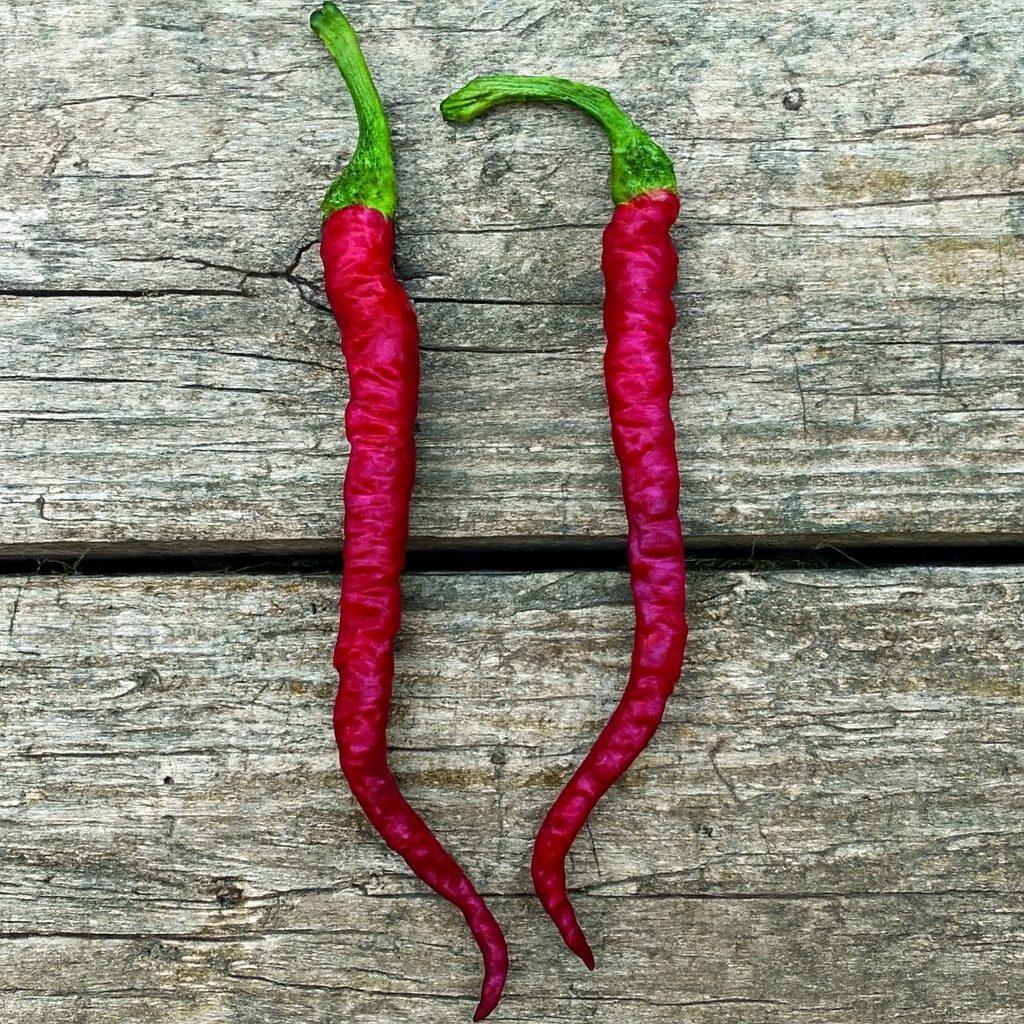
Kaddi Chilly is a revered heirloom cultivar of Capsicum annuum, originating from the Haveri district of Karnataka, India. Known for its elongated, gnarled form and deep red pigmentation, this variety is one of two primary types of the famed Byadgi chilli—specifically the “stick-like” Kaddi subtype. Though often overshadowed by its milder cousin, the Dabbi, Kaddi Chilly commands respect for its potent heat, high oleoresin content, and cultural significance in South Indian cuisine and cosmetics. It is widely cultivated and traded, with its dried pods forming the backbone of regional spice blends and industrial dye extraction.
- Cultivar Name: Kaddi Chilly
- Species: Capsicum annuum
- Common Names: Byadgi Kaddi, Stick Chilli
- Type: Heirloom
Origin & Lineage
Geographic Origin: Kaddi Chilly hails from the town of Byadgi in Karnataka’s Haveri district. This region has earned a Geographical Indication (GI) tag for its chilli production, with Kaddi and Dabbi being the two dominant cultivars. The Kaddi variant is grown extensively across Karnataka, including Dharwad, Gadag, and Bellary, and has also spread into parts of Andhra Pradesh due to its commercial viability.
Cultural Significance: Kaddi Chilly plays a vital role in South Indian culinary traditions, particularly in Udupi cuisine. It is used in dishes such as bisi bele bath, sambar, and chutneys, where its vibrant red color and assertive heat are prized. Beyond the kitchen, its oleoresin is extracted for use in cosmetics—most notably in nail polish and lipstick—due to its high ASTA color value. While not tied to ritual use, its economic and cultural impact is deeply rooted in the agricultural heritage of Karnataka.
Lineage / Hybridizer History: As an open-pollinated heirloom, Kaddi Chilly has no single credited breeder. It evolved through generations of selective cultivation by farmers in the Byadgi region. Its stability and distinct morphology have made it a benchmark cultivar for industrial and culinary applications. The Kaddi subtype is recognized for its longer, thinner pods and lower seed count compared to Dabbi, and it has influenced breeding programs focused on oleoresin yield and color intensity.
Heat Profile
- Scoville Rating (SHU): 50,000–100,000 SHU
- Perceived Heat: Very Hot
- Heat Characteristics: Kaddi Chilly delivers a sharp, penetrating heat that builds quickly and lingers. The pungency is concentrated in the placenta and inner walls, making it ideal for drying and grinding. Despite its fiery nature, the heat is clean and does not overwhelm the palate when balanced with other ingredients.
Flavor Profile
- Tasting Notes: Smoky, slightly sweet, and aromatic. The flavor is reminiscent of paprika but with significantly more heat.
- Aftertaste / Finish: A dry, lingering warmth with subtle earthy undertones. The finish is clean and slightly bitter when overused.
- Ideal Pairings: Best suited for spice blends, masalas, and meat rubs. It complements lentils, coconut-based curries, and fermented dishes. Its dried form enhances depth in sauces and chutneys.
Fruit Characteristics
- Shape: Long, thin, and gnarled with a tapered tip
- Size: 15–20 cm long, 1.5 cm diameter
- Color Stages: Immature: green → Ripe: deep red
- Wall Thickness: Thin
- Texture & Skin: Wrinkled and slightly blistered, with a matte finish
Plant Details
- Growth Habit: Bushy
- Plant Height & Width: 90–100 cm tall, 60–80 cm wide
- Foliage: Dark green, slightly pubescent
- Flower Color: White
- Days to Maturity: 90–110 days from transplant
- Yield: High – typically 100–150 pods per plant under optimal conditions
Cultivation Information
- Seed Count per Pack: 5 or 10 seeds (Presoaking Chilli Seeds)
- Germination Time: 7–14 days (Germinating Chilli Seeds)
- Optimal Germination Temp: 25–30°C (Essential guide to ideal temperatures and humidity for chilli seed germination)
- Light Requirements: Filtered sun
- Soil Preferences: Prefers loamy, well-drained soil with a pH of 5.5–6.5. Enrich with compost and potash for optimal growth (Easy DIY soil mixes)
- Storage Tips: Store seeds in airtight containers in a cool, dry place. Avoid exposure to moisture and light to maintain viability for up to 3 years.
Notable Compounds
- Capsaicinoid Content: Contains capsaicin and dihydrocapsaicin, contributing to its high pungency
- Volatile Flavor Compounds: Trace amounts of limonene and pyrazines may contribute to its smoky aroma
- Anthocyanins / Pigments: Minimal anthocyanin presence; coloration driven by carotenoids and oleoresin content
Culinary & Cultural Use
- Traditional Uses: Widely used in South Indian spice blends, including sambar powder, rasam powder, and chutney pudi.
- Raw vs Cooked Flavor: Raw pods are intensely pungent and slightly bitter. Cooking enhances sweetness and aroma. Roasting deepens the smoky notes, while pickling preserves color and heat.
- Regional Dishes: Featured in Karnataka’s bisi bele bath, Udupi-style sambar, and chutney powders. Often used in masala blends by brands such as MTR and local spice mills.
- Storage / Drying / Preserving Tips: Dry pods in shaded, ventilated areas to retain color. Sun drying for 2–3 weeks is common, though solar drying yields better pigment retention. Once dried, pods may be ground or stored whole. Fermentation with garlic and tamarind yields a robust, shelf-stable paste.


Reviews
There are no reviews yet.