
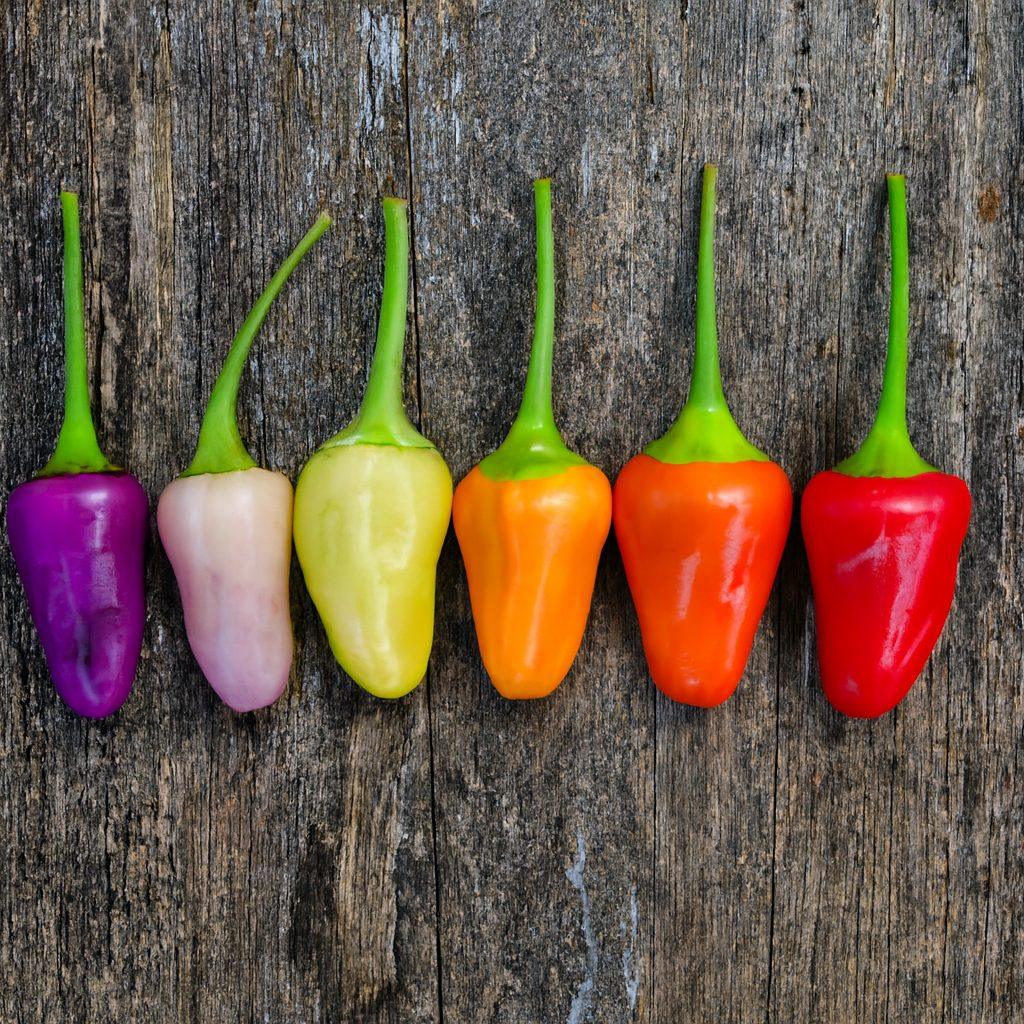
Description
Product Name: Numex Twilight Chilli Seeds
Cultivar Name: Numex Twilight
Species: Capsicum annuum
Common Names: Twilight Pepper, Rainbow Pepper
Type: Hybrid, Ornamental
Origin & Lineage
Geographic Origin: Numex Twilight was developed in the United States, specifically at the Chile Pepper Institute of New Mexico State University (NMSU). This institution has long been recognized for its pioneering work in chili pepper breeding and research. The cultivar was released in 1992 and has since become a staple among ornamental pepper enthusiasts and collectors worldwide.
Cultural Significance: Although primarily cultivated for ornamental purposes, Numex Twilight has found its way into culinary experimentation due to its moderate heat and vivid color transitions. It has not been documented in traditional ritual use or folklore, but its visual appeal has made it a symbolic addition to gardens and patios, often representing vibrancy and diversity. In some gardening communities, it is affectionately referred to as the “rainbow pepper” due to its multicolored fruit clusters.
Lineage / Hybridizer History: Numex Twilight is a stabilized hybrid derived from the Thai ornamental pepper. The breeding program at NMSU aimed to reduce the extreme heat of the Thai parent while enhancing its aesthetic appeal. The result was a cultivar that retained upright growth and compact fruit clusters but introduced a unique purple hue at the immature stage. The “Numex” prefix denotes its origin at New Mexico State University, where numerous other cultivars such as Numex Sunrise and Numex Sunset have also been developed.
Heat Profile
Scoville Rating (SHU): 30,000–50,000 SHU
Perceived Heat: Hot
Heat Characteristics: Despite its ornamental classification, Numex Twilight delivers a surprisingly potent heat. The burn is sharp and immediate, though it does not linger as long as superhot varieties. Its heat level is comparable to cayenne or tabasco peppers, making it suitable for those seeking moderate intensity. The pungency is clean and direct, with minimal throat burn, allowing it to be used sparingly in culinary applications without overwhelming the dish.
Flavor Profile
Tasting Notes: The flavor of Numex Twilight is often described as salty and bitter-bright. While not as complex as culinary-grade peppers, it offers a crisp, peppery bite that can complement acidic or sweet ingredients. The initial taste is flat but spicy, with a mineral-like undertone that becomes more pronounced when dried.
Aftertaste / Finish: The finish is short and slightly bitter, with a residual saltiness that may linger on the palate. When cooked, the bitterness softens, allowing the pepper’s natural brightness to emerge.
Ideal Pairings:
- Pickled vegetable jars
- Vinegar-based hot sauces
- Stir-fried dishes with soy or citrus
- Decorative garnishes for salads and cold platters
Fruit Characteristics
Shape: Small, conical, and upright
Size: Approximately 1.9 cm long, 1.2 cm diameter
Color Stages:
- Immature: purple
- Transition: yellow → orange
- Ripe: bright red
Wall Thickness: Thin
Texture & Skin: Smooth and glossy; skin remains firm even when dried, contributing to its ornamental longevity.
Plant Details
Growth Habit: Compact and bushy
Plant Height & Width: 45–60 cm tall, 45–60 cm wide
Foliage: Dark green, non-variegated, slightly pubescent
Flower Color: White
Days to Maturity: 75–90 days from germination
Yield: Moderate – estimated 50–80 pods per plant under optimal conditions.
Cultivation Information
Seed Count per Pack: 5 or 10 seeds (Presoaking Chilli Seeds)
Germination Time: 7–14 days (Germinating Chilli Seeds)
Optimal Germination Temp: 25–30°C (Essential guide to ideal temperatures and humidity for chilli seed germination)
Light Requirements: Filtered sun
Soil Preferences:
- pH range: 6.0–6.8
- Well-draining soil with high organic content
- Loamy mix enriched with compost or worm castings (Easy DIY soil mixes)
Storage Tips: Store seeds in airtight containers in a cool, dry environment. Avoid exposure to humidity and direct sunlight. Refrigeration is recommended for long-term preservation.
Notable Compounds
Capsaicinoid Content: Contains moderate levels of capsaicin and dihydrocapsaicin, contributing to its hot classification. These compounds are responsible for the pepper’s pungency and are present in higher concentrations during the red ripening stage.
Volatile Flavor Compounds: Though not extensively studied, Capsicum annuum varieties often contain limonene and vanillin, which may contribute to the subtle brightness and bitterness of Numex Twilight.
Anthocyanins / Pigments: The purple coloration in immature pods is due to anthocyanin expression, which is genetically inherited from its Thai ornamental parent. This pigmentation fades as the fruit matures, transitioning through a spectrum of colors that enhance its ornamental value.
Culinary & Cultural Use
Traditional Uses: Numex Twilight has not been documented in traditional culinary practices. However, it has been adopted by home cooks and artisan producers for use in:
- Pickled pepper blends
- Decorative hot sauces
- Infused vinegars
Raw vs Cooked Flavor: Raw pods deliver a sharp, salty bitterness with minimal sweetness. Cooking—especially roasting or stir-frying—softens the bitterness and enhances the pepper’s brightness. Pickling preserves its color and adds tangy complexity.
Regional Dishes: While not featured in named regional dishes, Numex Twilight has been used in fusion cuisine and experimental recipes, including:
- Thai-style stir-fries
- Mexican escabeche (pickled vegetables)
- Korean kimchi variants with added color
Storage / Drying / Preserving Tips:
- Air-drying in shaded, ventilated areas retains color and firmness
- Dehydrators may be used at low temperatures to preserve volatile compounds
- Pickling in vinegar brine maintains visual appeal and extends shelf life
- Freezing is possible but may compromise texture upon thawing




Reviews
There are no reviews yet.