
Description
Product Name: Golden Primotalii Chilli Seeds
Cultivar Name: Golden Primotalii
Species: Capsicum chinense
Common Names: Golden Primotalii, Golden Primo, Yellow Primotalii
Type: Semi-Stable Hybrid / Superhot / Ornamental
Origin & Lineage
Geographic Origin: Originally bred in the United States by Chris Saunders, the Golden Primotalii pepper is a color variant of the Primotalii—a supposed hybrid between the 7 Pot Primo and Fatalii. The golden phenotype emerged during stabilization and has since been isolated by growers like Jim Morrow and others working to refine its traits.
Cultural Significance: Though not tied to traditional culinary use, the Golden Primotalii pepper has gained cult status among superhot growers and collectors. Its vibrant color, extreme heat, and dramatic stinger tail make it a standout in pepper showcases and heat challenges. It’s often grown for novelty, artisan sauce production, and ornamental appeal.
Lineage / Hybridizer History: The original Primotalii was created by Chris Saunders in 2012 by crossing the 7 Pot Primo (one of the hottest peppers in the world) with the citrusy Fatalii. The golden variant appeared in later generations and is still undergoing stabilization. Growers have selected for consistent color, shape, and heat intensity.
Heat Profile
Scoville Rating (SHU): Estimated 2,200,000+ SHU (unofficial)
Perceived Heat: Superhot to Hyperhot
Heat Characteristics: Scorching and aggressive. The burn is immediate, full-body, and long-lasting. It starts with a sharp sting on the tongue and quickly spreads to the throat, sinuses, and even ears. Not recommended for casual consumption. Gloves and caution are essential during handling.
Flavor Profile
Tasting Notes: Floral, slightly fruity, and citrus-forward. The flavor is intense and perfumed, with hints of lemon zest and tropical fruit beneath the heat.
Aftertaste / Finish: Lingering bitterness with a smoky, citrusy echo. The finish is dominated by capsaicin intensity but retains a trace of sweetness.
Ideal Pairings:
- Fermented sauces with mango, pineapple, or papaya
- Extreme hot sauces for collectors
- Infused oils and vinegars
- Powdered blends for heat-forward rubs
- Culinary challenges and novelty dishes
Fruit Characteristics
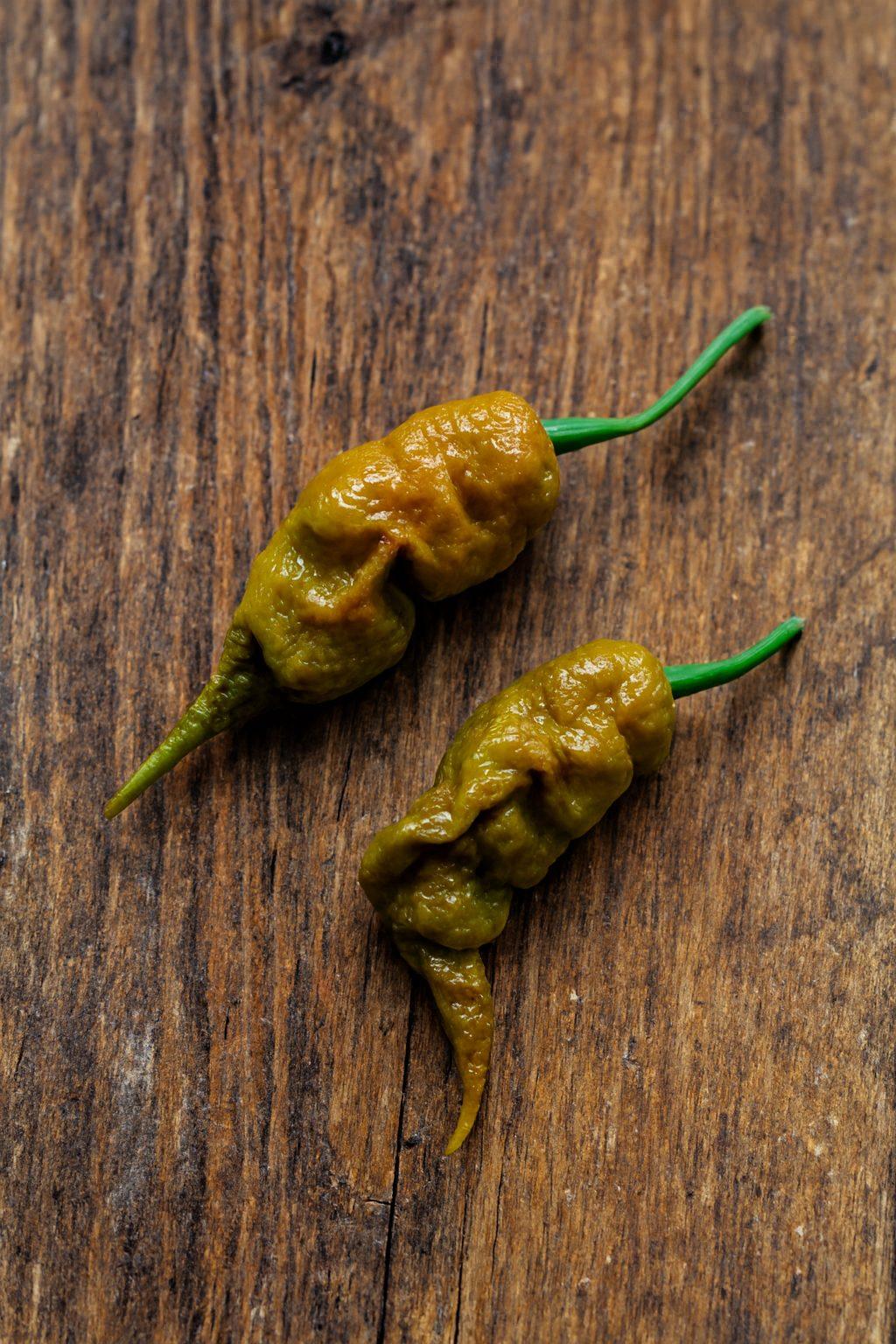
Shape: Small, elongated pods with pronounced stinger tails
Size: 2–3 inches (5–7 cm) long, 0.5–0.75 inches (1.2–2 cm) diameter
Color Stages:
- Immature: Pale green
- Ripe: Golden yellow to orange-gold
- Overripe: May deepen to amber or bronze tones
Wall Thickness: Thin
Texture & Skin: Deeply wrinkled, contorted surface; lightweight and blistered
Plant Details
Growth Habit: Compact and bushy
Plant Height & Width:
Height: 60–90 cm
Width: 50–70 cm
Foliage: Dark green, slightly crinkled leaves
Flower Color: White
Days to Maturity: 120–150 days from transplant
Yield: Moderate – typically 30–50 pods per plant under optimal conditions
Cultivation Information
Seed Count per Pack: 10 seeds
Germination Time: 7–14 days (Germinating Chilli Seeds)
Optimal Germination Temp: 26–32°C (Essential guide to ideal temperatures and humidity for chilli seed germination)
Light Requirements: Filtered sun
Soil Preferences:
- pH: 6.2–6.8
- Rich, well-draining loam
- Benefits from compost and potassium-rich feeding (Easy DIY soil mixes)
Storage Tips: Store Golden Primotalii pepper seeds in a cool, dry place. Refrigeration at 4–8°C extends viability. Avoid humidity and direct light.
Notable Compounds
Capsaicinoid Content: Extremely high levels of capsaicin and dihydrocapsaicin; heat concentrated in placenta and seeds
Volatile Flavor Compounds: Limonene, citral, and esters contribute to the citrus aroma
Anthocyanins / Pigments: Minimal anthocyanin expression; golden coloration driven by carotenoids like beta-carotene and violaxanthin
Culinary & Cultural Use
Traditional Uses: Not used traditionally due to extreme heat. Primarily grown for artisan sauces, fermentation, and heat challenges.
Raw vs Cooked Flavor: Raw Golden Primotalii pepper pods are floral and citrusy with overwhelming heat. Cooking softens bitterness and enhances sweetness. Fermentation adds depth and complexity.
Regional Dishes:
- Artisan superhot sauces
- Caribbean-style pepper mashes
- Southeast Asian sambals with tropical fruit
- Mexican-style golden salsa (microdosed)
Storage / Drying / Preserving Tips:
- Ideal for fermentation and sauce-making
- Can be dried whole or sliced
- Powdered form retains color and heat for seasoning blends



Reviews
There are no reviews yet.