
Description
Product Name: Yellow Ghost Pepper Seeds
Species: Capsicum chinense x Frutescens
Common Names: Yellow Bhut Jolokia, Yellow Ghost, Ghost Pepper Yellow
Type: Heirloom (stabilized color variant of Bhut Jolokia)
Origin & Lineage
Geographic Origin: Originally bred in India; stabilized and popularized globally through heirloom seed exchanges
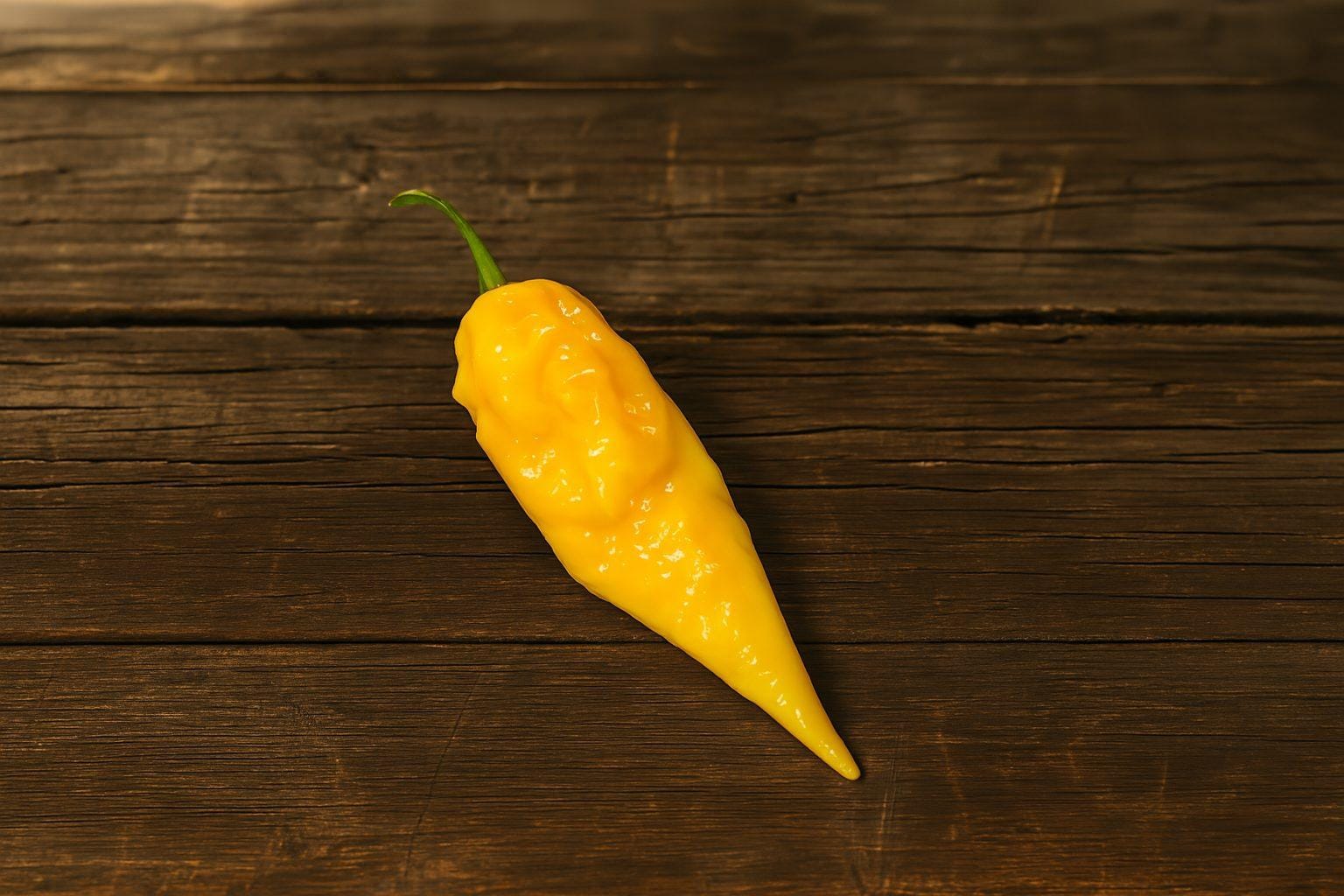
Development History: The Yellow Ghost Pepper is a color variant of the original Bhut Jolokia, which hails from the northeastern states of India—primarily Assam and Nagaland. Bhut Jolokia was officially recognized by Guinness World Records in 2007 as the world’s hottest chilli at the time, exceeding 1,000,000 SHU. The yellow variant emerged through natural mutation and selective breeding, offering a slightly milder heat and a brighter, fruitier flavor. Though not formally registered, the Yellow Ghost Pepper has been stabilized by growers in the U.S., Europe, and India over multiple generations. It retains the elongated, wrinkled pod shape of the original Bhut but matures to a vibrant yellow instead of red.
Cultural Significance: In India, ghost peppers are traditionally used in pickles, chutneys, and smoked spice blends. The yellow variant, while less common, has gained popularity among growers and chefs for its ornamental appeal and nuanced flavor. It’s often used in gourmet hot sauces, fermented pastes, and powdered seasonings.
Lineage / Hybridizer History: Yellow Ghost Pepper is not a hybrid but a stabilized selection from Bhut Jolokia genetics. Its lineage traces directly to Capsicum chinense landraces from Northeast India. The yellow phenotype was isolated and stabilized by growers seeking a sweeter, more aromatic alternative to the red Bhut. Despite its vivid color, it shares the same wrinkled morphology and intense heat profile.
Heat Profile
Scoville Rating (SHU): 800,000–1,000,000 SHU
Perceived Heat: Superhot—sharp and lingering
Heat Characteristics: The burn is immediate and intense, starting with a sharp sting on the tongue and spreading to the throat and sinuses. The heat builds over 30–60 seconds and can last for several minutes. Cooking or fermenting can mellow the burn slightly, while drying concentrates it. Despite its potency, the Yellow Ghost is often described as cleaner and more tolerable than the red variant.
Flavor Profile
Tasting Notes: Yellow Ghost Pepper pods offer a bright, citrus-forward flavor with notes of lemon zest, pineapple, and floral undertones. The sweetness is more pronounced than in red Bhut types, and the aroma is fresh and slightly tropical.
Aftertaste / Finish: The finish is warm and tangy, with lingering citrus and a mild bitterness. Roasting enhances caramel and dried fruit notes, while fermentation adds depth and umami.
Ideal Pairings: Citrus-based hot sauces and glazes Fermented chilli pastes with garlic and ginger Tropical fruit chutneys Spicy aioli and mayonnaise blends Grilled seafood and smoked meats Powdered seasoning for popcorn or roasted nuts
Fruit Characteristics
Shape: Elongated, wrinkled, slightly tapered
Size: 5–7 cm long, 2–3 cm wide
Color Stages: Immature: green → Ripe: bright yellow
Wall Thickness: Thin to medium
Texture & Skin: Wrinkled, glossy, firm
Plant Details
Growth Habit: Upright and bushy
Plant Height & Width: 90–120 cm tall, 60–90 cm spread
Foliage: Medium green, smooth leaves
Flower Color: White
Days to Maturity: 120–150 days from transplant
Yield: Moderate – 30–50 pods per plant under optimal conditions
Cultivation Information
Seed Count per Pack: 5 or 10 seeds
Germination Time: 10–14 days (Germinating Chilli Seeds)
Optimal Germination Temp: 26–30°C (Essential guide to ideal temperatures and humidity for chilli seed germination)
Light Requirements: Filtered sun (minimum 6–8 hours/day)
Soil Preferences: pH: 6.2–6.8 Well-draining loam enriched with compost (Easy DIY soil mixes) Avoid waterlogging; containers or raised beds preferred
Storage Tips: Store seeds in airtight containers in a cool, dry place. Refrigeration with desiccants can extend viability up to 3 years.
Notable Compounds
Capsaicinoid Content: High capsaicin concentration Moderate dihydrocapsaicin
Volatile Flavor Compounds: Limonene (citrus) Geraniol (floral) Beta-ionone (fruity)
Anthocyanins / Pigments: Yellow coloration due to carotenoids; no purple pigmentation observed
Culinary & Cultural Use
Traditional Uses: While not traditional in Indian cuisine, the Yellow Ghost Pepper is used similarly to Bhut Jolokia in pickles, spice blends, and sauces. Its sweeter flavor makes it suitable for fusion dishes and gourmet applications.
Raw vs Cooked Flavor: Raw pods deliver intense heat with bright citrus notes. Cooking—especially roasting or fermenting—enhances sweetness and reduces bitterness. Pickling adds acidity and preserves color, while drying intensifies both heat and aroma.
Regional Dishes: Yellow Ghost Pepper hot sauce with mango and lime Fermented chilli paste with turmeric and garlic Ghost chutney with pineapple and ginger Spicy aioli with roasted Yellow Ghost Smoked Yellow Ghost Pepper powder for rubs and seasoning
Storage / Drying / Preserving Tips:
Best preserved through fermentation or drying. For drying, slice and dehydrate at low temperatures. Store in airtight containers away from light. Roasted pods can be frozen for later use. Pickled pods retain color and flavor for up to 12 months when refrigerated.


Reviews
There are no reviews yet.