
Description
Product Name: Violet Sparkle Pepper Seeds
Cultivar Name: Violet Sparkle
Species: Capsicum annuum
Common Names: Violet Sparkle, Russian Jewel Pepper
Type: Heirloom
Origin & Lineage
Geographic Origin: The Violet Sparkle pepper (Capsicum annuum) traces its origins to Russia, where it was first circulated through regional seed exchanges and heirloom preservation networks. Russian growers have long cultivated sweet peppers with ornamental traits, and Violet Sparkle emerged as a standout for its compact growth, multi-tonal coloration, and culinary versatility.
Its introduction to Western growers came via rare seed trading platforms, with early mentions appearing in catalogs like RareSeeds and Fruition Seeds. The cultivar thrives in short, cool-season climates, making it especially well-suited to Eastern European gardens, where summers are mild and growing windows are tight. Its adaptability to container culture, greenhouse setups, and urban microgardens has further expanded its reach.
In South Africa, Violet Sparkle gained traction through several local growers. Its ornamental appeal and reliable yield have made it a favorite among seed collectors, culinary stylists, and heirloom preservationists across continents.
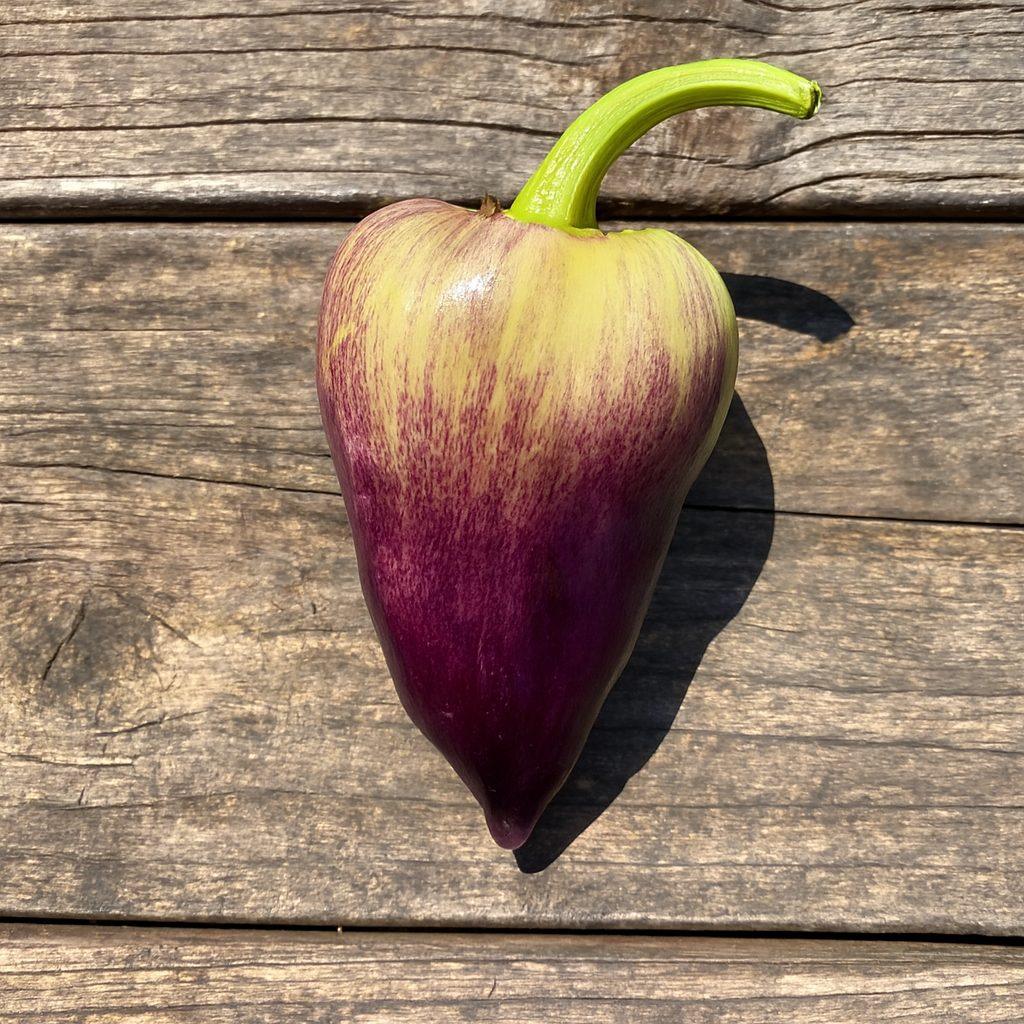
Cultural Significance: Violet Sparkle is celebrated for its stained-glass aesthetic—pods shimmer in hues of violet, cream, gold, and ruby red, often streaked with anthocyanin blushes and variegated striping. This kaleidoscopic display makes it a living ornament, often grown in:
- Kitchen gardens, where its compact form and prolific fruiting add visual drama
- Container setups, ideal for patios, balconies, and urban spaces
- Boutique farms, where color contrast and heirloom appeal drive culinary storytelling
Its sweet, crisp flavor and thick walls make it perfect for fresh snacking, stuffed dishes, grilled preparations, and pickled blends. Chefs and stylists favor it for plating contrast, especially in dishes that highlight seasonal produce or minimalist design.
Symbolically, the Violet Sparkle evokes themes of abundance, transformation, and artistry. In Eastern European folklore, vibrant peppers often represent fertility and protection, and while Violet Sparkle isn’t tied to specific rituals, its ornamental nature aligns with traditions of garden beauty and seasonal celebration.
Lineage / Hybridizer History: Violet Sparkle is an open-pollinated heirloom, originally traded from Russia and stabilized through community seed exchanges. Its lineage likely includes sweet annuum types selected for low heat, high anthocyanin expression, and ornamental pod shape.
Heat Profile
Scoville Rating (SHU): 0 SHU
Perceived Heat: None
Heat Characteristics: Completely sweet. No burn or pungency—ideal for raw use, stuffing, and roasting.
Flavor Profile
Tasting Notes: Exceptionally sweet with crisp texture and subtle floral undertones. Flavor intensifies as pods ripen to red.
Aftertaste / Finish: Clean and juicy with a lingering sweetness
Ideal Pairings:
- Raw in salads or slaws
- Stuffed with cheese or grains
- Roasted with olive oil and herbs
- Pickled for visual and flavor contrast
- Sliced into wraps, tacos, or sushi
Fruit Characteristics
Shape: Pointed, heart-shaped pods with slight curves
Size: 6–9 cm long, 3–5 cm wide
Color Stages:
- Immature: Violet with pale yellow streaks
- Mid-stage: Cream, gold, and purple blend
- Ripe: Deep red with residual sparkle
Wall Thickness: Medium
Texture & Skin: Glossy, firm skin with crisp, juicy flesh
Plant Details
Growth Habit: Compact and bushy
Plant Height & Width:
Height: 40–60 cm
Width: 40–50 cm
Foliage: Bright green, broad leaves
Flower Color: White
Days to Maturity: 75–85 days from transplant
Yield: Moderate – typically 6–10 pods per plant, often more under ideal conditions
Cultivation Information
Seed Count per Pack: 5 or 10 seeds
Germination Time: 10–14 days (Germinating Chilli Seeds)
Optimal Germination Temp: 21–32°C (Essential guide to ideal temperatures and humidity for chilli seed germination)
Light Requirements: Filtered sun
Soil Preferences:
- pH: 6.0–6.8
- Well-draining, fertile soil (Easy DIY soil mixes)
- Benefits from compost and potassium-rich feeding
Storage Tips: Store seeds in a cool, dry place. Refrigeration at 4–8°C extends viability. Avoid moisture and direct light.
Notable Compounds
Capsaicinoid Content: None – zero heat
Volatile Flavor Compounds: High sugar content with mild esters contributing to floral aroma
Pigments: Anthocyanins and carotenoids create violet, yellow, and red hues
Culinary & Cultural Use
Traditional Uses: Not tied to traditional cuisine, but ideal for modern dishes requiring color contrast and sweetness
Raw vs Cooked Flavor: Raw pods are crisp and sweet. Cooking deepens flavor and softens texture. Pickling preserves color and adds tang.
Regional Dishes:
- Russian-style pickled pepper blends
- Mediterranean stuffed peppers
- Gourmet crudité platters
- Sweet pepper poppers (no heat)
Storage / Drying / Preserving Tips:
- Best preserved fresh or pickled
- Drying may dull color
- Powdered form is rare but usable in sweet spice blends


Reviews
There are no reviews yet.