
Description
Product Name: Sugar Rush Peach Chilli Seeds
Cultivar Name: Sugar Rush Peach
Species: Capsicum baccatum
Common Names: Sugar Rush Peach
Type: Hybrid
Origin & Lineage
Geographic Origin: The Sugar Rush Peach pepper is a remarkable Capsicum baccatum cultivar with roots that span Finland, Wales, and South America. Its story begins in the experimental greenhouses of Jukka Kilpinen, a legendary Finnish chili grower known as Jukka Fatalii, who first observed a promising cross between Jamy and Kalaidoskop baccatum types around 2009–20102. Though Jukka didn’t immediately pursue stabilization, he shared seeds with his close friend Chris Fowler of Welsh Dragon Chilli, who cultivated hundreds of phenotypes and eventually isolated the peach variant.
The genetic ancestry of Sugar Rush Peach traces back to Peruvian and Bolivian ají landraces, where Capsicum baccatum has been grown for centuries. These peppers are known for their fruity complexity, elongated pods, and moderate heat—traits that Sugar Rush Peach inherited and refined.
Today, the cultivar is recognized as one of very few peach-colored ají-type peppers in existence, with a flavor profile and productivity that have earned it global admiration.
Cultural Significance: Sugar Rush Peach has become a darling of the pepper world, celebrated for its sweet, fruity flavor with notes of apricot, citrus, and peach, followed by a moderate heat estimated between 10,000–30,000 SHU. It’s a favorite among chefs, fermenters, and home gardeners for its versatility and visual appeal.
Common culinary uses include:
- Fruit-forward hot sauces—often paired with mango, pineapple, or peach
- Pickling and fermentation—where its sweetness balances acidity
- Powders and flakes—used in rubs and spice blends
- Fresh slicing—for salads, ceviche, and omelets
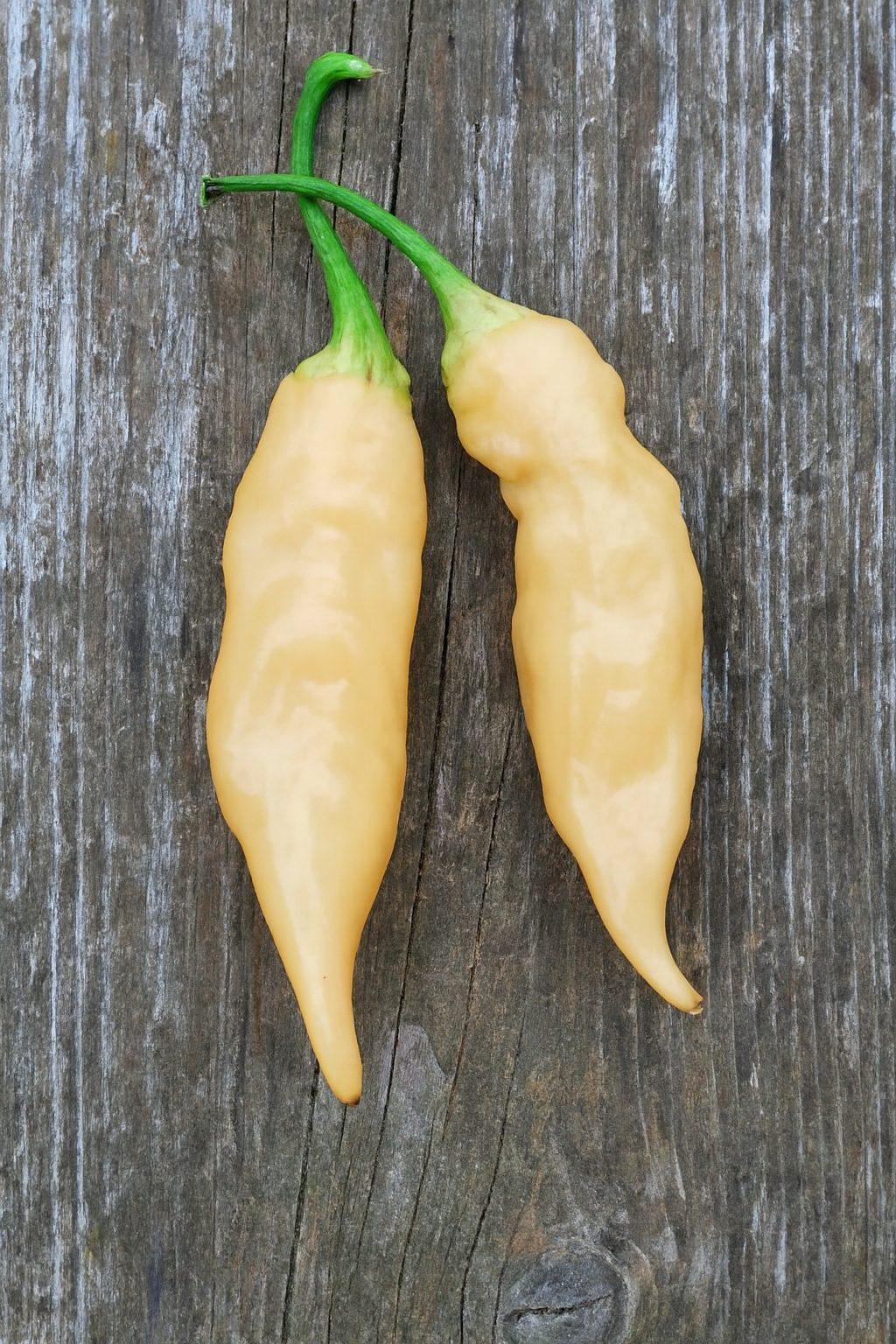
Its elongated, wrinkled pods and creamy peach hue make it a standout in garden beds and plating. The plant itself is highly prolific, often producing 60+ pods per season, and can grow up to 5 feet tall, requiring staking.
Beyond the kitchen, Sugar Rush Peach is a symbol of collaborative breeding and horticultural serendipity, showing how open pollination and international friendship can yield extraordinary results.
Lineage / Hybridizer History: The Sugar Rush Peach was born from an accidental cross in Jukka Fatalii’s greenhouse in Finland, likely between Jamy and Kalaidoskop baccatum types. The cross produced an exceptionally sweet phenotype that caught Jukka’s attention, but he passed the seeds to Chris Fowler, who took on the challenge of stabilizing the variety.
Fowler grew hundreds of plants, selecting for:
- Flavor complexity—sweet, fruity, and floral
- Color stability—ripening from pale yellow to deep peach
- Pod shape and size—long, curved, and slightly wrinkled
- Plant vigor and yield—tall plants with prolific fruiting
By F4–F6, the variety was considered stable and began circulating through seed networks and specialty vendors. It has since inspired several offshoots, including:
- Sugar Rush Peach Bell—a bell-shaped variant
- Sugar Rush Stripey—a striped mutation discovered in the U.S. and later stabilized by Jukka and Fowler
The Stripey variant even caught the attention of Dr. Paul Bosland at the Chili Pepper Institute, who began DNA research on its unique mutation.
Sugar Rush Peach stands as a testament to international collaboration, open-pollinated innovation, and the enduring magic of chili breeding. It’s not just a pepper—it’s a legacy.
Heat Profile
Scoville Rating (SHU): 10,000–30,000 SHU
Perceived Heat: Medium
Heat Characteristics: The burn is clean and warming, with a delayed onset. It complements the sweetness rather than overpowering it, making it ideal for layering flavor in sauces and salsas.
Flavor Profile
Tasting Notes: Sweet, fruity, and tropical with notes of apricot, melon, and citrus. The flavor is bright and juicy, especially when eaten raw.
Aftertaste / Finish: Smooth and tangy with a gentle heat that lingers. No bitterness, just a clean, sweet fade.
Ideal Pairings:
- Mango or pineapple-based hot sauces
- Pickled with ginger and garlic
- Fermented with tropical fruit
- Added to bean chili or lentil stews
- Dried into sweet-hot powder blends
Fruit Characteristics
Shape: Long, oblong pods with slight curvature and pointed tips
Size: 8–10 cm long, 2–2.5 cm diameter
Color Stages:
- Immature: Pale green
- Ripe: Creamy peach to soft orange
- Overripe: May deepen to salmon or blush tones
Wall Thickness: Medium
Texture & Skin: Smooth and glossy with occasional wrinkling near the stem
Plant Details
Growth Habit: Tall and vigorous; may require staking
Plant Height & Width:
Height: 120–150 cm
Width: 60–90 cm
Foliage: Bright green, lightly serrated leaves
Flower Color: White with greenish-yellow corolla
Days to Maturity: 100–120 days from transplant
Yield: High – typically 60–100 pods per plant under optimal conditions
Cultivation Information
Seed Count per Pack: 5 or 10 seeds
Germination Time: 7–14 days (Germinating Chilli Seeds)
Optimal Germination Temp: 25–30°C (Essential guide to ideal temperatures and humidity for chilli seed germination)
Light Requirements: Filtered sun
Soil Preferences:
- pH: 6.2–6.8
- Well-draining, fertile soil (Easy DIY soil mixes)
- Benefits from compost and potassium-rich feeding
Storage Tips: Store seeds in a cool, dry place. Refrigeration at 4–8°C extends viability. Avoid humidity and direct light.
Notable Compounds
Capsaicinoid Content: Moderate capsaicin and dihydrocapsaicin; heat concentrated in placenta
Volatile Flavor Compounds: Limonene, citral, and esters contribute to the fruity aroma
Carotenoids / Pigments: Peach coloration driven by beta-carotene, violaxanthin, and capsanthin
Culinary & Cultural Use
Traditional Uses: Not tied to traditional cuisine, but ideal for modern fruit-forward sauces, pickles, and powders
Raw vs Cooked Flavor: Raw pods are crisp and sweet with a gentle burn. Cooking enhances the tropical notes and softens acidity. Fermentation adds depth and tang.
Regional Dishes:
- Welsh-style peach pepper sauce
- Caribbean chutneys with citrus
- Mexican-style peach salsa
- Southeast Asian sambals with fruit
Storage / Drying / Preserving Tips:
- Excellent for fermentation and pickling
- Can be dried whole or sliced
- Powdered form retains sweetness and heat for seasoning blends


Reviews
There are no reviews yet.