
Description
Product Name: Moruglah
Moruglah is a ferocious Capsicum chinense hybrid bred for extreme heat, complex flavor, and high productivity. This cultivar is the result of crossing two of the world’s hottest peppers—Trinidad Moruga Scorpion and 7 Pot Douglah—yielding a superhot variety that delivers blistering intensity and a surprisingly nuanced taste. Though still in its F4 generation and not fully stabilized, Moruglah has already earned a reputation among elite growers and sauce makers for its aggressive burn, sherbet-like aroma, and prolific pod production. It is a must-have for collectors seeking high-impact cultivars with both culinary and ornamental value.
- Cultivar Name: Moruglah
- Species: Capsicum chinense
- Common Names: None formally documented
- Type: Hybrid
Origin & Lineage
Geographic Origin:
Moruglah was developed in USA by growers seeking to combine the heat and flavor of two legendary superhots. The parent lines—Trinidad Moruga Scorpion and 7 Pot Douglah—originate from Trinidad and Tobago, a region known for producing some of the most potent chili varieties on the planet.
Cultural Significance:
While Moruglah does not have documented folkloric or ritual use, its parentage links it to cultivars with deep cultural roots in Caribbean cuisine. Both Moruga Scorpion and 7 Pot Douglah are staples in traditional pepper sauces and spice blends across Trinidad and Tobago. Moruglah continues this legacy by offering a modern interpretation of these ancestral lines, tailored for extreme heat and gourmet applications. It is frequently featured in artisanal hot sauces, competitive chili-eating events, and ornamental garden displays.
Lineage / Hybridizer History:
Moruglah was created by crossing:
- Trinidad Moruga Scorpion: Known for its fruity aroma and record-breaking heat (up to 2,000,000 SHU).
- 7 Pot Douglah: A chocolate-colored superhot with earthy flavor and blistering intensity (up to 1,800,000 SHU).
The hybrid is currently in its F4 generation, meaning it is semi-stable but may still exhibit some phenotypic variation. Most plants express consistent traits, including wrinkled pods, red ripening, and extreme pungency. The cultivar has been trialed in various climates, including temperate zones and subtropical regions, and is now distributed by specialty seed vendors across South Africa and Europe.
Heat Profile
Scoville Rating (SHU):
Estimated between 1,000,000 and 1,500,000 SHU
Perceived Heat:
Superhot (500,000 or more SHU)
Heat Characteristics:
The burn delivered by Moruglah is immediate and aggressive. It begins with a stinging sensation on the tongue and lips, followed by a wave of heat that spreads to the throat and sinuses. The intensity builds rapidly, often peaking within 90 seconds and lingering for several minutes. The burn is described as “back-of-throat and front-of-mouth,” with a long-lasting sting that can overwhelm untrained palates. Despite its ferocity, the heat is clean and does not obscure the pepper’s underlying flavor, making it suitable for sauces that require both intensity and nuance.
Flavor Profile
Tasting Notes:
Moruglah offers a layered flavor profile beneath its fiery exterior. Initial notes include fruity sweetness, citrus, and sherbet, followed by earthy undertones and a subtle floral hint. The aroma is described as “super divine,” with a sherbet-like brightness that sets it apart from other superhots.
Aftertaste / Finish:
The finish is long and warming, with residual bitterness and a lingering floral note. When roasted or fermented, the bitterness softens and the sweetness becomes more pronounced, especially in fruit-based sauces.
Ideal Pairings:
- Fermented superhot sauces with mango or tamarind
- Roasted chili pastes for red meat and game
- Pickled blends with garlic and vinegar
- Infused oils and spicy jams for novelty applications
Fruit Characteristics
Shape:
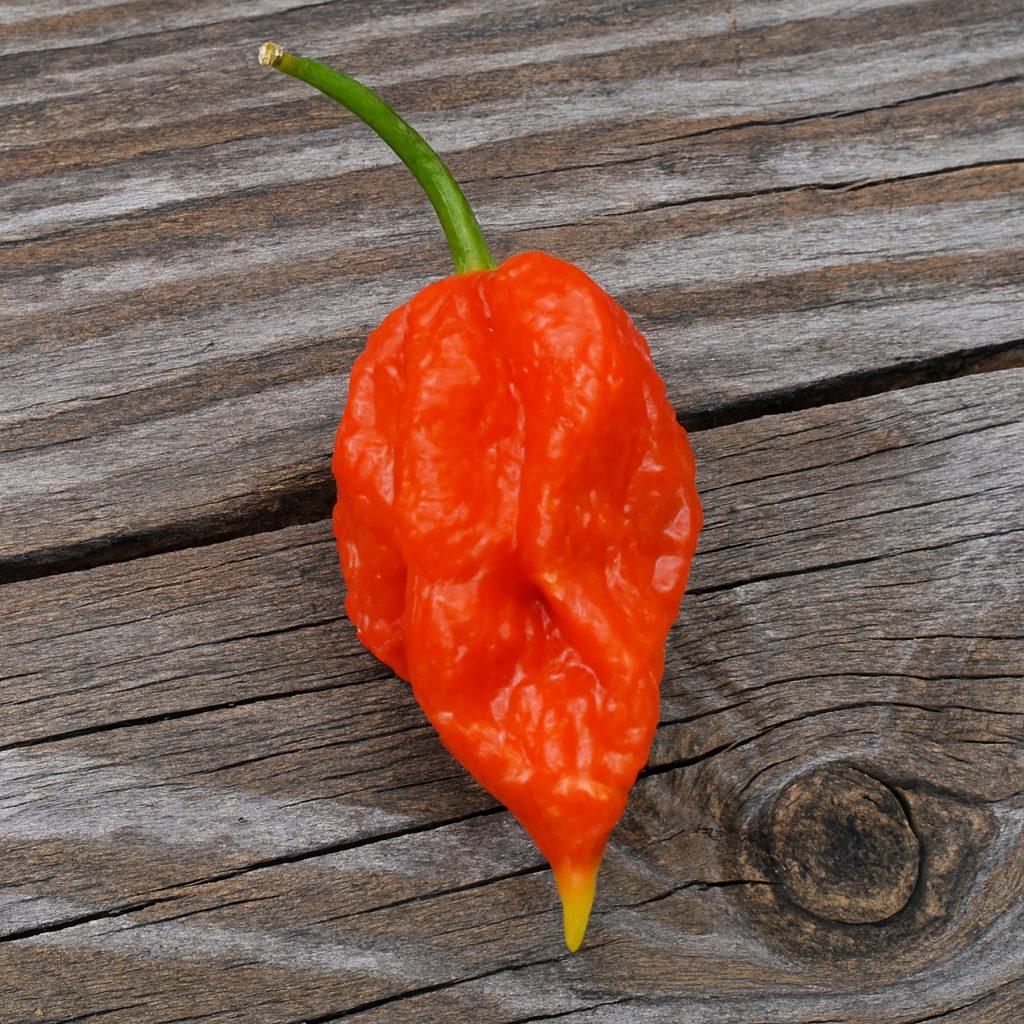
Slightly broader than Bhut Jolokia, shorter and more compact
Size:
4–5 cm long, 2–3 cm diameter
Color Stages:
- Immature: green
- Ripe: bright red
Wall Thickness:
Medium
Texture & Skin:
Wrinkled and blistered; skin is firm and glossy.
Plant Details
Growth Habit:
Bushy
Plant Height & Width:
90–120 cm tall, 60–80 cm wide
Foliage:
Dark green, slightly pubescent
Flower Color:
White
Days to Maturity:
120–150 days from germination
Yield:
High – typically 60–100 pods per plant under optimal conditions.
Cultivation Information
Seed Count per Pack:
5 or 10 seeds (Presoaking Chilli Seeds)
Germination Time:
7–14 days (Germinating Chilli Seeds)
Optimal Germination Temp:
25–30°C (Essential guide to ideal temperatures and humidity for chilli seed germination)
Light Requirements:
Filtered sun
Soil Preferences:
Loamy, well-drained soil with pH between 6.0 and 6.8; enriched with compost or aged manure (Easy DIY soil mixes)
Storage Tips:
Store seeds in airtight containers in a cool, dry place. Silica gel packets may be used to reduce humidity and extend viability.
Notable Compounds
Capsaicinoid Content:
Extremely high concentrations of capsaicin and dihydrocapsaicin contribute to its superhot classification. These compounds are concentrated in the placental tissue and inner walls of the pod.
Volatile Flavor Compounds:
Limonene and esters are present in trace amounts, contributing to the fruity and floral aroma. Vanillin-like compounds may emerge during roasting or fermentation.
Anthocyanins / Pigments:
No significant anthocyanin expression in ripe pods; pigmentation is dominated by carotenoids such as capsanthin and beta-carotene, responsible for the red hue.
Culinary & Cultural Use
Traditional Uses:
Though Moruglah is a modern cultivar, it has been adopted into artisanal hot sauce production and competitive chili-eating events. Its intense heat and sherbet-like flavor make it suitable for:
- Ají-style sauces
- Fermented chili pastes
- Salsas with smoked ingredients
- Dry rubs and infused oils
Raw vs Cooked Flavor:
Raw pods deliver a sharp, fruity heat with floral undertones. Cooking—especially roasting or grilling—enhances the sweetness and introduces a smoky depth. Fermentation amplifies the complexity and softens the bitterness, making it ideal for layered sauces.
Regional Dishes:
- Caribbean-style pepper sauces
- Mexican-style habanero salsas
- Southeast Asian chili jams
- South African braai rubs with dried Moruglah flakes
Storage / Drying / Preserving Tips:
- Air-dry whole pods in shaded, ventilated areas to preserve flavor and pigmentation
- Slice and dehydrate for faster drying and powder production
- Ferment with garlic and salt for chili paste
- Vacuum seal dried pods to prevent oxidation and flavor degradation



Reviews
There are no reviews yet.