
Description
Cultivar Name: Monkey Face Pepper Yellow Seeds
The Monkey Face pepper is a fascinating and highly sought-after cultivar within the home gardening community. This unique pepper is loved for its whimsical aesthetic and delicious flavor profile. It serves as an excellent conversation starter when grown in garden beds or containers.
Species: Capsicum annuum
Common Names: Monkey Face pepper
Type: Heirloom
Origin & Lineage
Geographic Origin: The historic roots of the Monkey Face pepper are traced back to South America, where Capsicum annuum varieties have been selectively cultivated for centuries. However, some modern seed collectors attribute its formal distribution and popularity to specialty growers in the United States of America. It has since spread globally due to its unique presentation and reliable growth habits.
Cultural Significance:While the Monkey Face pepper does not carry ancient ritualistic associations, this cultivar enjoys significant pop culture appreciation among contemporary chili collectors and home gardeners. The distinct primate-like appearance makes it a popular visual centerpiece in local agricultural exhibits and garden tours. In regions where it is grown traditionally, the bright pods are regularly featured in festive seasonal displays and farmers’ markets.
Lineage / Hybridizer History:
The Monkey Face pepper is categorized as an established open-pollinated heirloom rather than a modern laboratory creation. The original master breeder remains unrecorded in historical documents. However, the stable genetic lines are carefully maintained by specialized open-pollinated seed repositories around the world to keep its unique pod morphology completely intact.
Heat Profile
Scoville Rating (SHU): 1,000–15,000 SHU
Perceived Heat: Medium—comparable to standard jalapeños, with occasional spikes depending on growing stress
Heat Characteristics: An immediate warmth is experienced directly upon the first bite, rather than a slow, agonizing build-up. This initial sting coats the forward part of the tongue and lips before fading cleanly away. Consequently, the intense internal capsaicin burn will not overwhelm your palate or obscure the underlying culinary flavors.
Flavor Profile
Tasting Notes:A remarkably complex sweet flavor profile is presented by this variety, featuring prominent tropical undertones of ripe mango and citrus fruits. Subtle hints of crisp green apple and sweet yellow bell pepper are also detected by culinary experts.
Aftertaste / Finish:A delightful, clean fruity sweetness lingers on the palate long after the initial heat wave has dissipated. No heavy chemical bitterness or astringent back-of-throat irritation is left behind.
Ideal Pairings:
- White Fish and Seafood: The bright citrus tones perfectly cut through rich, oily seafood dishes.
- Tropical Fruit Salsas: Excellent when paired with fresh pineapple, mango, cilantro, and lime juice.
- Chicken and Poultry: Thin slices can be tossed directly into pan-seared chicken dishes during the final minutes of cooking.
Fruit Characteristics
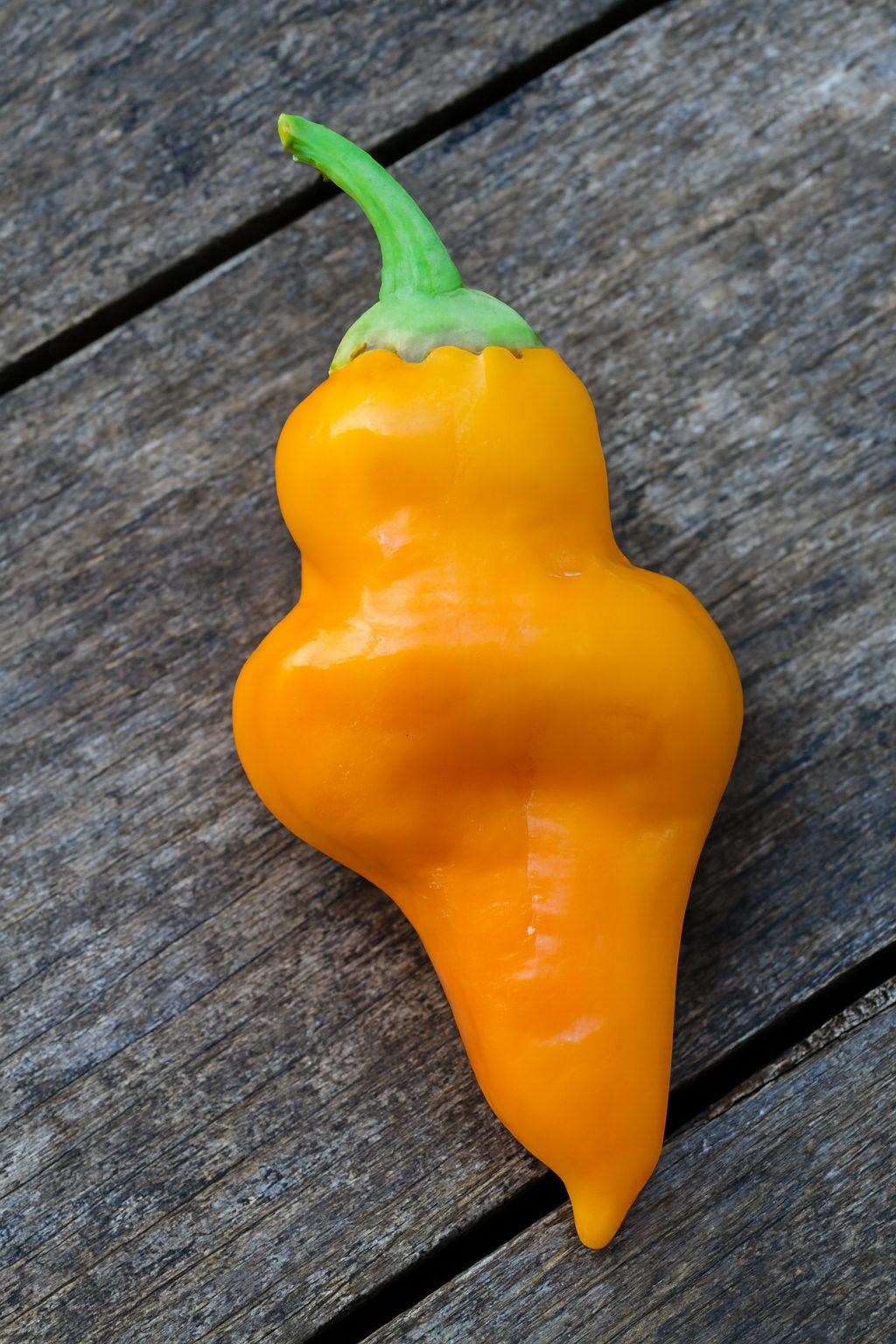
- Shape: The Minkey Face Pepper pods are elongated and highly irregular, featuring a distinctive transverse fold and a central bump. This wrinkled, contorted anatomy strongly resembles a stylized monkey’s face.
- Size: The generously sized fruits measure approximately 8 to 11 cm in length and roughly 3 to 5 cm in diameter. Individual mature pods can reach weights up to 100 grams under optimal conditions.
- Color Stages: Immature: Light Green → Ripe: Golden/Lemon Yellow.
- Wall Thickness: Medium to Thick. The thick walls ensure that the pods retain a fantastic crunch while providing a heavy, meaty texture
- Texture & Skin: The skin is notably wrinkled, tormented, and blistered. It possesses a glossy, waxy sheen that beautifully highlights its unique structural folds when displayed.
Plant Details
- Growth Habit: Monkey Face Pepper exhibits a sturdy, compact, and bushy growth habit. Because the heavy fruit clusters can quickly weigh down the main stems, structural staking is highly recommended by experienced growers.
- Plant Height & Width: 60–90 cm tall, 45–60 cm spread
- Foliage: The plant is adorned with dense, dark green leaves that show standard, smooth features. No major variegation or heavy purple pigment mapping is observed in this standard Capsicum annuum lineage.
- Flower Color: Brilliant, solid white flowers are produced abundantly at the nodes prior to fruit set.
- Days to Maturity: 100 to 140 days from initial seed germination to the final yellow fruit harvest. It is generally classified as a mid-to-late season producer.
- Yield: High – 40–60 pods per plant under optimal conditions
Cultivation Information
- Seed Count per Pack: 5 or 10 seeds
- Germination Time: 7–14 days (Germinating Chilli Seeds)
- Optimal Germination Temp: 24–29°C (Essential guide to ideal temperatures and humidity for chilli seed germination)
- Light Requirements: Filtered sun (minimum 6–8 hours/day)
- Soil Preferences:
- pH: 6.0–7.0
- Well-draining loam enriched with compost (Easy DIY soil mixes)
- Mulch to retain moisture and suppress weeds
Storage Tips: Store Monkey Face pepper seeds in airtight containers in a cool, dry place. Refrigeration with desiccants can extend viability up to 5 years.
Notable Compounds
Capsaicinoid Content:
- Moderate capsaicin and dihydrocapsaicin
- Heat concentration varies by ripeness and stress
Volatile Flavor Compounds:
Anthocyanins / Pigments:
Yellow coloration due to carotenoids; no purple pigmentation
Culinary & Cultural Use
Traditional Uses:Due to the Monkey Face thick flesh and sweet complexity, these peppers are traditionally processed into gourmet tropical hot sauces, summer salsas, and sweet chili jams. They are also hollowed out and used as unique stuffing vessels for savory meat or cheese fillings
Raw vs Cooked Flavor:When consumed raw, Monkey Face pepper offers a juicy, crisp texture with a sharp, bright citrus punch. Conversely, when the pods are slow-roasted or grilled, the natural sugars become beautifully caramelized, which unlocks a deeper, complex flavor profile resembling smoky pineapple.
Regional Dishes:
- While it is not the sole foundational ingredient of an ancient national dish, it is frequently utilized in modern Caribbean-style mango hot sauces and tropical fish stir-fries across coastal regions. It is also sliced thin and used as a fresh topping for artisan flatbreads and summer chicken salads
Storage / Drying / Preserving Tips:
Dry pods whole or sliced in a dehydrator. Pickling is highly effective—use vinegar, garlic, and sugar for a balanced brine. Roasted peppers can be frozen or blended into sauces. For seed saving, allow pods to fully ripen and dry before extraction.



Reviews
There are no reviews yet.