
Description
Product Name: Midnight Lantern
- Cultivar Name: Midnight Lantern
- Species: Capsicum chinense
- Common Names: Midnight Lantern.
- Type: Hybrid
Origin & Lineage
Geographic Origin: Capetown, South Africa
Cultural Significance: None yet
Lineage / Hybridizer History: The Midnight Lantern was created by Tony Lague. The intricate genetic history consists of a deliberate hybridization involving the world-renowned Carolina Reaper, the dark-foliage variant Kathumby Black, and the stunning Roxa Lantern (itself a cross between Chiero Roxa and Scarlet Lantern). The extreme, blistering heat of the Carolina Reaper was masterfully blended with the rich, deep purple hues and structural integrity of the other two parents. Currently, this variety is a F3-generation hybrid, meaning that major variations in pod shape or exact foliage coloration can still occasionally be observed by growers, adding an element of excitement to every harvest.
Heat Profile
- Scoville Rating (SHU): 500,000–800,000 SHU
- Perceived Heat: Extremely Hot
- Heat Characteristics: The heat delivery of the Midnight Lantern is incredibly aggressive, long-lasting, and multi-phased. Upon consumption, an immediate stinging sensation is felt directly on the tip of the tongue and lips, which is a trait inherited from its Kathumby Black ancestry. Within less than a minute, a creeping, devastating wave of superhot intensity begins to descend upon the back of the throat, heavily driven by the heavy capsaicinoid concentration of the Carolina Reaper lineage. This deep, internal burn can easily endure for ten, accompanied by intense physical warmth and endorphin release.
Flavor Profile
- Tasting Notes: Before the overwhelming heat fully takes over the palate, a remarkably complex flavor profile can be appreciated. Initial notes of rich, dark, earthy fruitiness are detected, reminiscent of sweet plums, blackberries, and black cherries. This dark fruit sweetness is paired beautifully with a subtle, smoky, and slightly floral undertone. The classic “perfumey” capsaicin aroma often found in lesser superhots is noticeably absent here, replaced instead by a deeply satisfying, robust savoriness.
- Aftertaste / Finish:The finish is exceptionally long, warm, and memorable. As the peak of the capsaicin storm subsides, a pleasant residual sweetness lingers on the palate, accompanied by a faint, woody smokiness. This ensures that the pepper provides a highly sophisticated culinary experience rather than just a simplistic, painful sting.
- Ideal Pairings: Due to its unique dark fruit flavor, the Midnight Lantern is an exceptional candidate for premium, artisanal hot sauces, particularly those featuring dark berries, figs, or red wine reductions. It functions perfectly when infused into gourmet barbecue rubs, premium spicy honeys, and slow-cooked stews. Additionally, it pairs wonderfully with dark chocolate desserts, where the sharp heat cuts through the rich cacao beautifully.
Fruit Characteristics
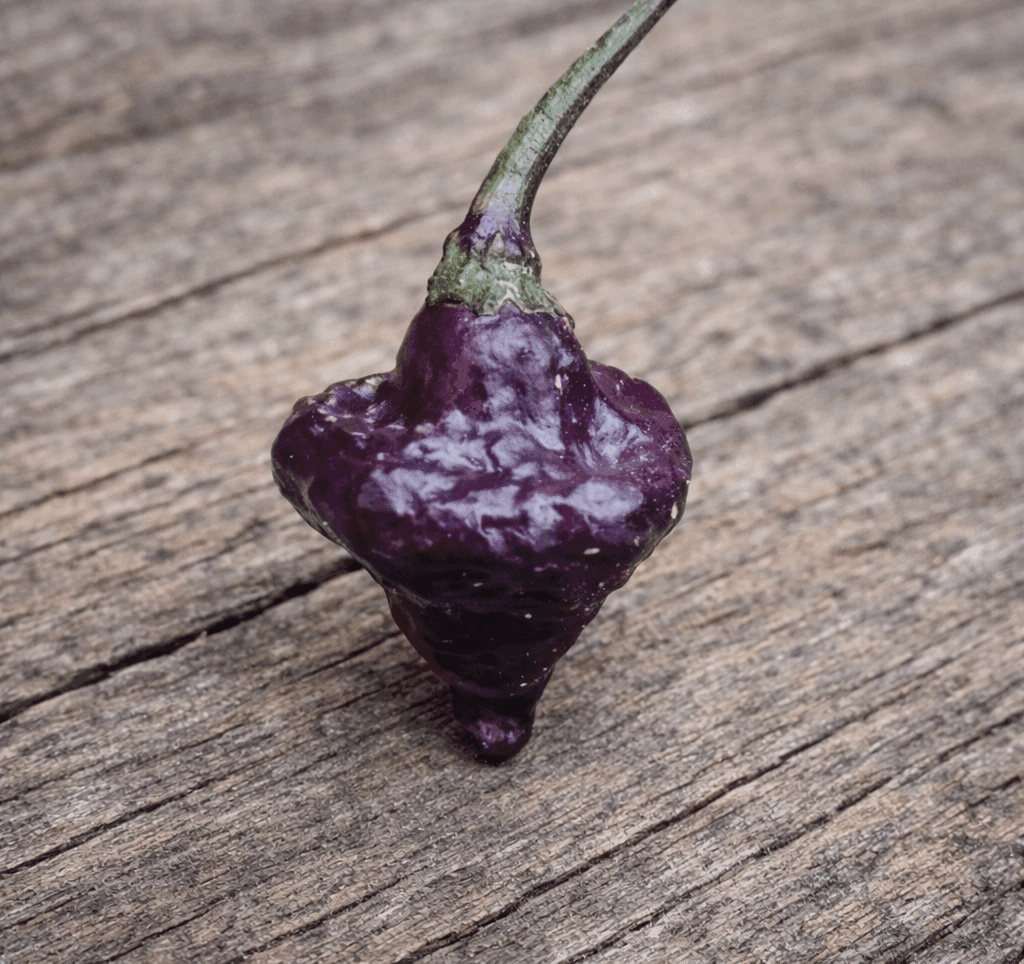
- Shape: The pods generally present a beautifully unique, pendulous lantern shape.
- Size: 2.5–4 cm long, 2 cm diameter
- Color Stages:Immature: deep dark purple where exposed to direct sunlight, with a dark green underbelly in shaded areas → Ripe: a mesmerizing transition into a deep, rich plum purple, finishing with striking dark red, maroon
- Wall Thickness: Medium
- Texture & Skin: The skin is notably glossy, highly blistered, and intricately wrinkled. This bumpy texture gives the pods a sinister, dangerous appearance.
Plant Details
- Growth Habit: Tall and bushy
- Plant Height & Width: 90–120 cm tall, 60–80 cm wide
- Foliage: The foliage is a true standout feature, exhibiting large, mottled dark green leaves that are heavily overlaid with deep purple and jet-black pigmentation due to high anthocyanin production when exposed to UV light. The stems are smooth and completely dark purple from the base to the growing tips, making this plant incredibly ornamental even before it sets fruit.
- Flower Color: Purple, with distinct white accents near the center of the corolla.
- Days to Maturity: 130–150 days from germination
- Yield: High – estimated 60 to 90 pods per plant under optimal growing conditions.
Cultivation Information
- Seed Count per Pack: 5 or 10 seeds (Presoaking Chilli Seeds)
- Germination Time: 7–14 days (Germinating Chilli Seeds)
- Optimal Germination Temp: 25–30°C (Essential guide to ideal temperatures and humidity for chilli seed germination)
- Light Requirements: Filtered sun
- Soil Preferences: Prefers well-drained, nutrient-rich soil with a pH of 6.0–6.8. Incorporate compost and perlite for aeration and moisture retention (Easy DIY soil mixes)
- Storage Tips: Store seeds in airtight containers in a cool, dry place. Avoid humidity and direct light to maintain viability for up to 3 years.
Notable Compounds
- Capsaicinoid Content: The chemical composition of the Midnight Lantern is dominated by high concentrations of capsaicin and dihydrocapsaicin. These specific alkaloid compounds are produced within the glands of the inner placental tissue, coating the seeds and internal walls in visible yellow capsaicin oil.
- Volatile Flavor Compounds: Extensive aromatic qualities are provided by a diverse range of volatile organic compounds. Traces of specific esters and terpenes, such as limonene and beta-caryophyllene, contribute significantly to the underlying fruity, citrus-like, and woody aromas that can be smelled immediately upon slicing open a fresh pod.
- Anthocyanins / Pigments:The stunning dark coloration of both the foliage and the immature fruit is caused by a massive presence of natural anthocyanin pigments. These compounds act as a natural sunscreen for the plant, shielding delicate tissues from intense ultraviolet rays while creating an exquisite visual display.
Culinary & Cultural Use
- Traditional Uses: While not tied to heritage recipes, Roxa Lantern Black has been adopted into modern hot sauce formulations and experimental dishes. It is used in fruit-based salsas, fermented pepper pastes, and infused oils.
- Raw vs Cooked Flavor: Raw pods deliver a sharp, fruity bite with immediate heat. Cooking enhances the earthy tones and reduces bitterness. Roasting deepens the flavor, while pickling preserves the pigmentation and adds tang.
- Regional Dishes: While not an ingredient in ancient historical recipes, it can be seamlessly introduced into modern adaptations of traditional hot sauces, spicy Caribbean style curries, and regional Mexican hot salsas. It is particularly effective when blended into deep, rich chocolate mole sauces.
- Storage / Drying / Preserving Tips: Dry pods in a shaded, ventilated area to retain pigmentation. Once dried, they may be ground into powder or stored whole. Fermentation with garlic and vinegar yields a complex, shelf-stable condiment.


Reviews
There are no reviews yet.