
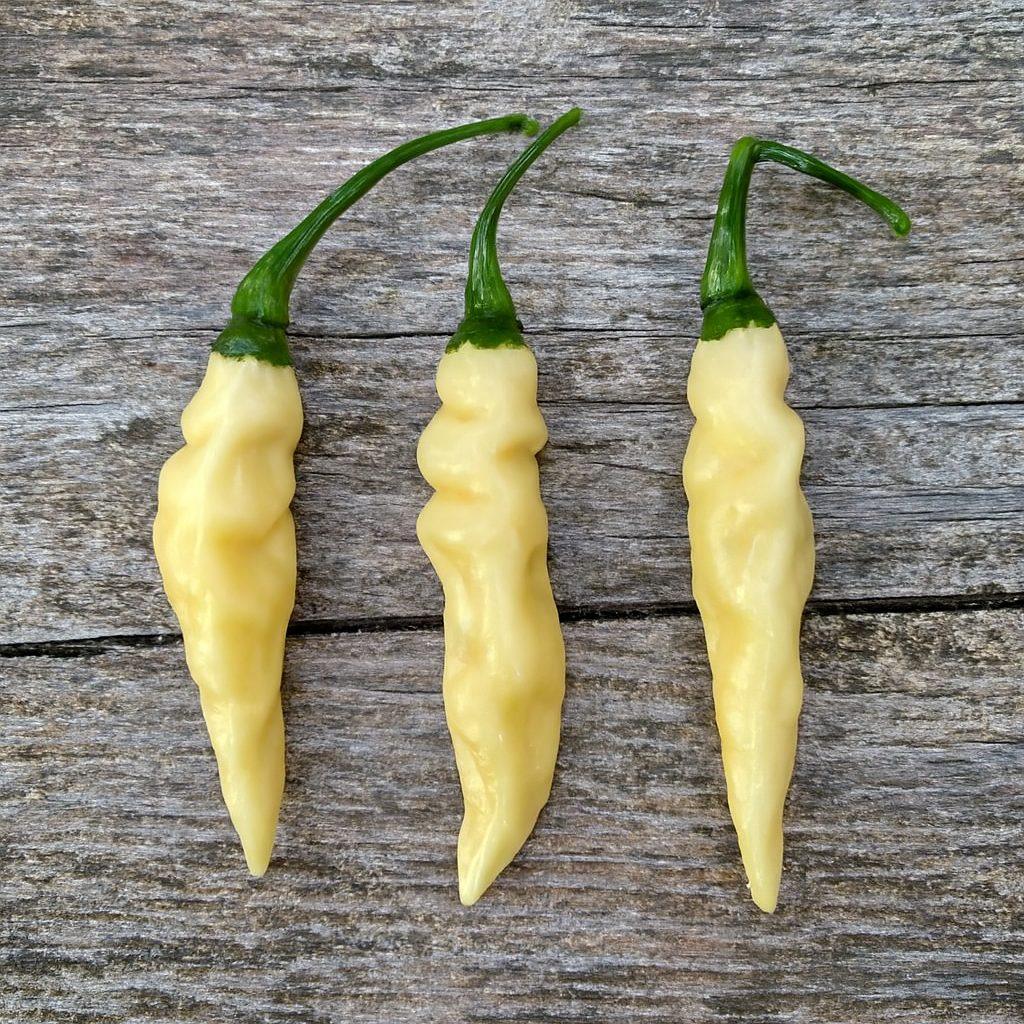
Description
Product Name: Marupi Amarela
Marupi Amarela is a rare heirloom cultivar of Capsicum chinense, originating from the Amazonian region of Brazil. Known for its creamy white pods and intense heat, this variety combines ornamental beauty with culinary potency. It is widely appreciated for its citrus-forward flavor and robust productivity, making it a standout choice for growers seeking both aesthetic appeal and high-performance yields. Despite its delicate appearance, Marupi Amarela delivers a heat level comparable to habaneros, and its compact growth habit makes it suitable for container cultivation and small garden spaces.
- Cultivar Name: Marupi Amarela
- Species: Capsicum chinense
- Common Names: Murupi Amarela, Yellow Murupi
- Type: Heirloom
Origin & Lineage
Geographic Origin: Marupi Amarela hails from the northern Amazon basin of Brazil, where it has been cultivated by indigenous communities and smallholder farmers for generations. Its adaptation to humid, tropical conditions and its compact stature suggest a lineage shaped by both environmental pressures and selective cultivation. The name “Murupi Amarela” translates to “Yellow Murupi,” referencing its pale coloration and regional heritage.
Cultural Significance: In Brazilian culinary tradition, Marupi Amarela is valued for its ability to impart heat without altering the color of dishes. This trait is particularly useful in preparations involving white meats, seafood, and light sauces. Indigenous Amazonian communities have historically used this pepper not only for cooking but also for medicinal purposes, including digestive tonics and topical applications. While no formal ritual use has been documented, its presence in traditional recipes such as Moqueca and Vatapá underscores its cultural embeddedness.
Lineage / Hybridizer History: The precise breeder of Marupi Amarela remains undocumented, as it is considered a landrace or regionally stabilized heirloom. Its genetic profile aligns closely with other Capsicum chinense cultivars, such as Habanero and Scotch Bonnet, though its pale coloration and elongated pod shape distinguish it from more common varieties. Conservation efforts by seed banks and specialty growers have ensured its preservation.
Heat Profile
- Scoville Rating (SHU): Approximately 100,000 SHU
- Perceived Heat: Extremely Hot
- Heat Characteristics: The heat of Marupi Amarela is immediate and lingering, often described as a deep burn that intensifies over time. Despite its small size and pale appearance, the pods deliver a potent punch. The heat is concentrated in the placenta and inner walls, making it advisable to handle with care. When dried, the heat becomes slightly more subdued but remains assertive in powders and flakes.
Flavor Profile
- Tasting Notes: Marupi Amarela offers a bright, citrus-forward flavor with notes of lemon zest and tropical fruit. The chinense lineage contributes a floral undertone that complements its sweetness.
- Aftertaste / Finish: The finish is clean yet fiery, with a lingering citrus tang and a subtle bitterness that emerges when cooked.
- Ideal Pairings: This cultivar pairs exceptionally well with seafood, chicken, and tropical fruits. It enhances ceviche, mango salsas, and coconut-based stews. When dried, it can be used in rubs for grilled meats or incorporated into jams and chutneys for a sweet-heat balance.
Fruit Characteristics
- Shape: Long, narrow, and slightly twisted with a pointed tip
- Size: Approximately 6–7 cm long, 1 cm diameter
- Color Stages: Immature: light green → Ripe: creamy white
- Wall Thickness: Thin
- Texture & Skin: Wrinkled and crinkly, with a slightly blistered surface that becomes more pronounced upon drying
Plant Details
- Growth Habit: Compact
- Plant Height & Width: 60 cm tall, 40 cm wide
- Foliage: Dark green, lightly pubescent
- Flower Color: White
- Days to Maturity: 100–120 days from germination
- Yield: High – capable of producing 40–60 pods per plant under optimal conditions
Cultivation Information
- Seed Count per Pack: 5 or 10 seeds (Presoaking Chilli Seeds)
- Germination Time: 14–21 days (Germinating Chilli Seeds)
- Optimal Germination Temp: 25–30°C (Essential guide to ideal temperatures and humidity for chilli seed germination)
- Light Requirements: Filtered sun
- Soil Preferences: Prefers well-drained, loamy soil with a pH of 6.0–6.8. Organic matter such as compost or worm castings enhances root development (Easy DIY soil mixes)
- Storage Tips: Store seeds in airtight containers in a cool, dry place. Avoid exposure to light and moisture to maintain viability for up to 3 years.
Notable Compounds
- Capsaicinoid Content: High concentrations of capsaicin and dihydrocapsaicin contribute to its intense heat
- Volatile Flavor Compounds: Contains limonene and trace esters, which impart citrus aroma and flavor
- Anthocyanins / Pigments: No purple pigmentation observed; pale coloration is due to low anthocyanin expression and high carotenoid content
Culinary & Cultural Use
- Traditional Uses: Marupi Amarela is used in Brazilian cuisine to create hot sauces, spice blends, and fermented pastes. It is also dried and ground into powder for use in rubs and marinades.
- Raw vs Cooked Flavor: When raw, the pods offer a crisp texture and bright citrus flavor. Cooking deepens the sweetness and reduces the sharpness of the heat. Roasting enhances the floral notes, while pickling introduces a tangy contrast.
- Regional Dishes: Commonly featured in Moqueca (Bahian fish stew), Vatapá (shrimp and peanut paste), and Ceviche preparations. It is also used in artisanal hot sauces and jams.
- Storage / Drying / Preserving Tips: Dry pods in a shaded, well-ventilated area to preserve color and flavor. Once dried, store in airtight containers or grind into powder. For fermentation, combine chopped pods with salt and garlic, allowing natural lacto-fermentation over 2–3 weeks.


Reviews
There are no reviews yet.