

Description
Product Name: Kashmiri Mirch Chilli Seeds
Cultivar Name: Kashmiri Mirch
Species: Capsicum annuum
Common Names: Kashmiri Red Chilli, Kashmiri Lal Mirch, Kashmiri Paprika
Type: Heirloom
Origin & Lineage
Geographic Origin: The Kashmiri Mirch—also known as Kashmiri Laal Mirch—is primarily cultivated in the Kashmir Valley, nestled in the northern reaches of India. This region’s cool climate, fertile alluvial soil, and high-altitude sunlight contribute to the pepper’s signature traits: intense red pigmentation, thin skin, and gentle heat. Additional cultivation occurs in Himachal Pradesh and Goa, where similar agro-climatic conditions allow for regional adaptation.
Although all Capsicum annuum cultivars trace their ancestry to Central and South America, the Kashmiri Mirch has been locally selected and stabilized over generations by farmers in the region. Its development was guided not by formal breeding programs but by traditional agricultural knowledge, emphasizing color over pungency. The result is a pepper that’s mild in heat (1,000–2,000 SHU) but rich in carotenoids, especially capsanthin, which gives it its iconic crimson hue.
Due to its popularity, Kashmiri Mirch is now grown outside its namesake region, but true Kashmiri-grown pods remain prized for their authenticity and depth of color.
Cultural Significance: Kashmiri Mirch is a cornerstone of Indian culinary aesthetics, prized not for its heat but for its visual and flavor-enhancing properties. It’s used extensively in:
- Curries and gravies—to impart a deep red hue without overpowering spice
- Tandoori marinades—for color and a subtle smoky sweetness
- Pickles and chutneys—where its mildness balances stronger ingredients
- Signature Kashmiri dishes like Rogan Josh, Dum Aloo, and Yakhni, where it’s essential to both flavor and presentation
Its accessibility across spice tolerances makes it a favorite in home kitchens and professional spice blends. In fact, many Indian restaurants use Kashmiri Mirch powder to achieve the vibrant red color associated with dishes like Butter Chicken and Tandoori Paneer, often blending it with hotter varieties for layered heat.
Beyond India, Kashmiri Mirch has gained global recognition in Durban curry blends, British-Indian cuisine, and artisan spice rubs, where its color and mildness are celebrated.
Lineage / Hybridizer History: Kashmiri Mirch is a naturally selected heirloom, not a commercial hybrid. It belongs to the species Capsicum annuum, and while multiple strains exist, the traditional form is open-pollinated, meaning it can be reliably grown from saved seed without loss of key traits.
Farmers in Kashmir have long practiced seed selection based on pigment concentration, pod shape, and drying behavior. The peppers are typically sun-dried, resulting in wrinkled, jewel-toned pods that release their full color when ground into powder. This drying process is central to the pepper’s identity, with whole dried pods considered the most authentic representation.
Commercial brands such as MDH, Everest, and Badshah Masala offer powdered Kashmiri Mirch, but due to high demand, substitutes like Byadagi chilli are sometimes used to mimic its color. Government initiatives in Jammu and Kashmir have been launched to protect and promote the local variety, recognizing its cultural and economic importance.
Heat Profile
Scoville Rating (SHU):
1,000–2,000 SHU
Perceived Heat: Mild
Heat Characteristics: Gentle warmth that builds slowly and fades quickly. The heat is subtle, making it ideal for layering flavor without overpowering a dish. It’s often used in combination with hotter chillies to balance color and spice.
Flavor Profile
Tasting Notes:
Fruity, slightly smoky, and sweet. The aroma is floral and earthy, with hints of dried berries and tea.
Aftertaste / Finish:
Clean and mellow, with a faint tang. No lingering bitterness.
Ideal Pairings:
- Tandoori marinades and rubs
- Tomato-based curries and gravies
- Pickles and chutneys
- Spice blends like garam masala
- Fermented sauces with garlic and mustard seed
Fruit Characteristics
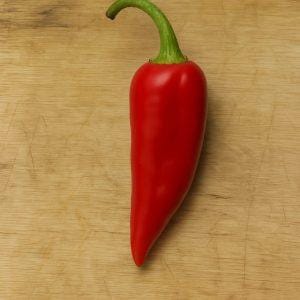
Shape: Slender, slightly curved pods with pointed tips
Size: 6–8 cm long, 1.5–2 cm diameter
Color Stages:
- Immature: Green
- Ripe: Deep crimson red
- Dried: Wrinkled, dark red to brownish
Wall Thickness: Thin
Texture & Skin: Wrinkled and leathery when dried; smooth when fresh
Plant Details
Growth Habit: Bushy and upright
Plant Height & Width:
Height: 60–100 cm
Width: 50–70 cm
Foliage: Bright green, smooth leaves
Flower Color: White
Days to Maturity: 90–110 days from transplant
Yield: Moderate – typically 40–60 pods per plant under optimal conditions
Cultivation Information
Seed Count per Pack: 5 or 10 seeds
Germination Time: 10–20 days (Germinating Chilli Seeds)
Optimal Germination Temp: 25–30°C (Essential guide to ideal temperatures and humidity for chilli seed germination)
Light Requirements: Filtered sun
Soil Preferences:
- pH: 6.0–6.8
- Loamy, well-draining soil
- Benefits from compost and moderate irrigation (Easy DIY soil mixes)
Storage Tips:
Store seeds in a cool, dry place. Refrigeration at 4–8°C extends viability. Avoid moisture and direct light.
Notable Compounds
Capsaicinoid Content: Low capsaicin concentration; typically around 0.325%
Volatile Flavor Compounds: Limonene, citral, and trace esters contribute to the fruity aroma
Anthocyanins / Pigments: High carotenoid content, especially capsanthin and capsorubin; ASTA color value ~54.10
Culinary & Cultural Use
Traditional Uses:
- Kashmiri Rogan Josh
- Dum Aloo
- Tandoori marinades
- Pickled vegetables
- Spice blends and masalas
Raw vs Cooked Flavor: Raw pods are mildly sweet and aromatic. Cooking enhances the color and deepens the fruity notes. Roasting or frying in oil intensifies the pigment release.
Regional Dishes:
- Rogan Josh (Kashmir)
- Misal Pav (Maharashtra)
- Tandoori Chicken (Pan-India)
- Pav Bhaji (Mumbai street food)
Storage / Drying / Preserving Tips:
- Traditionally sun-dried for maximum pigment retention
- Can be ground into powder or flakes
- Store in airtight containers away from light and humidity



Reviews
There are no reviews yet.