

Description
Product Name: Hot Portugal Chilli Seeds
Species: Capsicum annuum
Common Names: Hot Portugal, Portuguese Cayenne
Type: Heirloom
Origin & Lineage
Geographic Origin: Despite its evocative name, the Hot Portugal pepper was not developed in Portugal. Its commercial debut occurred in the United States, specifically through Joseph Harris & Co. of Coldwater, New York, around 19352. The name likely pays homage to Iberian cultivars introduced to Europe via Spanish and Portuguese explorers during the 15th and 16th centuries. These explorers helped disseminate Capsicum annuum from its native range in Central and South America to Europe, where it was embraced and adapted into regional cuisines.
While the Hot Portugal may carry genetic echoes of Iberian landraces, its modern phenotype—long, glossy red fruits with cayenne-like heat—was selected and stabilized in North America. It’s considered a U.S.-bred heirloom, and its name reflects cultural inspiration rather than direct geographic lineage.
Cultural Significance: The Hot Portugal pepper has earned a loyal following among home gardeners and small-scale growers for its early ripening, vigorous yields, and versatile culinary profile. It’s especially valued in cooler climates, where its dependable performance makes it a go-to choice for growers seeking heat without the unpredictability of tropical cultivars.
In the kitchen, Hot Portugal peppers are celebrated for their sweet heat—a flavor that bridges the gap between cayenne and Anaheim. They’re used fresh in salsas and stir-fries, dried for flakes and powders, and roasted or fermented into hot sauces. In Portugal, similar peppers are traditionally ground into pimenta moída, a fermented red pepper paste used on grilled meats, fish, and bread. While the Hot Portugal itself isn’t tied to ritual or folklore, it plays a quiet but essential role in spicy home cooking, seed-saving communities, and regional food traditions.
Its popularity has surged in recent years thanks to the Seed Savers Exchange, which helped preserve and distribute the cultivar to a new generation of growers seeking reliable, open-pollinated varieties.
Lineage / Hybridizer History: The Hot Portugal pepper was first offered by Joseph Harris & Co., a respected seed company known for introducing hardy, productive cultivars to American growers. In 1935, the variety was shared with the Seed Savers Exchange, a nonprofit dedicated to preserving heirloom genetics. Since then, it has remained open-pollinated, meaning it breeds true from seed without requiring hybridization.
There is no known hybrid parentage in its lineage, and it has not been subjected to commercial crossbreeding programs. Its stability and uniformity are the result of generational selection, not genetic engineering. This makes it a favorite among heirloom enthusiasts, seed libraries, and growers who value genetic transparency and seed sovereignty.
Botanically, it belongs to Capsicum annuum, and is often classified as a cayenne-type due to its elongated shape and moderate-to-hot Scoville rating, which can range from 5,000 to 30,000 SHU, occasionally peaking at 50,000 SHU.
Heat Profile
Scoville Rating (SHU):
5,000–30,000 SHU
Perceived Heat: Medium
Heat Characteristics: The heat is clean and direct, similar to cayenne but slightly sweeter. It builds quickly and fades within minutes, making it suitable for fresh use, cooking, and drying. Seeds and membranes carry most of the heat.
Flavor Profile
Tasting Notes: Sweet, slightly smoky, and peppery with a crisp vegetal base. The flavor intensifies when roasted or dried.
Aftertaste / Finish: Mild bitterness with a lingering warmth. The finish is clean and earthy.
Ideal Pairings:
- Roasted and blended into red sauces
- Sliced fresh into spicy slaws
- Dried and crushed for flakes
- Stuffed with cheese or grains
- Simmered into soups and stews
Fruit Characteristics
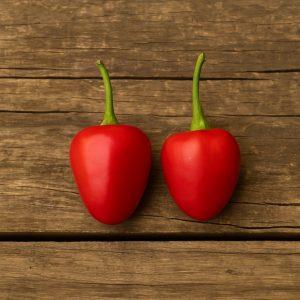
Shape: Long, tapered pods with slight curvature
Size: 12–20 cm long, 2–3 cm diameter
Color Stages:
- Immature: Glossy green
- Ripe: Deep red
Wall Thickness: Thin to medium
Texture & Skin: Smooth to slightly wrinkled; glossy and waxy surface
Plant Details
Growth Habit: Upright and bushy
Plant Height & Width:
Height: 80–100 cm
Width: 50–70 cm
Foliage: Bright green, smooth leaves
Flower Color: White
Days to Maturity: 75–90 days from transplant; one of the earliest ripening chillies
Yield: High – typically 50–80 pods per plant under optimal conditions
Cultivation Information
Seed Count per Pack: 5 or 10 seeds
Germination Time: 10–20 days (Germinating Chilli Seeds)
Optimal Germination Temp: 24–30°C (Essential guide to ideal temperatures and humidity for chilli seed germination)
Light Requirements: Filtered sun
Soil Preferences:
- pH: 6.0–6.8
- Well-draining, fertile soil
- Benefits from compost and mulch (Easy DIY soil mixes)
Storage Tips: Store Hot Portugal seeds in a cool, dry place. Refrigeration at 4–8°C extends viability. Avoid moisture and direct light.
Notable Compounds
Capsaicinoid Content: Moderate capsaicin and dihydrocapsaicin; heat concentrated in seeds and placenta
Volatile Flavor Compounds: Hexanal, pyrazines, and trace esters contribute to the sweet-spicy aroma
Anthocyanins / Pigments: Low anthocyanin expression; red coloration driven by carotenoids like capsanthin and capsorubin
Culinary & Cultural Use
Traditional Uses:
- Portuguese-style spicy stews
- American hot sauces and flakes
- Pickled whole or sliced
- Stuffed and baked with cheese or rice
Raw vs Cooked Flavor: Raw Hot Portugal pods are crisp and sweet with moderate heat. Cooking enhances smokiness and softens bitterness. Drying concentrates flavor and heat.
Regional Dishes:
- Portuguese piri-piri-style sauces
- American chili flakes
- Mediterranean stuffed peppers
- Spicy tomato-based soups
Storage / Drying / Preserving Tips:
- Excellent for air-drying or dehydrating
- Can be fermented into sauces
- Powdered form retains color and heat for seasoning blends


Reviews
There are no reviews yet.