
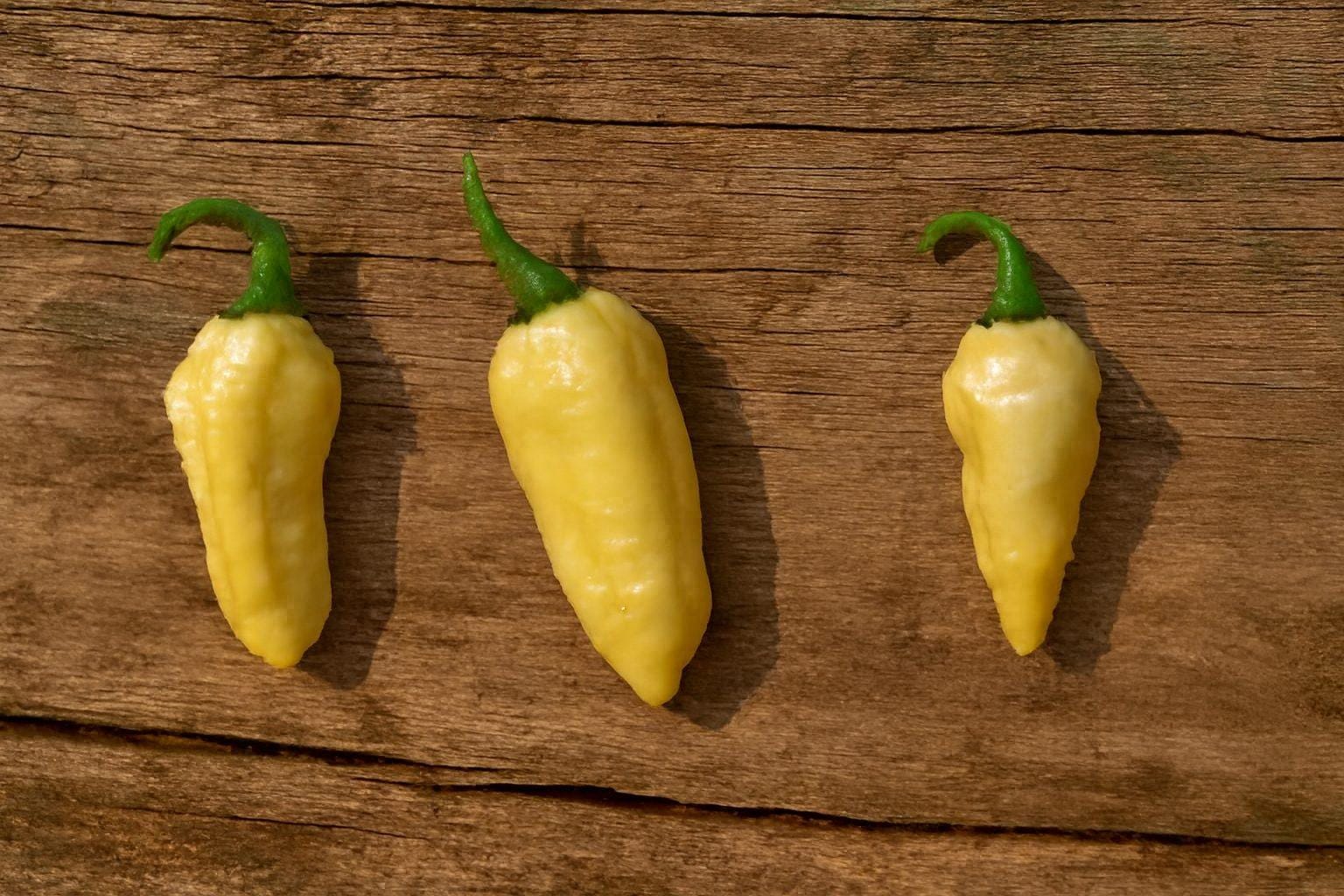
Description
Product Name: Cream Carbonero
Cultivar Name: Cream Carbonero
Species: Capsicum chinense
Common Names: Carbonero Cream, White Carbonero
Type: Hybrid
Origin & Lineage
Geographic Origin:
The Cream Carbonero was developed in the United States, with its lineage tracing back to Florida. It emerged as a stabilized variant of the original Carbonero pepper, which itself was bred by Tony Sherwood. The cultivar’s creamy coloration and compact growth habit have made it a standout among ornamental and culinary superhots. Though not native to any one region, it has been cultivated and refined through successive generations by hobbyists and breeders in North America.
Cultural Significance:
While the Cream Carbonero has not yet entered traditional culinary or ritual use, its aesthetic appeal and unique flavor have earned it a place in modern chili culture. It is often grown for its ornamental value and used in boutique hot sauces and fermented blends. The creamy-white pods evoke curiosity and are frequently featured in social media posts and grower showcases. Although folklore has not formed around this cultivar, its name and appearance have contributed to its cult status among collectors and experimental chefs.
Lineage / Hybridizer History:
Cream Carbonero is a complex hybrid derived from a cross between White Bhut Jolokia (also known as White Ghost Pepper) and the original Carbonero Orange. The Carbonero Orange itself is a three-way cross involving Bhut Carbon, Yellow 7 Pot, and Orange Habanero. The cream variant was later stabilized through open pollination and selective seed saving, resulting in a reproducible phenotype with ivory-colored pods and consistent heat. Although Tony Sherwood is credited with the original Carbonero, the exact breeder of the cream variant remains unconfirmed. Nonetheless, the cultivar has been stabilized and is now considered true-to-type for its key traits.
Heat Profile
Scoville Rating (SHU):
Estimated between 300,000–350,000 SHU
Perceived Heat:
Extremely Hot (150,000 to 500,000 SHU)
Heat Characteristics:
The Cream Carbonero delivers a slow-building heat that begins with a gentle glow and intensifies into a full-mouth burn. The heat is concentrated in the placenta and inner walls, and it tends to linger long after consumption. Unlike some superhots that overwhelm immediately, this cultivar offers a more gradual crescendo, making it suitable for sauces that require layered intensity. Roasting and fermentation slightly mellow the burn, but the pepper retains its potency across preparations.
Flavor Profile
Tasting Notes:
Fresh pods offer a tropical fruitiness with citrus and floral overtones. The flavor is bright and slightly sweet, reminiscent of orange peel and mango. A mild bitterness may be present in immature pods, but this fades as the fruit ripens. The aroma is floral with hints of capsaicin and citrus zest.
Aftertaste / Finish:
The finish is warm and lingering, with a subtle tang that complements the initial sweetness. When roasted, the flavor deepens into a smoky, caramelized profile. Fermentation introduces savory and umami notes, enhancing the pepper’s complexity.
Ideal Pairings:
- Tropical fruit-based hot sauces (mango, pineapple, papaya)
- Fermented chili pastes with garlic and onion
- Creamy aioli-style sauces with citrus zest
- Pickled medleys with carrots and pearl onions
- Roasted pepper spreads for grilled meats and vegetables
Fruit Characteristics
Shape:
Pods are elongated and slightly twisted, often with a wrinkled or lightly blistered surface
Size:
Approximately 5–6 cm long, 2–2.5 cm diameter
Color Stages:
Immature: pale green → Ripe: creamy white or ivory
Wall Thickness:
Medium
Texture & Skin:
Smooth with occasional wrinkling; skin is firm and glossy when ripe.
Plant Details
Growth Habit:
Bushy and compact, ideal for container growing and greenhouse cultivation
Plant Height & Width:
Height: 60–90 cm
Width: 50–70 cm
Foliage:
Dark green, slightly pubescent leaves with broad coverage
Flower Color:
White
Days to Maturity:
Approximately 100–120 days from germination
Yield:
High – plants produce abundant pods across multiple flushes throughout the season.
Cultivation Information
Seed Count per Pack:
5 or 10 seeds (Presoaking Chilli Seeds)
Germination Time:
7–14 days (Germinating Chilli Seeds)
Optimal Germination Temp:
25–30°C (Essential guide to ideal temperatures and humidity for chilli seed germination)
Light Requirements:
Filtered sun
Soil Preferences:
Prefers well-draining soil with a pH of 6.2–6.8, enriched with compost and perlite for aeration (Easy DIY soil mixes)
Storage Tips:
Store Cream Carbonero seeds in airtight containers in a cool, dry environment. Refrigeration is recommended for long-term viability. Avoid exposure to humidity and direct light.
Notable Compounds
Capsaicinoid Content:
High concentrations of capsaicin and dihydrocapsaicin contribute to its extreme heat classification
Volatile Flavor Compounds:
Limonene and esters are likely present, contributing to the citrus aroma and fruity flavor. Vanillin and aldehydes may emerge during roasting
Anthocyanins / Pigments:
Minimal anthocyanin expression; coloration is dominated by carotenoids responsible for the creamy-white hue.
Culinary & Cultural Use
Traditional Uses:
As a modern hybrid, Cream Carbonero has not yet entered traditional culinary use. However, it has been embraced in contemporary hot sauce production and gourmet chili pastes. Its unique color and flavor make it a favorite among experimental chefs and artisan producers.
Raw vs Cooked Flavor:
Raw Cream Carbonero pods deliver a crisp, fruity heat with floral undertones. Roasting enhances sweetness and introduces a smoky depth. Fermentation brings out savory and umami layers, while pickling intensifies the tanginess and preserves the pod’s pale coloration.
Regional Dishes:
Although not featured in named regional dishes, Cream Carbonero has been successfully incorporated into:
- Mango-cream hot sauces
- Fermented chili pastes with citrus and garlic
- Pickled chili blends for tacos and grilled meats
- Roasted pepper rubs for poultry and pork
Storage / Drying / Preserving Tips:
Drying is best achieved using a dehydrator or by air-drying in a warm, low-humidity environment. Slice pods to accelerate drying and reduce mold risk. For fermentation, submerge sliced pods in brine with garlic and spices for 7–14 days. Pickling should be done in vinegar-based solutions with added sugar and salt to balance flavor. Store dried pods in airtight containers away from light and moisture.


Reviews
There are no reviews yet.