
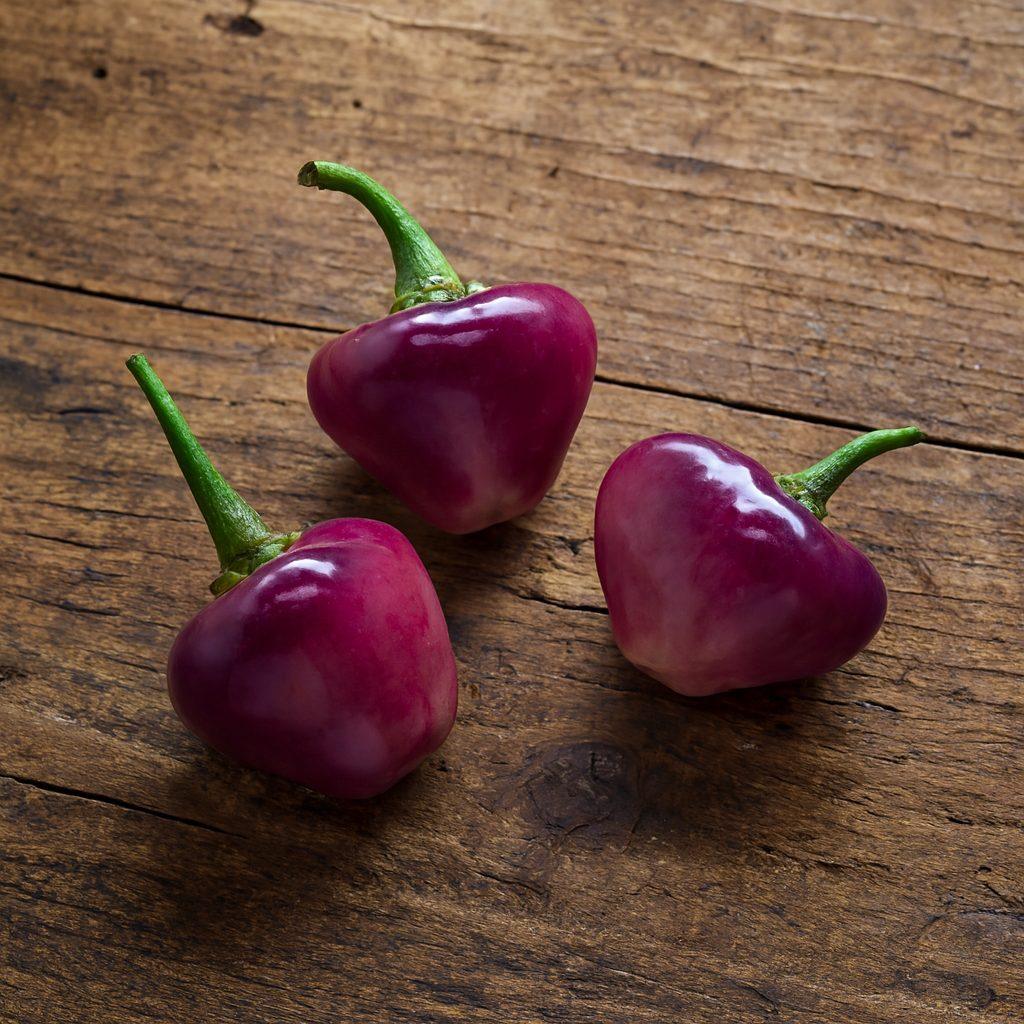
Description
Cheiro Roxa
Product Name: Cheiro Roxa
Cheiro Roxa is a visually stunning and flavor-rich cultivar of Capsicum chinense, originating from Brazil and revered for its unique pigmentation, aromatic complexity, and culinary versatility. Often described as one of the most beautiful ornamental peppers available, Cheiro Roxa combines deep purple foliage and pods with a fruity, floral heat that rivals traditional habanero types. Despite its ornamental appeal, this variety is not just grown for aesthetics—it delivers a bold, citrusy punch that makes it a standout in salsas, sauces, and fermented preparations. Its name, translating loosely to “purple scent,” reflects both its vibrant hue and its fragrant profile.
Cultivar Name: Cheiro Roxa
Species: Capsicum chinense
Common Names: Purple Perfume, Purple Fragrance, Cheiro Roxa
Type: Heirloom, Ornamental
Origin & Lineage
Geographic Origin:
Cheiro Roxa originates from Brazil, where it has been cultivated for generations as both a culinary and ornamental variety. The name itself is a fusion of Portuguese and indigenous Brazilian language roots—“cheiro” meaning scent or aroma, and “roxa” meaning purple. This cultivar is considered a landrace, having been stabilized through farmer selection rather than formal hybridization. It was later introduced to international seed markets, where it gained popularity for its dual-purpose appeal.
Cultural Significance:
In Brazilian cuisine, Cheiro Roxa is used to add aromatic heat to stews, sauces, and marinades. Its compact size and vivid coloration have also made it a favorite in urban gardens and edible landscaping projects. While not associated with ritual use, its name and appearance evoke a sensory experience that aligns with Brazil’s rich culinary and botanical traditions. The pepper’s ornamental value has led to its inclusion in flowerbeds and container gardens, where it serves as both a visual and edible asset.
Lineage / Hybridizer History:
Cheiro Roxa is an open-pollinated heirloom cultivar, not the result of modern hybridization. Its stability and consistent traits are the product of generational selection by Brazilian farmers. Though no single breeder is credited, its preservation and distribution have been supported by seed banks and specialty growers. The cultivar has been catalogued under various names, including Purple Perfume and Cheiro Roxa, depending on the region and vendor.
Heat Profile
Scoville Rating (SHU): 60,000–80,000 SHU
Perceived Heat: Very Hot (50,000 to 150,000 SHU)
Heat Characteristics:
The heat of Cheiro Roxa is sharp and immediate, with a clean burn that builds quickly and fades evenly. It sits above cayenne in intensity but below the habanero, making it suitable for those seeking bold flavor without overwhelming fire. The pungency is concentrated in the placenta and inner membranes, and it intensifies as the pods mature. When dried or fermented, the heat becomes more rounded and slightly smoky.
Flavor Profile
Tasting Notes:
Cheiro Roxa offers a fruity, floral flavor with notes of plum, apricot, and citrus. The aroma is sweet and perfumed, reminiscent of lilac or tropical blossoms. Unlike many ornamental varieties, it does not sacrifice flavor for appearance.
Aftertaste / Finish:
The finish is clean and slightly bitter, with lingering floral notes and a mild tannic dryness. When roasted, the bitterness softens and the fruitiness deepens, creating a more complex flavor profile.
Ideal Pairings:
- Tropical fruit salsas
- Fermented hot sauces
- Pickled vegetable medleys
- Roasted meats and root vegetables
- Infused oils and vinegars
Fruit Characteristics
Shape: Squat, lantern-shaped pods with a slight taper
Size: 2–3 cm long, 1.5–2 cm diameter
Color Stages:
- Immature: dark purple
- Ripe: creamy pink to lavender-red
Wall Thickness: Medium
Texture & Skin: Smooth with occasional blistering; firm and glossy
Plant Details
Growth Habit: Bushy
Plant Height & Width: 90–120 cm tall, 60–80 cm wide
Foliage: Dark green to purple, pubescent
Flower Color: White with purple streaks
Days to Maturity: 90–100 days from transplant
Yield: Moderate – typically 50–100 pods per plant under optimal conditions
Cultivation Information
Seed Count per Pack: 5 or 10 seeds (Presoaking Chilli Seeds)
Germination Time: 7–14 days (Germinating Chilli Seeds)
Optimal Germination Temp: 25–30°C (Essential guide to ideal temperatures and humidity for chilli seed germination)
Light Requirements: Filtered sun
Soil Preferences:
- pH: 6.2–6.8
- Well-drained loamy soil
- High organic matter content (Easy DIY soil mixes)
Storage Tips:
Store Cheiro Roxa seeds in airtight containers in a cool, dry place. For long-term viability, refrigeration at 4–8°C is recommended. Avoid exposure to humidity and direct sunlight.
Notable Compounds
Capsaicinoid Content:
- Capsaicin
- Dihydrocapsaicin
These compounds contribute to the pepper’s pungency and metabolic effects, with concentrations increasing as the pods ripen.
Volatile Flavor Compounds:
- Limonene (citrus aroma)
- Beta-ionone (floral and fruity notes)
- Trace vanillin (sweetness in dried pods)
Anthocyanins / Pigments:
The deep purple coloration is due to anthocyanins, particularly delphinidin and petunidin derivatives. These pigments are expressed in the fruit skin and foliage, and may fade slightly during cooking or drying.
Culinary & Cultural Use
Traditional Uses:
Cheiro Roxa is used in Brazilian stews, sauces, and marinades. Its fruity heat makes it suitable for ají-style condiments and tropical salsas.
Raw vs Cooked Flavor:
Raw Cheiro Roxa pods deliver a crisp, fruity bite with immediate heat. Cooking enhances sweetness and reduces bitterness, especially when roasted or grilled. Pickling preserves the color and adds tang, making it ideal for visual and flavor contrast.
Regional Dishes:
- Brazilian-style pepper sauces
- Tropical chutneys with mango or papaya
- Pickled relishes for grilled meats
- Fermented mash for artisanal hot sauces
Storage / Drying / Preserving Tips:
- Air-dry pods in a shaded, ventilated area
- Use dehydrators at 45–50°C for consistent drying
- Store dried pods in glass jars with desiccant packs
- Ferment in 2% salt brine for 2–3 weeks, then refrigerate
- Freeze whole pods for up to 6 months


Reviews
There are no reviews yet.