

Description
Carbonero
Product Name: Carbonero
Cultivar Name: Carbonero
Species: Capsicum chinense
Common Names: Carbonero Orange
Type: Hybrid
Origin & Lineage
Geographic Origin:
The Carbonero pepper was developed in Florida, United States, by Tony “Pepper T” Sherwood in 2012. It emerged from a series of intentional crosses involving three distinct superhot cultivars: Bhut Jolokia Indian Carbon, Yellow 7 Pot, and Orange Habanero. This multi-parent lineage was selected for its vibrant color, high yield, and balanced flavor-to-heat ratio. Though bred in the U.S., the Carbonero has since gained popularity among growers in Europe, Australia, and South Africa, where it is cultivated primarily in specialty gardens and by chili enthusiasts.
Cultural Significance:
While the Carbonero does not carry traditional ritual or folkloric significance, it has earned cultural relevance within the modern chili community. It won first place in the 2013 Gnarly Pod Contest, a competition celebrating unique and visually striking chili phenotypes. Furthermore, it was featured in Arthur Wayne’s “Caribbean Fling” hot sauce, which blended Carbonero with Scotch Bonnet and St. Vincent island peppers. This commercial use helped elevate its status among sauce makers and collectors. Though not tied to indigenous culinary traditions, its adoption into contemporary hot sauce culture reflects its growing influence.
Lineage / Hybridizer History:
The Carbonero was bred by Tony Sherwood, a self-proclaimed “chile head” known for his experimental crosses. The initial hybrid combined Bhut Jolokia Indian Carbon with Yellow 7 Pot, both known for their intense heat and complex flavor. This cross was later stabilized with Orange Habanero, introducing a sweeter, fruitier profile and enhancing pod uniformity. The result is a semi-stable hybrid with consistent orange coloration and a manageable heat level. Though some phenotypic variation persists, the cultivar has been widely propagated and is now considered a reliable producer in controlled grow-outs.
Heat Profile
Scoville Rating (SHU):
Approximately 350,000 SHU
Perceived Heat:
Extremely Hot (150,000 to 500,000 SHU)
Heat Characteristics:
The Carbonero delivers a slow-building burn that begins with a gentle glow and intensifies over 60–90 seconds. The heat is felt primarily on the tongue and lips, with a secondary burn that creeps into the throat. Unlike sharper superhots, its burn is smoother and more prolonged, often described as “smoldering.” The heat profile is consistent across fresh and dried applications, though roasting may slightly mellow the intensity.
Flavor Profile
Tasting Notes:
Carbonero peppers are known for their sweet, fruity flavor with dominant citrus notes and a subtle floral undertone. A faint Bhut Jolokia influence adds depth without overpowering the palate. The flesh is crisp and juicy, releasing a tropical aroma upon slicing.
Aftertaste / Finish:
The finish is clean and lingering, with residual sweetness and a mild bitterness that fades slowly. The floral notes diminish as the heat peaks, leaving behind a pleasant citrus echo.
Ideal Pairings:
- Mango and pineapple chutneys
- Roasted garlic and tomato sauces
- Caribbean-style marinades
- Fermented fruit-based hot sauces
- Pickled blends with cucumber and onion
Fruit Characteristics
Shape:
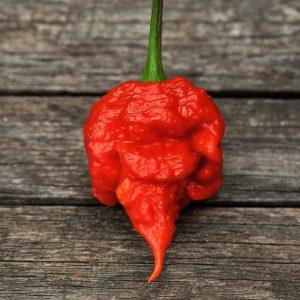
Conical to diamond-shaped with deep folds and a tapered tip
Size:
5–6 cm long, 2–3 cm diameter
Color Stages:
Immature: green → Ripe: bright orange
Wall Thickness:
Thin to medium
Texture & Skin:
Wrinkled, lightly blistered, semi-smooth with a waxy sheen
Plant Details
Growth Habit:
Bushy
Plant Height & Width:
Height: 60–100 cm
Width: 50–70 cm
Foliage:
Dark green, slightly pubescent
Flower Color:
White
Days to Maturity:
90–120 days from germination to harvest
Yield:
High – typically 80–120 pods per plant under optimal conditions
Cultivation Information
Seed Count per Pack:
5 or 10 seeds (Presoaking Chilli Seeds)
Germination Time:
7–14 days (Germinating Chilli Seeds)
Optimal Germination Temp:
25–30°C(Essential guide to ideal temperatures and humidity for chilli seed germination)
Light Requirements:
Filtered sun
Soil Preferences:
- pH: 6.0–6.8
- Well-draining loamy soil
- Rich in compost and organic matter (Easy DIY soil mixes)
Storage Tips:
Store seeds in airtight containers in a cool, dry environment. Refrigeration is recommended for long-term viability. Avoid exposure to humidity and direct light.
Notable Compounds
Capsaicinoid Content:
High levels of capsaicin and dihydrocapsaicin; responsible for prolonged burn and anti-inflammatory properties
Volatile Flavor Compounds:
Limonene and citral dominate the aroma profile; trace vanillin may contribute to sweetness
Anthocyanins / Pigments:
No purple pigmentation observed; coloration driven by carotenoids responsible for orange hue
Culinary & Cultural Use
Traditional Uses:
Not associated with traditional recipes due to its hybrid origin. However, it has been widely adopted in:
- Artisan hot sauces
- Fruit-based chili jams
- Spicy marinades for grilled meats
- Fermented pepper blends
Raw vs Cooked Flavor:
Raw pods deliver a crisp texture and bright citrus flavor with immediate heat. Roasting enhances sweetness and introduces a smoky depth. Pickling preserves the fruitiness while adding acidity. Fermentation deepens umami notes and softens the burn, making it ideal for aged sauces.
Regional Dishes:
Though not tied to a specific regional cuisine, Carbonero has featured in:
- Caribbean-style pepper sauces
- Spanish-inspired chili jams
- Latin American-style escabeche
- Southeast Asian sambals (experimental)
Storage / Drying / Preserving Tips:
- Air-drying recommended for preserving flavor and heat
- Oven drying below 50°C retains volatile compounds
- Fermentation in salt brine enhances complexity and shelf life
- Pickling in vinegar with aromatics preserves both heat and aesthetics
- Freezing suitable for short-term use, though texture may degrade


Reviews
There are no reviews yet.