
Description
Product Name: Brazilian Reaper
Cultivar Name: Brazilian Reaper
Species: Capsicum chinense
Common Names: Brazilian Reaper
Type: Hybrid
Origin & Lineage
Geographic Origin:
The Brazilian Reaper was developed in Brazil, a country known for its rich biodiversity and deep-rooted chili culture. This cultivar emerged from the crossbreeding of two notorious superhot varieties: the Brazilian Ghost Pepper and the Carolina Reaper. While the Carolina Reaper was bred in South Carolina, USA, the Brazilian Ghost Pepper has its origins in South America, likely within the Amazon basin. The hybridization was carried out to combine the intense heat of the Reaper with the tropical fruitiness of the Ghost Pepper, resulting in a cultivar that is both ferocious and flavorful.
Cultural Significance:
Although the Brazilian Reaper is a relatively recent cultivar, it has quickly gained traction among chili enthusiasts and extreme heat seekers. In Brazil, chili peppers have long been used in traditional dishes such as moqueca, vatapá, and various pimenta-based sauces. While the Brazilian Reaper is not tied to ancient folklore or ritual use, it has become a symbol of modern chili breeding innovation. Its dramatic appearance and blistering heat have made it a popular feature in chili festivals and competitive eating events. The cultivar is also used ornamentally due to its striking pod shape and vibrant coloration.
Lineage / Hybridizer History:
The Brazilian Reaper is a hybrid developed by crossing the Brazilian Ghost Pepper with the Carolina Reaper. Although the exact breeder remains undocumented, the cultivar has been stabilized through selective breeding in Brazil and South Africa. It is considered an unstable hybrid, with some phenotypic variation still observed across generations. Pods may vary in tail length and surface texture, but the core traits—extreme heat, wrinkled skin, and red coloration—remain consistent. The Carolina Reaper, bred by Ed Currie of PuckerButt Pepper Company, contributes the signature stinger tail and high capsaicinoid content, while the Brazilian Ghost Pepper adds floral and citrus notes.
Heat Profile
Scoville Rating (SHU):
Estimated between 1,000,000 and 1,300,000 SHU
Perceived Heat:
Superhot (500,000 or more SHU)
Heat Characteristics:
The Brazilian Reaper delivers an immediate and aggressive burn that intensifies over time. The heat is concentrated in the placenta and inner walls, with oil-rich vesicles that release capsaicinoids upon contact. The burn is sharp, lingering, and often described as “angry” or “brutal.” Despite its intensity, the heat is not one-dimensional; it evolves with each bite, starting with a sting and progressing to a deep, throbbing sensation. This cultivar is not recommended for casual consumption and should be handled with gloves. Cooking tends to mellow the sharpness slightly, but the core heat remains formidable.
Flavor Profile
Tasting Notes:
Beneath the searing heat lies a surprisingly complex flavor profile. The Brazilian Reaper offers fruity, floral, and citrus notes, likely inherited from its Ghost Pepper parentage. When tasted raw, the initial flavor is sweet and tropical, followed by a floral bitterness and intense heat. Roasting enhances the fruitiness and introduces a smoky undertone.
Aftertaste / Finish:
The finish is long and persistent, dominated by heat but accompanied by a subtle tang. A faint bitterness may linger, especially when consumed raw. When fermented, the flavor deepens, revealing umami and earthy tones that balance the heat.
Ideal Pairings:
- Fermented hot sauces with tropical fruits like mango or pineapple
- Roasted chili rubs for red meat and game
- Citrus-based marinades for grilled seafood
- Pickled chili blends with garlic and vinegar
- Extreme heat salsas for tacos and nachos
Fruit Characteristics
Shape:
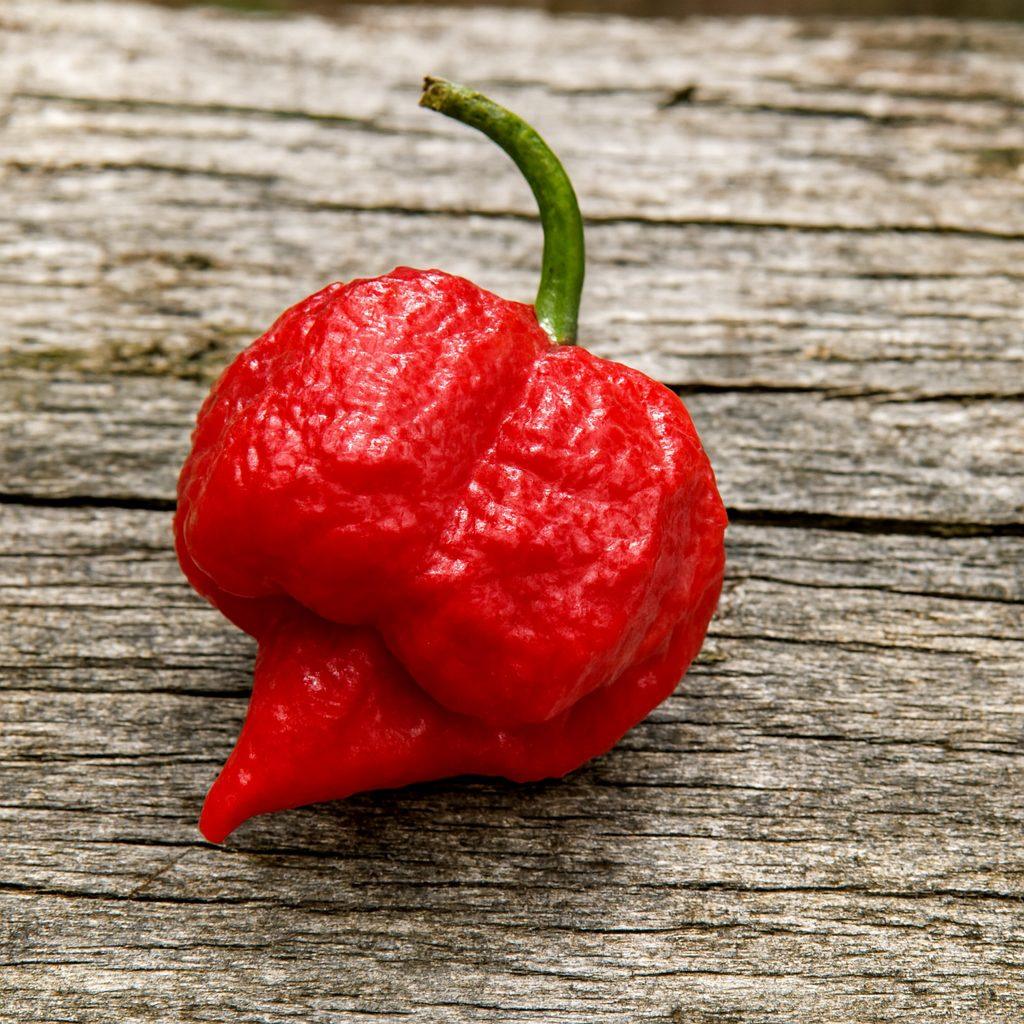
Wrinkled, lobed, and often featuring a stinger tail. Pods are irregular and gnarly, resembling the Carolina Reaper in form.
Size:
Approximately 5–7 cm long, 2.5–3 cm diameter
Color Stages:
Immature: green → Ripe: bright red
Wall Thickness:
Medium
Texture & Skin:
Bumpy and blistered with deep folds and oil-rich surfaces.
Plant Details
Growth Habit:
Bushy with strong lateral branching
Plant Height & Width:
Height: 60–80 cm
Width: 50–70 cm
Foliage:
Dark green, slightly pubescent
Flower Color:
White
Days to Maturity:
120–150 days from germination
Yield:
Moderate – typically 30–60 pods per plant depending on climate and soil fertility.
Cultivation Information
Seed Count per Pack:
5 or 10 seeds (Presoaking Chilli Seeds)
Germination Time:
7–14 days (Germinating Chilli Seeds)
Optimal Germination Temp:
25–30°C (Essential guide to ideal temperatures and humidity for chilli seed germination)
Light Requirements:
Filtered sun
Soil Preferences:
Prefers well-draining soil with pH between 6.0 and 6.8. Enrich with compost and perlite for aeration and moisture retention (Easy DIY soil mixes)
Storage Tips:
Store seeds in airtight containers in a cool, dry place. Refrigeration is recommended for long-term viability. Avoid exposure to humidity and direct light.
Notable Compounds
Capsaicinoid Content:
High concentrations of capsaicin and dihydrocapsaicin are present, contributing to the cultivar’s superhot classification. These compounds are responsible for the intense pungency and physiological effects such as sweating and endorphin release.
Volatile Flavor Compounds:
Limonene and esters may be present, contributing to the fruity and floral aroma. These compounds are more noticeable in fresh and roasted pods.
Anthocyanins / Pigments:
Minimal anthocyanin presence; red coloration is primarily due to carotenoids such as capsanthin and capsorubin.
Culinary & Cultural Use
Traditional Uses:
Used in extreme hot sauces, salsas, and chili powders. While not traditionally part of Brazilian cuisine, it has been adopted by chili enthusiasts for its heat and flavor. It is also used in novelty products and competitive eating challenges.
Raw vs Cooked Flavor:
Raw pods deliver a sharp, fruity heat with floral undertones. Roasting enhances sweetness and reduces acidity. Fermentation introduces depth and umami, while pickling preserves the pod’s color and texture.
Regional Dishes:
Although not tied to specific named dishes, the Brazilian Reaper has been used in:
- Fermented chili sauces with tropical fruit bases
- Roasted chili rubs for churrasco-style meats
- Pickled chili blends in vinegar-based condiments
- Extreme heat salsas for street food applications
Storage / Drying / Preserving Tips:
Drying is best achieved using a dehydrator or low-humidity environment. Slice pods to accelerate drying and reduce risk of mold. For fermentation, submerge sliced pods in brine with garlic and spices. Freezing is suitable for short-term storage but may affect texture.


Reviews
There are no reviews yet.