
Description
Product Name: Brazilian Ghost Chocolate Chilli Seeds
Brazilian Ghost Chocolate is a semi-stable superhot chili cultivar known for its striking chocolate-brown ripening stage and intense, lingering heat. This variety is a hybridized descendant of several legendary superhot strains, combining visual intrigue with a complex flavor profile. It has gained traction among collectors and culinary enthusiasts for its unique balance of smokiness, sweetness, and brutal heat. Though not yet fully stabilized, its phenotypic consistency has improved over successive generations, making it a viable candidate for legacy-grade cultivation and documentation.
Cultivar Name: Brazilian Ghost Chocolate
Species: Capsicum chinense
Common Names: Chocolate Ghost, Brazilian Bhut Chocolate
Type: Hybrid
Origin & Lineage
Geographic Origin: The Brazilian Ghost Chocolate was originally bred in Brazil by hybridizer José Renato. It emerged from a lineage of superhot peppers that includes the Bhut Jolokia (Ghost Pepper), 7 Pot Douglah, and Trinidad Scorpion. These parent lines are themselves renowned for their extreme heat and complex flavor profiles. Brazil’s tropical climate and rich horticultural culture provided an ideal environment for the development of this cultivar, which has since been propagated internationally by specialty growers.
Cultural Significance: While the Brazilian Ghost Chocolate does not have deep-rooted indigenous folklore, its parent strains—particularly Bhut Jolokia—carry cultural weight in northeastern India, where they are revered as “king chiles.” In Brazil, the cultivar has been embraced by artisanal sauce makers and chili enthusiasts for its dramatic appearance and culinary versatility. It is often used in small-batch hot sauces, fermented blends, and experimental fusion dishes that highlight its smoky undertones.
Lineage / Hybridizer History: José Renato initiated the hybridization process by crossing Bhut Jolokia with 7 Pot Douglah, followed by a subsequent cross with Trinidad Scorpion. The result was a three-way hybrid that underwent several generational selections to isolate the chocolate phenotype. The cultivar was later released and further refined by John Ford, who introduced the Brazilian Ghost Scorpion Chocolate variant. While multiple phenotypes emerged during stabilization, the Brazilian Ghost Chocolate has become recognized for its consistent pod shape and color transition.
Heat Profile
Scoville Rating (SHU):
Tested between 800,000 and 1,430,000 SHU, depending on growing conditions and phenotype selection.
Perceived Heat:
Superhot (500,000 or more SHU)
Heat Characteristics:
The heat of Brazilian Ghost Chocolate is deceptive and delayed. Initial tasting reveals a sweet and smoky profile before the heat builds gradually, peaking around 30 to 45 seconds post-consumption. The burn is deep and persistent, often lasting over 30 minutes. It is known to cause intense sweating and endorphin release, making it suitable only for experienced chili consumers. The capsaicin concentration is high, and the burn is felt across the palate, throat, and digestive tract.
Flavor Profile
Tasting Notes:
The flavor opens with a fruit-forward sweetness, followed by earthy and smoky undertones. Hints of tanginess and chocolate-like depth are present, especially when the pepper is roasted or fermented.
Aftertaste / Finish:
A lingering smokiness remains after the heat subsides, with subtle bitterness and umami notes. The finish is long and complex, often described as “haunting” due to the pepper’s ghost lineage.
Ideal Pairings:
- Smoked meats (beef brisket, pork shoulder)
- Earthy legumes (black beans, lentils)
- Fermented sauces and chutneys
- Dark chocolate and mole-style preparations
- Rustic stews and curries
Fruit Characteristics
Shape:
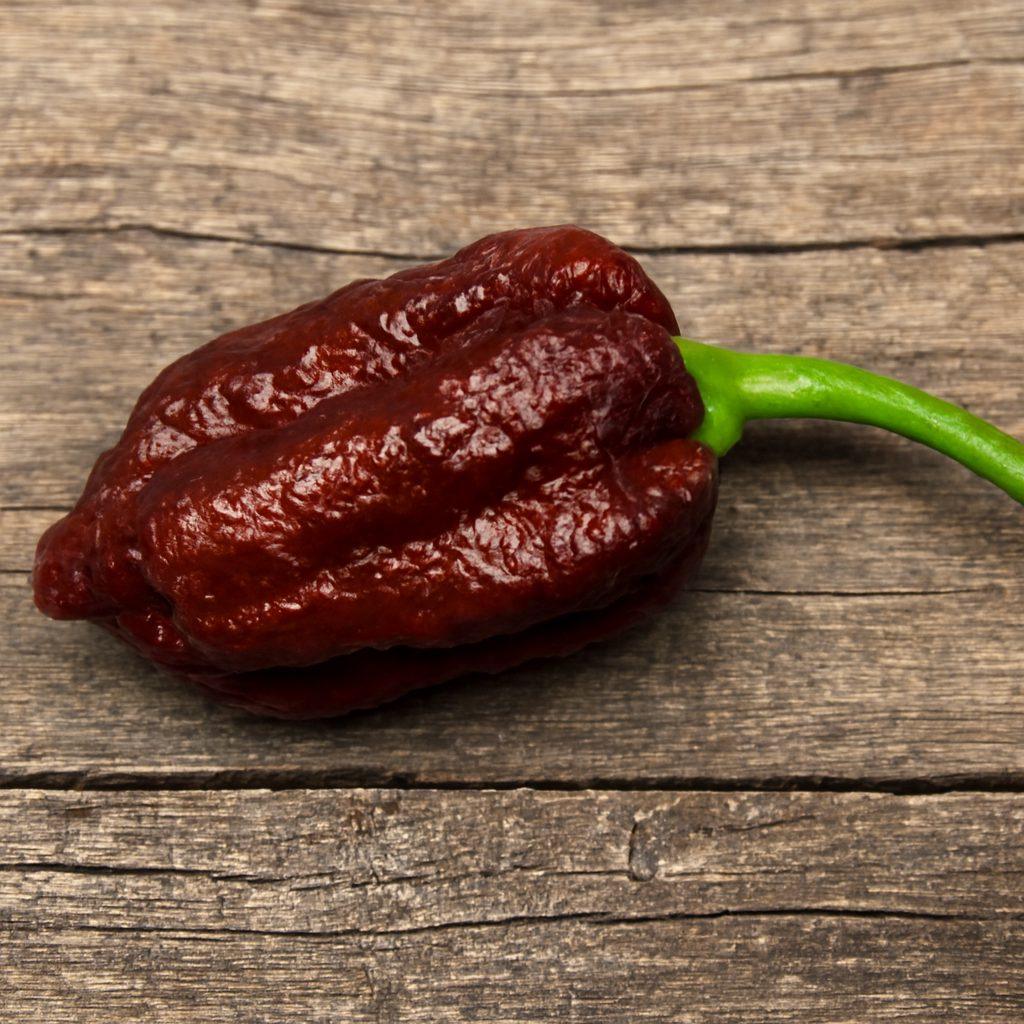
Conical, tapering to a pointed non-stem end. Often gnarled and blistered.
Size:
Typically 5–8 cm long, 2–3 cm in diameter
Color Stages:
Immature: green → Ripe: deep chocolate brown
Wall Thickness:
Medium
Texture & Skin:
Wrinkled and blistered with a glossy sheen. The skin is firm but pliable, enclosing a crisp, semi-thick flesh.
Plant Details
Growth Habit:
Bushy
Plant Height & Width:
Height: 100–150 cm
Width: 60–90 cm
Foliage:
Dark green, slightly pubescent
Flower Color:
White
Days to Maturity:
120–150 days from transplant
Yield:
Moderate – approximately 40–60 pods per mature plant under optimal conditions.
Cultivation Information
Seed Count per Pack:
5 or 10 seeds (Presoaking Chilli Seeds)
Germination Time:
10–14 days (Germinating Chilli Seeds)
Optimal Germination Temp:
25–30°C (Essential guide to ideal temperatures and humidity for chilli seed germination)
Light Requirements:
Filtered sun
Soil Preferences:
- pH range: 6.0–6.8
- Well-draining loamy soil
- Enriched with organic compost (Easy DIY soil mixes)
Storage Tips:
Store Brazilian Ghost Chocolate seeds in airtight containers in a cool, dry place. Refrigeration is recommended for long-term viability.
Notable Compounds
Capsaicinoid Content:
High concentrations of capsaicin and dihydrocapsaicin. These compounds are responsible for the intense heat and analgesic effects.
Volatile Flavor Compounds:
Limonene, vanillin, and trace smoky esters contribute to the pepper’s aromatic complexity.
Anthocyanins / Pigments:
While the mature fruit is chocolate brown, anthocyanin expression may occur in early growth stages, especially under stress or cooler temperatures.
Culinary & Cultural Use
Traditional Uses:
Though not tied to indigenous Brazilian cuisine, the Brazilian Ghost Chocolate has been adopted into modern culinary practices. It is used in:
- Fermented hot sauces
- Smoked chili rubs
- Salsas with tropical fruits
- Infused oils and salts
Raw vs Cooked Flavor:
Raw Brazilian Ghost Chocolate pods deliver a sharper, more acidic sweetness with immediate bitterness. Cooking—especially roasting or fermenting—enhances the smoky and earthy notes while mellowing the bitterness.
Regional Dishes:
- Brazilian-style churrasco marinades
- Ghost pepper feijoada (experimental fusion)
- Chocolate ghost mole (inspired by Mexican mole negro)
Storage / Drying / Preserving Tips:
- Dry whole pods in a dehydrator at 45°C until brittle
- Store dried pods in vacuum-sealed bags
- Ferment chopped pods with 2% salt by weight for 30 days, then blend into sauce
- Freeze fresh pods in airtight containers for up to 6 months


Reviews
There are no reviews yet.