
Description
Product Name: Bhutlah Cheesehead Red
Cultivar Name: Bhutlah Cheesehead Red
Species: Capsicum chinense
Common Names: Cheesehead Red, Wisconsin Bhutlah, Bhutlah CR
Type: Hybrid
Origin & Lineage
Geographic Origin:
Bhutlah Cheesehead Red was developed in Wisconsin, USA, by grower Chad Soleski, who coined the term “Bhutlah” to describe his hybrid cross between Bhut Jolokia (Ghost Pepper) and 7 Pot Douglah. The “Cheesehead” designation is a nod to Wisconsin’s cultural identity and Soleski’s regional pride.
Cultural Significance:
This cultivar is part of the Bhutlah family, known for pushing the limits of capsaicin concentration. It is sought after by extreme heat enthusiasts, hot sauce makers, and collectors of unstable superhot hybrids. Though not fully stabilized, it has gained traction for its distinctive pod shape, intense heat, and smoky-fruity flavor profile.
Lineage / Hybridizer History
Parentage:
Bhut Jolokia × 7 Pot Douglah
Hybridizer:
Chad Soleski (Wisconsin, USA)
Selected Traits:
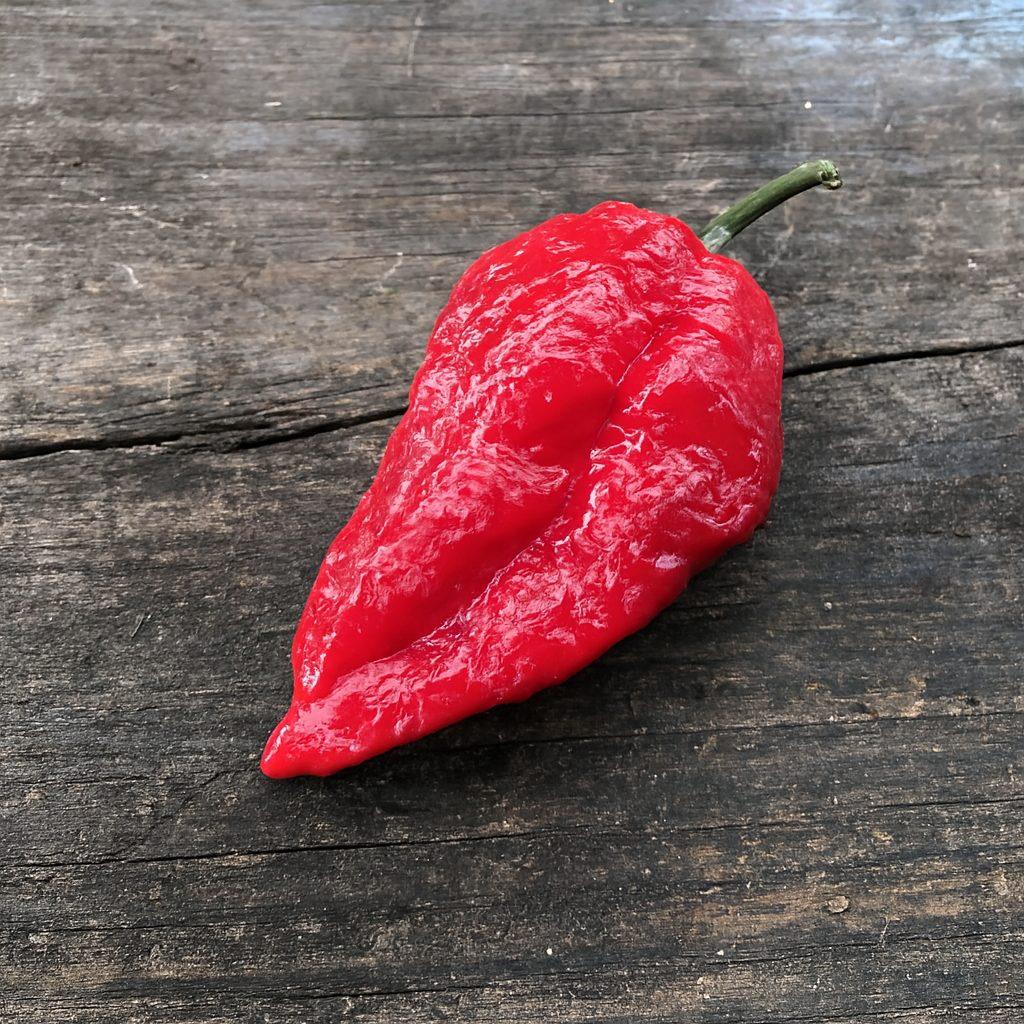
• Spiky, bumpy pods with Naga-like appearance
• Deep red coloration at maturity
• Smoky, fruity flavor with ghost pepper undertones
• Extreme heat with fast onset
• Unstable pod shape and phenotype
Stabilization Status:
Unstable hybrid. Expect variation in pod shape, size, and heat intensity across generations. Not recommended for commercial-scale uniformity.
Heat Profile
Scoville Rating (SHU): Estimated 1,500,000–2,000,000+ SHU
Perceived Heat: Superhot to Hyperhot
Heat Characteristics:
Bhutlah Cheesehead Red delivers a rapid, searing burn that begins within seconds of contact. The heat is concentrated in the placenta and inner walls, with a lingering, throat-forward sting. It rivals Chocolate Bhutlah and Carolina Reaper in intensity but lacks formal SHU certification due to instability.
Flavor Profile
Tasting Notes:
Smoky and fruity with red ghost pepper undertones, hints of dried cherry, charred wood, and fermented citrus. The flavor is more pronounced in dried or fermented form, as fresh pods may overwhelm the palate with heat.
Aftertaste / Finish:
Lingering bitterness with a smoky finish and floral top notes
Ideal Pairings:
• Fermented sauces with garlic and tamarind
• Extreme hot sauces for collectors
• Dried flakes for chili challenges
• Infused oils for culinary heat layering
• Salsas and stews requiring minimal dosage
Fruit Characteristics
Shape:
Spiky, bumpy pods resembling Naga or Douglah types
Size:
5–7 cm long, 2–3 cm wide
Color Stages:
• Immature: Pale green
• Mid-stage: Orange-red
• Ripe: Deep crimson red
Wall Thickness:
Medium
Texture & Skin:
Wrinkled, rough skin with oil-rich placenta. Pods may exhibit tails or contorted shapes due to instability.
Plant Details
Growth Habit:
Tall and branching
Plant Height & Width:
Height: 100–150 cm
Width: 80–120 cm
Foliage:
Dark green, ovate leaves with open canopy
Flower Color:
White
Days to Maturity:
100–130 days from transplant
Yield:
Moderate — typically 40–80 pods per plant under optimal conditions
Bhutlah Cheesehead Red plants are vigorous but require heat, humidity, and long seasons to reach full maturity. Not recommended for short-season climates without greenhouse support.
Cultivation Information
Seed Count per Pack: 10 seeds
Germination Time: 14–21 days (Germinating Chilli Seeds)
Optimal Germination Temp: 26–32°C (Essential guide to ideal temperatures and humidity for chilli seed germination)
Light Requirements: Filtered sun
Soil Preferences:
• pH: 6.0–6.5
• Rich, well-draining loam (Easy DIY soil mixes)
• Benefits from compost and calcium supplementation
Watering:
Maintain consistent moisture. Avoid overwatering. Mulch to retain soil moisture and suppress weeds.
Fertilization:
Apply balanced NPK fertilizer every 2–3 weeks. Supplement with calcium and magnesium during fruiting.
Support:
Staking recommended due to tall growth and heavy fruit load
Pruning:
Pinch growing tips to encourage branching. Remove lower leaves to improve airflow.
Storage Tips:
Store seeds in a cool, dry place. Refrigeration at 4–8°C extends viability. Avoid humidity and light exposure.
Notable Compounds
Capsaicinoid Content:
Extremely high — primarily capsaicin and dihydrocapsaicin
Volatile Flavor Compounds:
Linalool, methyl anthranilate, and esters contribute to fruity aroma
Pigments:
Coloration driven by capsanthin, beta-carotene, and cryptoxanthin
Nutritional Value:
High in vitamin C, antioxidants, and trace minerals
Culinary & Cultural Use
Traditional Uses:
Used in extreme heat sauces, chili challenges, and collector-grade spice blends. Not suitable for casual consumption. Handle with gloves and avoid contact with eyes or mucous membranes.
Raw vs Cooked Flavor:
Raw: Intense heat with smoky-fruity burst
Cooked: Mellowed bitterness with deeper floral and earthy notes
Regional Dishes:
• Fermented Bhutlah mash with garlic and vinegar
• Ghost-style chili oil infusions
• Collector-grade hot sauces with fruit base
• Dried flakes for extreme heat seasoning
• Bhutlah powder for spice challenges
Storage / Drying / Preserving Tips:
• Dry pods whole for powder or flakes
• Freeze fresh pods in airtight bags
• Ferment with salt and garlic for mash
• Infuse in oil or vinegar for culinary use


Reviews
There are no reviews yet.