
Description
Product Name: BBM x Scorpion
Cultivar Name: Big Black Mama x Trinidad Scorpion
Species: Capsicum chinense
Common Names: BBM x Scorpion, Black Scorpion, BBM Scorpion Hybrid
Type: Unstable Superhot Hybrid
Origin & Lineage
Geographic Origin:
BBM x Scorpion is a hybrid cross between two notorious superhot cultivars: Big Black Mama (a hybrid originally bred by Troy Primeaux in the USA) and Trinidad Scorpion (a landrace from Trinidad and Tobago). The cross was selected for its dark pigmentation, gnarly pod structure, and extreme heat, and has been distributed through specialty seed vendors in Europe, Africa, and North America.
Cultural Significance:
This cultivar is part of the modern superhot breeding movement, combining the oil-rich placenta and floral heat of the Scorpion with the dark, blistered skin and intense pungency of Big Black Mama. It is favored by collectors, sauce makers, and growers seeking high-impact visual and sensory traits.
Lineage / Breeder History
Parentage:
Big Black Mama x Trinidad Scorpion Butch T
Hybridizer:
Unattributed
Selected Traits:
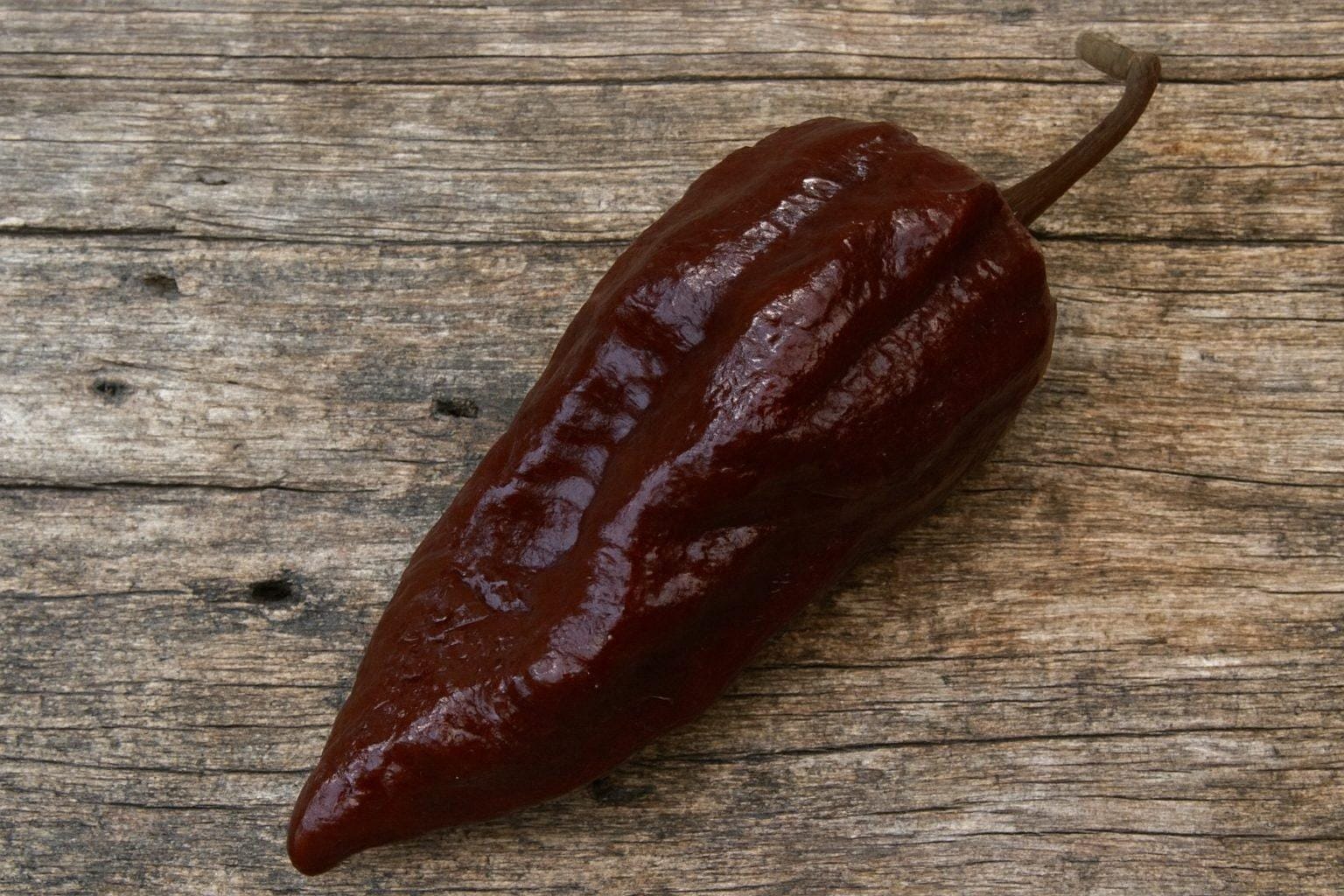
• Wrinkled, blistered pods with dark brown to black coloration
• Elongated shape with occasional stinger tip
• Fruity aroma with smoky and floral undertones
• Intense, lingering heat
• High oil content and placental saturation
Stabilization Status:
Unstable hybrid. Expressed in F3–F4 generations. Phenotypic variation expected in pod shape, color, and heat intensity.
Heat Profile
Scoville Rating (SHU): Estimated 1,000,000–1,400,000 SHU
Perceived Heat: Superhot
Heat Characteristics:
Rapid onset with a throat-forward burn and lingering sting. Heat builds aggressively and persists for 10–20 minutes. Comparable to Chocolate Bhutlah and Moruga Scorpion in intensity. Use caution when handling and consuming.
Flavor Profile
Tasting Notes:
Sweet and fruity on the front palate, followed by smoky, earthy, and floral bitterness. The flavor is bold and complex, but often masked by overwhelming heat.
Aftertaste / Finish:
Dry, acrid finish with residual floral bitterness
Ideal Pairings:
• Fermented sauces with garlic and tamarind
• Superhot chili pastes for barbecue and stews
• Infused oils for micro-dosing
• Dried flakes for collector-grade spice blends
• Extreme heat pickles and relishes
Fruit Characteristics
Shape:
Elongated, wrinkled pods with occasional tail or stinger tip
Size:
5–7 cm long, 2–2.5 cm wide
Color Stages:
• Immature: Pale green
• Mid-stage: Chocolate brown
• Ripe: Deep brown to black with glossy finish
Wall Thickness:
Medium
Texture & Skin:
Highly blistered and wrinkled surface with dense placental tissue. High oil saturation.
Plant Details
Growth Habit:
Tall and upright with branching canopy
Plant Height & Width:
Height: 90–120 cm
Width: 60–90 cm
Foliage:
Dark green leaves with purple veining under stress
Flower Color:
White with purple anthers
Days to Maturity:
100–120 days from transplant
Yield:
Moderate — typically 40–80 pods per plant under optimal conditions
BBM x Scorpion plants are vigorous but require heat, light, and nutrient support to reach full potential. Best suited to greenhouse or protected outdoor cultivation.
Cultivation Information
Seed Count per Pack: 10 seeds
Germination Time: 10–14 days (Germinating Chilli Seeds)
Optimal Germination Temp: 26–32°C (Essential guide to ideal temperatures and humidity for chilli seed germination)
Light Requirements: Filtered sun
Soil Preferences:
• pH: 6.0–6.5
• Rich, well-draining loam with compost (Easy DIY soil mixes)
• Benefits from calcium and potassium supplementation
Watering:
Maintain consistent moisture. Avoid waterlogging. Mulch to retain soil moisture.
Fertilization:
Apply high-nitrogen fertilizer during vegetative growth. Switch to potassium-rich feed during flowering and fruiting. Supplement with magnesium and calcium.
Support:
Staking recommended due to tall growth and heavy fruit load
Pruning:
Pinch growing tips to encourage branching. Remove lower leaves to improve airflow.
Storage Tips:
Store seeds in a cool, dry place. Refrigeration at 4–8°C extends viability. Avoid humidity and light exposure.
Notable Compounds
Capsaicinoid Content:
Extremely high — primarily capsaicin, dihydrocapsaicin, and nordihydrocapsaicin
Volatile Flavor Compounds:
Linalool, methyl anthranilate, and esters contribute to fruity aroma
Pigments:
Capsanthin (red), anthocyanins (black), and beta-carotene
Nutritional Value:
High in vitamin C, antioxidants, and capsaicinoids
Culinary & Cultural Use
Traditional Uses:
Modern hybrid with no historical culinary lineage. Used in extreme sauces, extracts, and chili challenges.
Raw vs Cooked Flavor:
Raw: Fruity, floral, and sharp
Cooked: Smoky, bitter, and pungent with intensified heat
Regional Dishes:
• Trinidad-style pepper mash
• Bhutlah-infused vinegar
• Superhot chili oil for micro-dosing
• Scorpion BBQ rubs and sauces
• Dried powder for extreme heat seasoning
Storage / Drying / Preserving Tips:
• Pods dry well for powder or flakes
• Can be frozen whole or sliced
• Suitable for fermentation and oil infusions
• Handle with gloves and eye protection


Reviews
There are no reviews yet.