
Description
Cultivar Name: Banana Pepper Chocolate Seeds
Species: Capsicum annuum
Common Names: Banana Pepper Chocolate,Wax Pepper, Banana Chili
Type: Heirloom
Origin & Lineage
Geographic Origin: The genetic foundation of the banana pepper family can be historically traced back to South America, from where the Capsicum annuum species spread globally through centuries of trade. However, the exact color mutation that gave rise to the Banana pepper chocolate phenotype was meticulously selected and stabilized by heirloom preservationists in Europe and North America. These dark-hued cultivars were heavily preserved by dedicated backyard growers who sought to expand the aesthetic diversity of sweet garden peppers. Today, the Banana Pepper chocolate has been thoroughly adapted to temperate and subtropical home gardens across the globe.
Development History: Banana peppers are believed to have originated in South America, particularly in regions like Peru and Bolivia, where indigenous peoples cultivated early Capsicum annuum varieties. In the 20th century, the Corneli Seed Company introduced a mutation of the Hungarian Wax Pepper to the U.S. market, selectively breeding it for sweetness, mild heat, and curved fruit shape. Banana pepper chocolate was named for its resemblance to a banana in both shape and color.
Cultural Significance: Throughout culinary history, banana peppers have been celebrated for their versatile kitchen utility, particularly within Mediterranean and North American traditions. Traditionally, these sweet and mild pods are featured prominently in fresh summer salads, sub sandwiches, and extensive pickling projects. Folklore surrounding colored sweet peppers often suggests that dark chocolate phenotypes possess a deeper, more mysterious flavor profile compared to their bright yellow counterparts, making them highly prized among heirloom collectors. While they carry no deep ritualistic history, they are treated as a modern crowning achievement in agricultural biodiversity festivals and community seed-saving exchanges.
Lineage / Hybridizer History:
The precise identity of the original breeder who stabilized the Banana pepper chocolate remains open to debate, as it emerged out of natural open-pollination selections where growers continuously saved seeds from pods that exhibited deep brown coloration. Because it is classified strictly as an open-pollinated heirloom, its uniform genetic traits are passed down reliably from generation to generation. It is entirely free from laboratory hybridization or modern bioengineering. The parental line stems from the standard sweet yellow banana pepper, which experienced a natural pigment mutation where the chlorophyll failed to break down completely as the red carotenoids developed, producing a stable chocolate-brown skin.
Heat Profile
Scoville Rating (SHU): 0–500 SHU
Perceived Heat: Sweet to very mild—often described as a gentle warmth
Heat Characteristics:
Flavor Profile
Tasting Notes:
When a fresh banana pepper chocolate pod is sliced open, a wonderfully complex aroma that combines crisp vegetal clarity with earthy undertones is immediately released. On the tongue, a distinct, sugary sweetness is delivered, which is beautifully balanced by a subtle, smoky richness that defines most chocolate-colored peppers. The flavor is significantly deeper and less tangy than that of a traditional yellow banana pepper, offering notes that hint at dark cocoa and caramelized sugars without any bitter traits.
Aftertaste / Finish:
Ideal Pairings:
- Cheeses: Soft goat cheese, sharp cheddar, creamy feta, and fresh mozzarella.
- Proteins: Roasted chicken, grilled pork chops, seared steak strips, and white fish.
- Vegetables: Red onions, heirloom tomatoes, fresh basil, garlic, and roasted eggplants.
- Condiments: Balsamic reductions, extra virgin olive oil, apple cider vinegar brines, and smoky barbecue sauces.
Fruit Characteristics
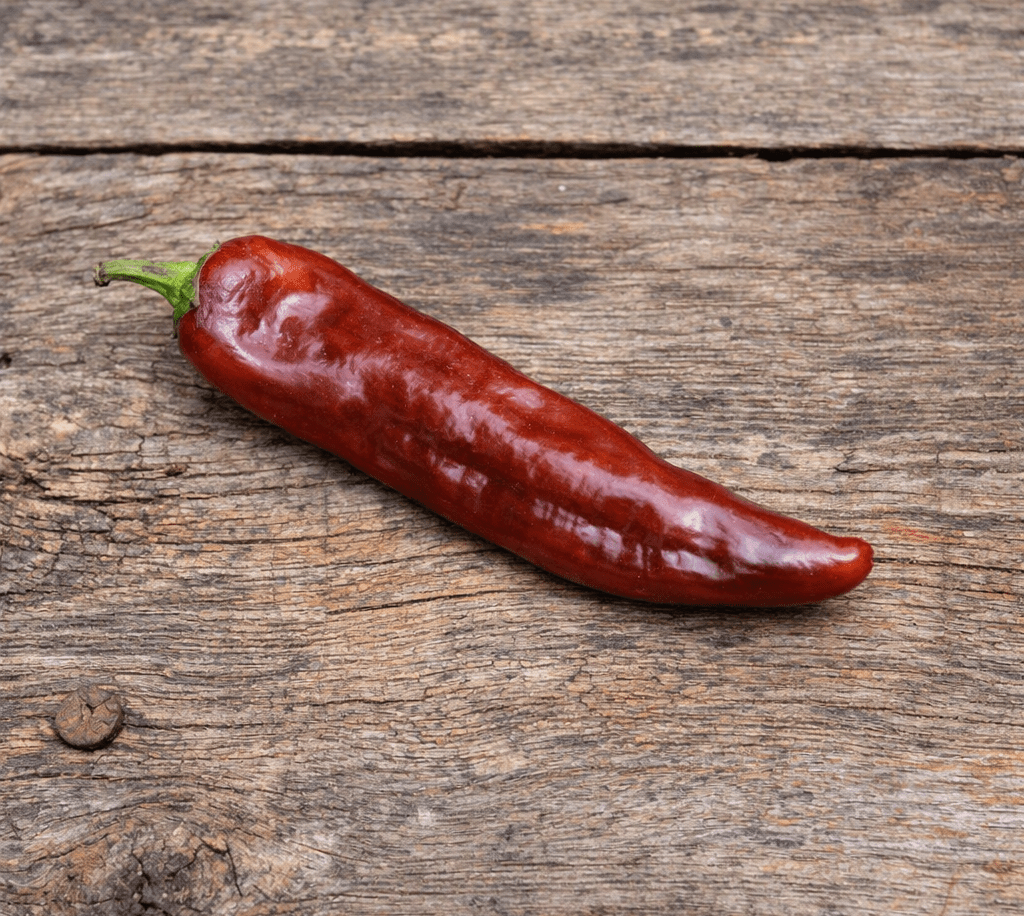
- Shape: The banana pepper chocolate pods display a highly distinct, elegantly elongated, and gently curved morphology that strongly resembles a classic banana. It tapers uniformly down to a blunt, rounded point at its apex, with subtle, structural lobing occasionally observed near the calyx.
- Size: The matured fruits typically grow up to 15–20 cm long and average approximately 3–4 cm in diameter at the widest portion of the shoulder.
- Color Stages: Immature: green → Ripe: glossy chocolate brown, sometimes with deep hints of red or dark purple under direct sunlight.
- Wall Thickness: Thick. The crisp, robust walls provide a satisfying structural density that ensures the pepper holds its shape exceptionally well during high-heat cooking applications.
- Texture & Skin: The outer skin is remarkably smooth, glossy, and taught, showing a beautiful reflective sheen when fully ripe. Underneath, the thick flesh feels exceptionally crisp and crunchy, offering a satisfying snap when bitten into fresh from the vine.
Plant Details
- Growth Habit: Bushy. The plant develops a sturdy, well-branched central structure with dense, compact lateral branches that provide excellent structural support for the heavy fruit load.
- Plant Height & Width: Under optimal conditions, the plant reaches a height of 60–75 cm and develops a canopy width of approximately 45–50 cm, making it perfectly suited for container gardening.
- Foliage: The canopy is composed of dense, dark green leaves that are smooth and lanceolate in shape. The thick foliage serves as a natural shield, ensuring that the developing pods are safely protected from intense sunscald.
- Flower Color: White. The small, five-petaled star-shaped blossoms emerge abundantly at the nodes and are highly attractive to local pollinators.
- Days to Maturity: 70–80 days from the date of transplantation to a full chocolate-brown harvest.
- Yield: High. This prolific producer consistently generates between 25 and 40 large pods per plant over a single extended growing season.
Cultivation Information
- Seed Count per Pack: 5 or 10 seeds
- Germination Time: 7–14 days (Germinating Chilli Seeds)
- Optimal Germination Temp: 22–28°C (Essential guide to ideal temperatures and humidity for chilli seed germination)
- Light Requirements: Filtered sun (minimum 6–8 hours/day)
- Soil Preferences:
- pH: 6.0–6.8
- Well-draining loam enriched with compost (Easy DIY soil mixes)
- Mulch to retain moisture and suppress weeds
Storage Tips: Store Banana Pepper seeds in airtight containers in a cool, dry place. Refrigeration with desiccants can extend viability up to 3 years.
Notable Compounds
Capsaicinoid Content: Because this cultivar is fundamentally a sweet pepper, the total capsaicinoid content is incredibly low. Quantitative laboratory testing typically reveals negligible levels of capsaicin and dihydrocapsaicin within the internal tissues. Consequently, the biochemical energy of the plant is redirected entirely away from heat production and focused heavily on synthesizing complex natural sugars.
Volatile Flavor Compounds: The unique aromatic profile is governed by a rich matrix of organic volatile compounds, including specific pyrazines that contribute to the dominant green, bell-pepper aroma. Additionally, trace elements of cyclic terpenes and esters provide the underlying sweet, fruity, and caramelized notes that are characteristic of the chocolate color mutation.
Anthocyanins / Pigments: The spectacular dark brown coloration is driven by a specific genetic interaction known as the “chlorophyll retainer” gene. As the fruit matures, carotenoid pigments like capsanthin (which creates red coloration) are synthesized simultaneously while the green chlorophyll is retained inside the cell walls instead of degrading. The overlay of these deep red and green pigments naturally creates the stunning, glossy chocolate-brown appearance.
Culinary & Cultural Use
Traditional Uses: In historical home cooking, these sweet chocolate pods have been utilized heavily in raw vegetable platters, colorful crudités, and rustic pan-frys. They are widely appreciated in traditional pickling brines, where their thick walls readily absorb acidic solution while retaining a satisfyingly firm crunch. They are also split open lengthwise and stuffed with seasoned cream cheese or savory sausage mixtures for family gatherings.
Raw vs Cooked Flavor: When consumed raw, the pepper delivers a burst of clean, refreshing sweetness mixed with a satisfying structural crunch. However, when the flesh is subjected to roasting, grilling, or wood-firing, the flavor shifts dramatically. The heat carmelizes the high concentration of internal sugars, intensifying the deep, smoky undertones and bringing out a robust richness that pairs beautifully with charred meats.
Regional Dishes: Sweet Pickled Chocolate Banana Rings are a classic staple commonly found across North American farm stands, where they are layered into sandwiches, wood-fired pizzas, and gourmet burgers. They are also adapted into regional sweet pepper relishes and specialized mild stir-frys throughout European countryside kitchens.
Storage / Drying / Preserving Tips:
Pickling is the most popular method. Use vinegar, sugar, and spices for a balanced brine. For drying, slice and dehydrate at low temperatures. Freeze roasted or blanched peppers in airtight containers. Store fresh peppers in the crisper drawer for up to two weeks.



Reviews
There are no reviews yet.