
Description
Product Name: Appelkosies
Cultivar Name: Appelkosies
Species: Capsicum chinense
Common Names: Arriba Saia Rosé x Roxa lantern black
Type: Hybrid
Origin & Lineage
Geographic Origin:
The Appelkosies pepper variety was originated in Cape Town, South Africa. The unique environmental conditions of the Western Cape region, which is characterised by Mediterranean climate patterns, hot summers, and maritime breezes, have influenced its development.
Cultural Significance:
While the Appelkosies pepper itself is an unreleased experimental cultivar, its cultural significance is deeply rooted in South African culinary heritage. The name is derived from a beloved, nostalgic South African confectionary treat known as “appelkosies” (traditional apricot marshmallow or gelatin-based sweet cubes). This sweet treat evokes fond memories of childhood and grandma’s pantry (“Ouma se appelkosies”) across generations of South Africans. By naming this hybrid after the classic apricot sweet, a sensory bridge is built between traditional Cape confectionary and modern artisanal pepper hybridisation
Lineage / Breeder History
The creation of the Appelkosies was achieved by the passionate South African pepper breeder Tony Lague. It was developed as an intentional cross between two highly distinct Capsicum chinense parents: Arriba Saia Rosé and Roxa Lantern Black. Arriba Saia Rosé brings intense heat, incredible aromatic properties, and dynamic productivity to the cross, while Roxa Lantern Black (itself a beautiful dark-foliaged hybrid of Cheiro Roxa and Scarlet Lantern) contributes striking dark anthocyanin pigments, exceptional pod architecture, and deep fruity undertones. Currently, the lineage sits at the F4 generation. Because it is at the F4 stage, it is classified as semi-stable. Growers should expect some exciting, minor phenotypic variations, though the primary fruit form strongly resembles the plump, blocky shape of the famous apricot sweets
Heat Profile
Scoville Rating (SHU): Estimated 150,000–300,000 SHU
Perceived Heat: Extremely Hot (150000 to 500000 shu)
Heat Characteristics:
The heat delivery of the Appelkosies pepper is highly characteristic of premium Brazilian and Caribbean Capsicum chinense strains. Upon ingestion, a deceptive, immediate sweetness is felt on the palate, which is quickly followed by a sharp, mounting thermal bloom. The capsaicin burn is felt predominantly at the back of the throat and across the mid-tongue region. Rather than dropping off instantly, the fire lingers pleasantly for several minutes, providing a robust, glowing sensation that satisfies seasoned chilli enthusiasts without completely overwhelming the senses.
Flavor Profile
Tasting Notes:
An exquisite complexity is displayed by the Appelkosies, beautifully merging the attributes of its parentage. A bright, intensely fruity apricot-like aroma is noticed as soon as the pod is sliced open. On the tongue, forward notes of sweet summer stone fruits, tropical nectar, and a subtle floral perfume are tasted, which directly mimics the nostalgic South African confectionary it is named after.
Aftertaste / Finish: The finish is clean and lingering, highlighted by a persistent fruit-skin tanginess and a warm, sweet-smoky echo that remains long after the initial heat wave has peaked.
Ideal Pairings: This magnificent flavour profile makes it exceptionally well-suited for gourmet applications. It pairs beautifully with pork belly, grilled poultry, and white cheeses like goat’s cheese or brie. Furthermore, it serves as an excellent base for tropical fruit salsas, artisanal hot sauces, and sweet-and-spicy apricot chutneys.
Fruit Characteristics
Shape:
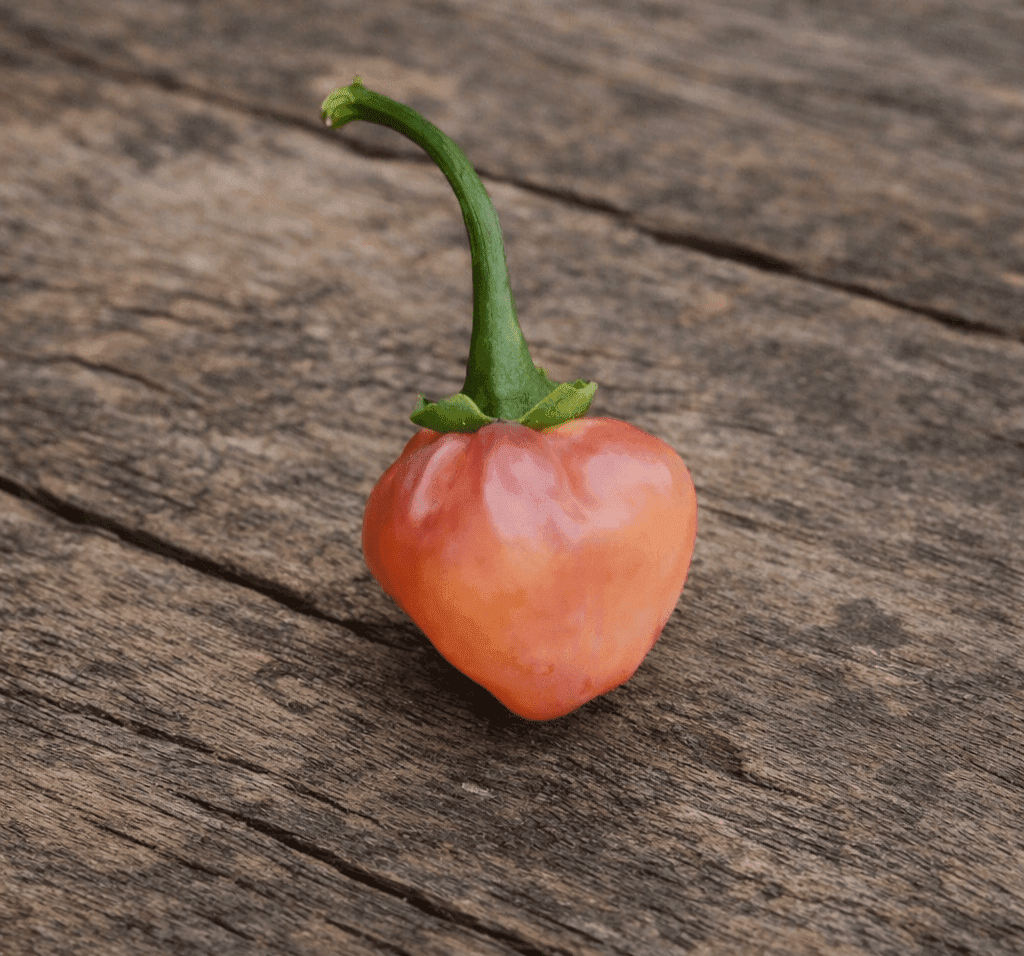
Small, rounded pods with slight taper
Size:
3.5 cm long, 2 cm wide
Color Stages:
• Immature: Purple
• Ripe: Rosé pink/Peach with darker shading on the top
Wall Thickness:
Thin to medium
Texture & Skin:
Smooth, glossy skin with crisp, juicy flesh. Ideal for fresh use, pickling, and fermentation.
Plant Details
Growth Habit:
Compact bush with dense foliage
Plant Height & Width:
Height: 60–75 cm
Width: 60–90 cm
Foliage:
Striking dark green leaves beautifully overlaid with rich purple anthocyanin veins and shading, showing its heritage from the Roxa Lantern Black parent
Flower Color:
White with distinct purple streaks or edges along the petals.
Days to Maturity:
100–120 days from transplant
Yield:
High — typically 80–150 pods per plant under optimal conditions.
Cultivation Information
Seed Count per Pack: 10 seeds
Germination Time: 14–21 days (Germinating Chilli Seeds)
Optimal Germination Temp: 26–30°C (Essential guide to ideal temperatures and humidity for chilli seed germination)
Light Requirements: Filtered sun
Soil Preferences:
• pH: 6.0–6.8
• Rich, well-draining loam (Easy DIY soil mixes)
• Benefits from compost and potassium-rich feeding
Watering:
Maintain consistent moisture. Avoid waterlogging. Mulch to retain soil moisture and suppress weeds.
Fertilization:
Apply balanced NPK fertilizer every 2–3 weeks. Supplement with calcium and magnesium during fruiting.
Support:
Staking optional; canopy remains compact
Storage Tips:
Store Appelkosies seeds in a cool, dry place. Refrigeration at 4–8°C extends viability. Avoid humidity and light exposure.
Notable Compounds
Capsaicinoid Content:
The primary pungent compounds are dominated by capsaicin and dihydrocapsaicin, which are concentrated heavily within the internal placenta and capsaicin glands of the pod wall
Volatile Flavor Compounds:
High concentrations of fruit-forward esters, linalool, and limonene are present within the volatile profile, generating the distinctive stone-fruit and citrus-perfumed aromatic bouquet
Pigments: Abundant accumulation of plant pigments, specifically cyanidin-3-glucoside, is expressed throughout the stems, leaves, and unripe fruit, giving the plant its stunning ornamental dark purple properties.
Nutritional Value:
High in vitamin C, antioxidants, and dietary fiber
Culinary & Cultural Use
Traditional Uses: None
Raw vs Cooked Flavor: When eaten raw, the crisp texture delivers a bright, immediate rush of tropical stone fruit and floral clarity. Conversely, when the fruit is roasted or simmered into a cooked sauce, the sugars carmelise beautifully, reducing the sharp floral edge and transforming the flavour into a deep, jammy, rich apricot-like nectar.
Regional Dishes: Due to its similarity to local flavours, it can be seamlessly introduced into traditional South African recipes. It makes a phenomenal addition to Cape Malay Bobotie, where its sweet heat elevates the spiced minced meat base, or it can be infused into a spicy South African Apricot Blatjang (chutney) to serve alongside braai staples.
Storage / Drying / Preserving Tips:
• Thin walls dry quickly for powder or flakes
• Pickles well in vinegar or brine
• Can be frozen whole or sliced
• Suitable for oil infusions and fermented sauces


Reviews
There are no reviews yet.