
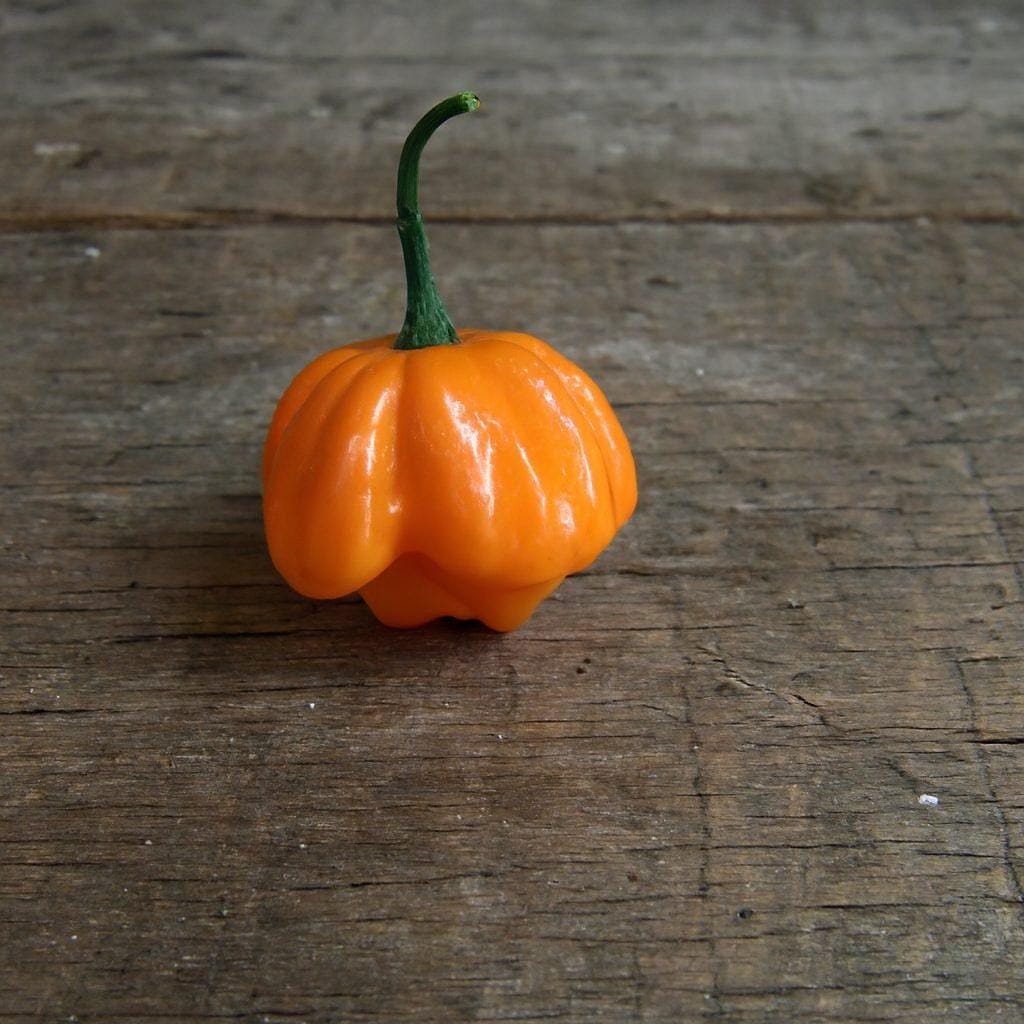
Description
Product Name: Bahamian Goat Pepper Seeds
Species: Capsicum chinense
Common Names: Bahamian Goat, Goat Pepper
Type: Heirloom
Origin & Lineage
Geographic Origin: The Bahamian Goat Pepper is native to the islands of the Bahamas and belongs to the Capsicum chinense species. It thrives in the region’s warm, humid climate and has been cultivated for generations by local farmers who value its productivity, vibrant peach-orange color, and fruity, citrus-forward flavor. Though closely related to Scotch Bonnets and Habaneros, the Bahamian Goat Pepper stands out for its quirky, pumpkin-like shape and its uniquely tropical aroma.
Bahamian Goat is rarely found outside the Caribbean, making it a prized heirloom among island growers. Its popularity in Bahamian gardens stems from its adaptability to local soil and climate, as well as its reliable yield and culinary versatility.
Cultural Significance: The Bahamian Goat Pepper is more than just a spice—it’s a cultural icon. It plays a starring role in traditional dishes like spicy conch salad, fried chicken, and Bahamian souse. Its use in everyday cooking reflects the island’s deep-rooted connection to bold, tropical flavors.
The name “goat pepper” is the subject of colorful folklore:
- Some say it “kicks like a goat”—a nod to its fiery heat.
- Others claim it smells like a goat when sliced open.
- Another theory links it to goat pastures, as the peppers often grow near livestock in rural areas.
Regardless of origin, the name has stuck, and the pepper has become a beloved staple in Bahamian kitchens and markets.
Lineage / Hybridizer History: The Bahamian Goat Pepper is a naturally selected heirloom—not a commercial hybrid. It has been stabilized through generations of local cultivation, with no known breeder or formal hybridization process. Its traits—heat, flavor, shape, and color—have been preserved through traditional seed saving and community farming practices.
Botanically, it shares lineage with other Capsicum chinense cultivars like Scotch Bonnet and Habanero, but its distinct phenotype and flavor profile suggest a long history of regional adaptation. Its continued cultivation reflects the resourcefulness and resilience of Bahamian agriculture.
Heat Profile
Scoville Rating (SHU):
100,000–350,000 SHU
Perceived Heat: Very Hot to Extremely Hot
Heat Characteristics: Comparable to habanero and scotch bonnet. The burn is sharp and immediate, concentrated on the tongue and lips, but fades relatively quickly. It’s intense enough for hot sauce lovers, but not overwhelming for experienced eaters.
Flavor Profile
Tasting Notes: Bright, fruity, and floral with strong citrus notes—especially lemon. The aroma is potent and perfumed, often described as tropical and sweet.
Aftertaste / Finish: Clean and slightly tangy, with minimal bitterness. The finish is refreshing and aromatic.
Ideal Pairings:
- Tropical fruit-based hot sauces
- Caribbean-style marinades
- Spicy conch salad
- Mango salsas and chutneys
- Citrus-forward pickles and relishes
Fruit Characteristics
Shape: Rounded, deeply ribbed pods with occasional pointed tails; often likened to miniature pumpkins
Size: 2–3 cm long, 2–3 cm diameter
Color Stages:
- Immature: Dark green
- Ripe: Peach to soft orange
- Overripe: May deepen to orange-red
Wall Thickness: Medium
Texture & Skin: Firm, slightly glossy with ridged surface
Plant Details
Growth Habit: Bushy and vigorous
Plant Height & Width:
Height: 60–120 cm
Width: 50–80 cm
Foliage: Bright green, smooth leaves
Flower Color: White
Days to Maturity: 90–120 days from transplant
Yield: Moderate to high – typically 30–60 pods per plant under optimal conditions
Cultivation Information
Seed Count per Pack: 10 seeds
Germination Time: 10–21 days (may take up to 4 weeks) (Germinating Chilli Seeds)
Optimal Germination Temp: 26–30°C (Essential guide to ideal temperatures and humidity for chilli seed germination)
Light Requirements: Filtered sun
Soil Preferences:
- pH: 6.0–6.8
- Fertile, well-draining soil
- Benefits from compost and good air circulation (Easy DIY soil mixes)
Storage Tips:
Store Bahamian Goat seeds in a cool, dry place. Refrigeration at 4–8°C extends viability. Avoid moisture and direct light.
Notable Compounds
Capsaicinoid Content: High in capsaicin and dihydrocapsaicin; moderate levels of nordihydrocapsaicin
Volatile Flavor Compounds: Limonene, citral, and floral esters contribute to the citrus aroma
Anthocyanins / Pigments: Low anthocyanin expression; peach coloration driven by carotenoids like beta-carotene and lutein
Culinary & Cultural Use
Traditional Uses:
- Spicy conch salad
- Bahamian fried chicken
- Tropical hot sauces
- Citrus-based marinades
Raw vs Cooked Flavor: Raw Bahamian Goat pods are aromatic and tangy with a sharp burn. Cooking softens the heat and enhances the citrus notes. Fermentation preserves the aroma and adds depth.
Regional Dishes:
- Bahamian conch salad
- Mango-goat pepper salsa
- Caribbean pepper mash
- Citrus-infused pickles
Storage / Drying / Preserving Tips:
- Ideal for fermentation and sauce-making
- Can be dried whole or sliced; retain color by drying at low temps
- Powdered form preserves flavor and heat for long-term use


Reviews
There are no reviews yet.