
Description
Product Name: Black Shishito Pepper Seeds
Species: Capsicum annuum
Common Names: Black Shishito
Type: Stable Hybrid
Origin & Lineage
Geographic Origin: The Black Shishito was bred in Pune, Maharashtra, India by Avinash Gune—a respected grower and hybridizer known for his work with anthocyanin-rich chilli varieties. This cultivar was grown out and stabilized in South Africa by Tony Lague a local grower, adapting it to regional conditions and enhancing its yield and pigmentation consistency.
Cultural Significance: Shishito peppers have long been a staple in Japanese cuisine, prized for their mild heat and blistered texture. The Black Shishito builds on this legacy, offering a modern twist with dramatic pigmentation and a slightly smokier flavor. While not tied to ritual use or folklore, its aesthetic appeal and culinary versatility have earned it a loyal following among chefs, growers, and ornamental collectors.
Lineage / Hybridizer History: The Black Shishito is a hybrid with a known maternal parent—a traditional Shishito pepper—and an unnamed pollen donor selected for anthocyanin expression and fruit structure. Avinash Gune created the cultivar and Tony Lague took it through multiple generations of refinement, reaching F7. Its South African grow-out has further solidified its performance and consistency, making it suitable for both culinary and ornamental use.
Heat Profile
Scoville Rating (SHU):
100–500 SHU (estimated)
Perceived Heat: Sweet to Mild
Heat Characteristics: Most pods are sweet, with the occasional fruit showing a gentle spike in heat—a trait inherited from its Shishito lineage. The heat is fleeting, front-palate, and never overwhelming. This makes it ideal for beginner growers, children, and those sensitive to capsaicin.
Flavor Profile
Tasting Notes: Fresh pods offer grassy, smoky, and slightly sweet notes. When roasted or grilled, the flavor deepens into umami-rich territory, with hints of green tea and charred bell pepper.
Aftertaste / Finish: Clean and vegetal, with a faint bitterness reminiscent of eggplant skin. The finish is short and subtle, allowing complementary ingredients to shine.
Ideal Pairings:
- Blistered in sesame oil and sea salt
- Sliced raw into noodle salads
- Pickled with rice vinegar and ginger
- Roasted with aubergine and miso
- Stuffed with cream cheese and herbs
Fruit Characteristics
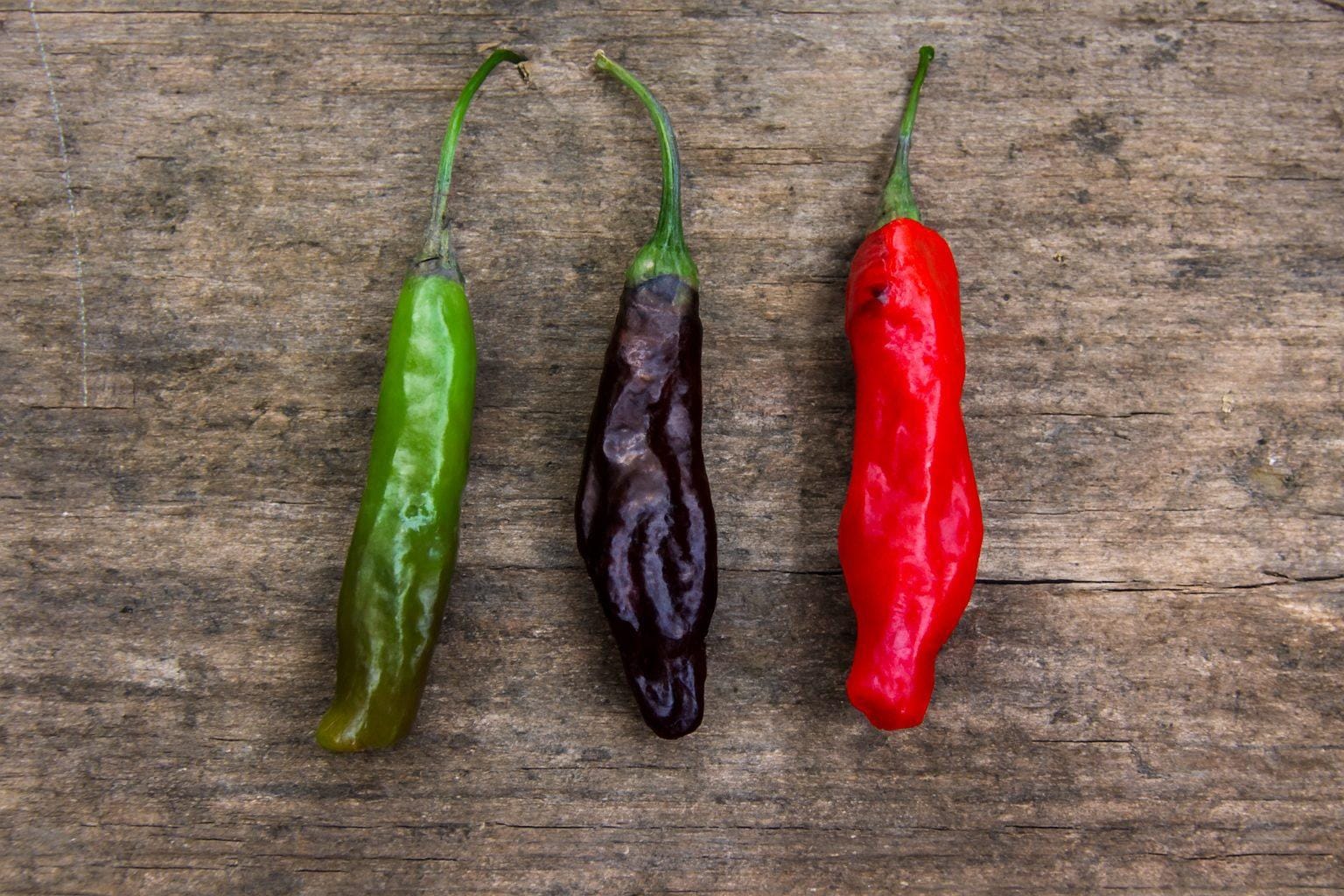
Shape: Slender, slightly curved pods with a tapered tip
Size: 6–8 cm long, 1.5–2 cm diameter
Color Stages:
- Immature: Deep green with purple blush
- Ripe: Glossy black with red striping or splotching
- Fully mature: Deep red with residual black tones
Wall Thickness: Thin
Texture & Skin: Smooth and glossy, with occasional wrinkling near the stem. The skin blisters easily when pan-roasted.
Plant Details
Growth Habit: Compact and bushy
Plant Height & Width:
Height: 50–70 cm
Width: 40–60 cm
Foliage: Dark green with purple veining; semi-pubescent
Flower Color: White with faint purple streaks
Days to Maturity: 100–120 days from germination to harvest
Yield: Moderate to high – typically 40–60 pods per plant under optimal conditions
Cultivation Information
Seed Count per Pack: 10 seeds
Germination Time: 7–14 days (Germinating Chilli Seeds)
Optimal Germination Temp: 25–30°C (Essential guide to ideal temperatures and humidity for chilli seed germination)
Light Requirements: Filtered Sun
Soil Preferences:
- pH: 6.2–6.8
- Well-draining loam or sandy soil
- Rich in organic matter; compost-amended beds recommended (Easy DIY soil mixes)
Storage Tips:
Store seeds in a cool, dry place in airtight containers. For long-term viability, refrigeration at 4–8°C is ideal. Avoid humidity and direct light exposure.
Notable Compounds
Capsaicinoid Content: Trace amounts of capsaicin and dihydrocapsaicin; negligible pungency in most pods
Volatile Flavor Compounds: Linalool, hexanal, and trace vanillin contribute to the fresh and roasted aroma profile
Anthocyanins / Pigments: High anthocyanin expression in fruit skin and stems; likely includes delphinidin and petunidin derivatives. Expression is light-dependent and strongest in cooler temperatures.
Culinary & Cultural Use
Traditional Uses: Though not traditional in the strict sense, Black Shishito peppers are used similarly to Japanese Shishito. They are ideal for:
- Blistered pan preparations
- Tempura-style frying
- Pickling in rice vinegar
- Garnishing ramen and rice bowls
Raw vs Cooked Flavor: Raw pods are crisp and grassy, with mild bitterness. Cooking transforms them—roasting brings out sweetness and umami, while pickling enhances their tang and preserves their color.
Regional Dishes:
- South African fusion: Blistered Black Shishito with chakalaka
- Japanese izakaya: Grilled Black Shishito with bonito flakes
- Korean banchan: Pickled Black Shishito with garlic and sesame
- Mediterranean tapas: Stuffed Black Shishito with feta and herbs
Storage / Drying / Preserving Tips:
- Best preserved by quick pickling or flash-freezing
- Drying is possible but not ideal due to thin walls
- For fermenting, pair with garlic, ginger, and low-salt brine to retain color


Reviews
There are no reviews yet.