
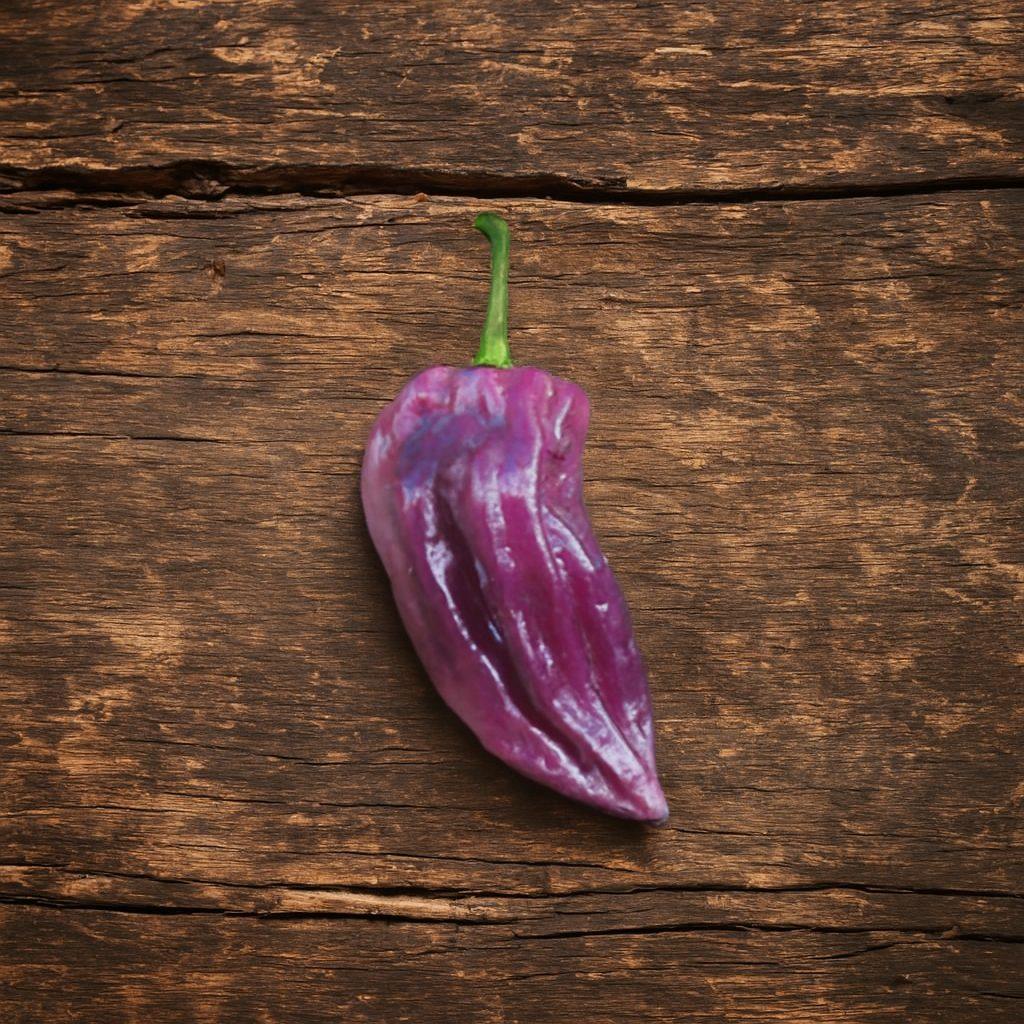
Description
Product Name: Purple Ghost Pepper Seeds
Species: Capsicum chinense
Common Names: Purple Bhut Jolokia, Ghost Pepper Purple.
Type: Unstable Hybrid
Origin & Lineage
Geographic Origin: Originally bred in the United States; derived from Indian Bhut Jolokia genetics with anthocyanin-rich selections
Development History: The Purple Ghost Pepper is a visually striking variant of the Bhut Jolokia, developed through selective breeding for anthocyanin expression. While the original Bhut Jolokia hails from Northeast India and was once the world’s hottest pepper, the purple variant emerged from U.S. grower experimentation in the 2010s. It is not a naturally occurring stable phenotype but rather a selection that expresses purple pigmentation under specific environmental conditions.
The Purple Ghost Pepper is still considered unstable, with pod color varying from deep violet to green and eventually ripening to red or reddish-purple. Despite its visual appeal, it retains the intense heat and wrinkled morphology of its Bhut lineage.
Cultural Significance: Purple Ghost peppers are primarily grown for ornamental and novelty purposes. Their vivid coloration and extreme heat make them popular among collectors and hot sauce makers seeking visual impact. While not widely used in traditional cuisine, they have found a niche in fusion dishes and artisanal products.
Lineage / Hybridizer History: Purple Ghost Pepper is a selection from Bhut Jolokia genetics, bred for high anthocyanin expression. Its lineage includes Capsicum chinense landraces from Assam and Nagaland, India, with additional breeding in North America to enhance pigmentation. The purple coloration is influenced by light exposure, temperature, and nutrient levels, making it a challenging cultivar to stabilize.
Heat Profile
Scoville Rating (SHU): 800,000–1,000,000 SHU
Perceived Heat: Superhot—sharp, aggressive, and persistent
Heat Characteristics: The burn is immediate and intense, beginning with a sting on the tongue and spreading to the throat and sinuses. It builds over 30–60 seconds and can last for several minutes. The heat is concentrated in the placenta and inner walls. Cooking or fermenting may soften the burn slightly, but the overall effect remains potent.
Flavor Profile
Tasting Notes: Purple Ghost Pepper pods offer a fruity, floral flavor with notes of berry, citrus, and a hint of bitterness. The sweetness is subtle, and the aroma is pungent and slightly smoky.
Aftertaste / Finish: The finish is warm and tangy, with lingering floral and herbal notes. Roasting enhances caramel and dried fruit tones, while fermentation adds depth and complexity.
Ideal Pairings:
Berry-based hot sauces and glazes
Fermented chilli pastes with garlic and vinegar
Spicy aioli and mayonnaise blends
Grilled meats and smoked vegetables
Powdered seasoning for dark chocolate or fruit snacks
Fruit Characteristics
Shape: Elongated, wrinkled, often with a tapered tip
Size: 5–7 cm long, 2–3 cm wide
Color Stages: Immature: deep purple → Ripe: red or reddish-purple
Wall Thickness: Thin to medium
Texture & Skin: Wrinkled, glossy, firm
Plant Details
Growth Habit: Upright and bushy
Plant Height & Width: 90–120 cm tall, 60–90 cm spread
Foliage: Dark green to purple-tinged leaves
Flower Color: White with purple accents
Days to Maturity: 120–150 days from transplant
Yield: Moderate – 30–50 pods per plant under optimal conditions
Cultivation Information
Seed Count per Pack: 5 or 10 seeds
Germination Time: 10–14 days (Germinating Chilli Seeds)
Optimal Germination Temp: 26–30°C (Essential guide to ideal temperatures and humidity for chilli seed germination)
Light Requirements: Filtered sun (minimum 6–8 hours/day)
Soil Preferences:
pH: 6.2–6.8
Well-draining loam enriched with compost (Easy DIY soil mixes)
Avoid waterlogging; containers or raised beds preferred
Storage Tips:
Store Purple Ghost Pepper seeds in airtight containers in a cool, dry place. Refrigeration with desiccants can extend viability up to 3 years.
Notable Compounds
Capsaicinoid Content:
High capsaicin and dihydrocapsaicin concentrations
Volatile Flavor Compounds:
Limonene (citrus)
Geraniol (floral)
Beta-ionone (fruity)
Anthocyanins / Pigments:
Purple coloration due to high anthocyanin expression in immature pods; final ripening shifts to red or reddish-purple
Culinary & Cultural Use
Traditional Uses: Not traditional in Indian cuisine, but used similarly to Bhut Jolokia in hot sauces, spice blends, and novelty products. Its vivid color makes it ideal for fusion dishes and gourmet applications.
Raw vs Cooked Flavor: Raw Purple Ghost Pepper pods deliver intense heat with floral and berry notes. Cooking—especially roasting or fermenting—enhances sweetness and reduces bitterness. Pickling adds acidity and preserves color temporarily, though purple fades with ripening.
Regional Dishes:
Purple Ghost Pepper hot sauce with blueberry and lime
Fermented chilli paste with garlic and ginger
Ghost chutney with blackberries and balsamic
Spicy aioli with roasted Purple Ghost
Smoked Purple Ghost powder for rubs and seasoning
Storage / Drying / Preserving Tips:
Best preserved through fermentation or drying. For drying, slice and dehydrate at low temperatures. Store in airtight containers away from light. Roasted pods can be frozen for later use. Pickled pods retain color and flavor for up to 12 months when refrigerated.


Reviews
There are no reviews yet.