
Description
Product Name: Black Thai Chilli Seeds
Species: Capsicum annuum
Common Names: Black Thai, Thai Black, Black Thai TQ
Type: Regionally significant cultivar and Heirloom
Origin & Lineage
Geographic Origin: Thailand; distributed globally through ornamental and culinary seed networks
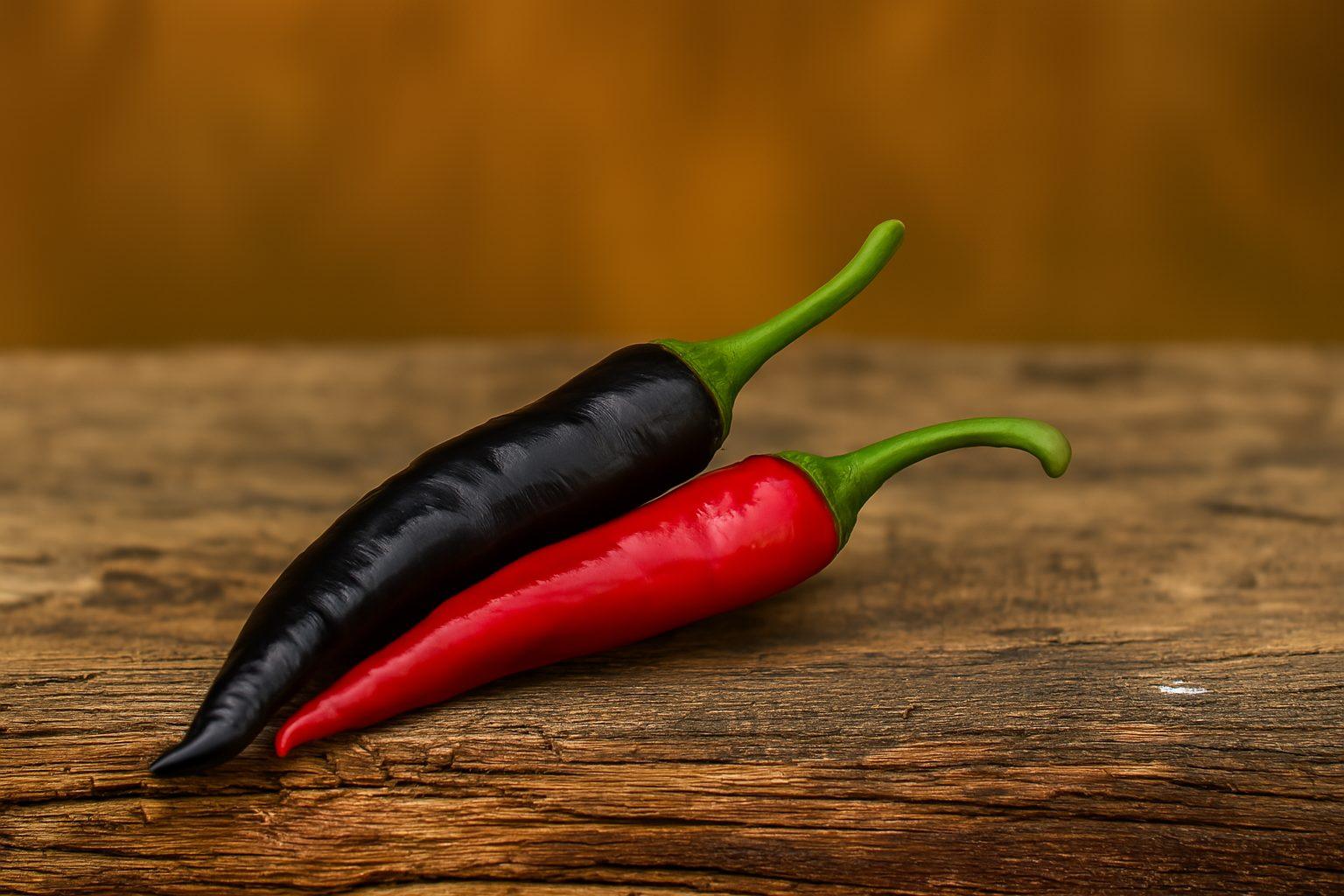
Development History: The Black Thai Chilli is a visually striking cultivar of Capsicum annuum, originating in Thailand and refined through regional selection. It was introduced to international markets via seed collectors and ornamental breeders, gaining popularity for its dramatic color transitions and culinary versatility. The pods begin green, darken to a deep black-purple, and finally ripen to vibrant red. This color evolution, combined with its compact growth habit, makes it a favorite among gardeners and chefs alike.
Cultural Significance: In Thai cuisine, chillies are central to flavor balance—heat, sweetness, and acidity. While the Black Thai is not a traditional landrace, it embodies the aesthetic and culinary values of Thai cooking. Its use in stir-fries, curries, and pickles reflects the Thai principle of layering heat and aroma. In Western markets, it’s prized for its ornamental appeal and mid-level heat, often grown in containers or decorative beds.
Lineage / Hybridizer History:
Though not attributed to a single breeder, the Black Thai likely descends from Thai bird’s eye and Prik Chi Fa lines. It was stabilized for color, productivity, and flavor by growers in the U.S., Europe, and Australia. It remains open-pollinated and suitable for seed saving.
Heat Profile
Scoville Rating (SHU): 50,000–70,000 SHU
Perceived Heat: Medium-hot—comparable to cayenne or bird’s eye
Heat Characteristics: The burn is immediate and sharp, beginning with a tongue-tingling sting and spreading quickly to the cheeks and throat. It lingers for several minutes and intensifies when dried. The heat is concentrated in the placenta and inner membranes, but the thin flesh allows for quick release during cooking.
Flavor Profile
Tasting Notes: Black Thai chillies offer a slightly sweet, fresh flavor reminiscent of capsicum, with subtle earthy and grassy undertones. The aroma is clean and peppery, with hints of citrus when raw. Roasting enhances caramel and smoky notes, while pickling brightens acidity.
Aftertaste / Finish: The finish is warm and slightly bitter, with lingering heat and a crisp vegetal snap. When dried, the pods develop a deeper, smoky character ideal for powders and flakes.
Ideal Pairings:
- Thai stir-fries and noodle dishes
- Coconut-based curries
- Pickled chilli rings for sandwiches
- Spicy marinades for grilled meats
- Chilli-infused oils and sauces
Fruit Characteristics
- Shape: Elongated, tapered pods with pointed tips
- Size: 10–12 cm long, 1–1.5 cm wide
- Color Stages: Green → Black-purple → Bright red
- Wall Thickness: Thin
- Texture & Skin: Smooth, glossy, slightly waxy
Plant Details
- Growth Habit: Upright and bushy
- Plant Height & Width: 60–100 cm tall, 45–60 cm spread
- Foliage: Dark green, ovate leaves
- Flower Color: White
- Days to Maturity: 100–120 days from transplant
- Yield: High – 50–100 pods per plant under optimal conditions
Cultivation Information
- Seed Count per Pack: 10 seeds
- Germination Time: 7–14 days (Germinating Chilli Seeds)
- Optimal Germination Temp: 24–29°C (Essential guide to ideal temperatures and humidity for chilli seed germination)
- Light Requirements: Filtered sun (minimum 6–8 hours/day)
- Soil Preferences:
- pH: 6.0–6.8
- Well-draining loam enriched with compost (Easy DIY soil mixes)
- Suitable for containers and raised beds
Storage Tips: Store seeds in airtight containers in a cool, dry place. Refrigeration with desiccants can extend viability up to 3 years.
Notable Compounds
Capsaicinoid Content:
- Moderate capsaicin and dihydrocapsaicin
- Heat varies by ripeness and growing stress
Volatile Flavor Compounds:
- Limonene (citrus)
- Vanillin (sweetness)
- Methylpyrazine (smoke)
Anthocyanins / Pigments: Black coloration due to anthocyanins; red ripening driven by carotenoids
Culinary & Cultural Use
Traditional Uses: Black Thai chillies are used in Thai cuisine to add heat and color to dishes such as curries, stir-fries, and soups. They are also used in sauces, marinades, and pickles. Their ornamental appeal makes them popular in edible landscaping and container gardens.
Raw vs Cooked Flavor: Raw pods deliver crisp heat and grassy brightness. Roasting deepens sweetness and adds smoky complexity. Pickling preserves crunch and intensifies acidity. Drying concentrates flavor and heat for use in powders and flakes.
Regional Dishes:
- Thai basil stir-fry with sliced Black Thai
- Coconut curry with Black Thai infusion
- Pickled Black Thai rings for bánh mì or wraps
- Black Thai chilli jam with ginger and lime
- Chilli oil for dumplings and noodles
Storage / Drying / Preserving Tips:
Dry pods whole or sliced in a dehydrator. Pickling is highly effective—use vinegar, garlic, and sugar for a balanced brine. Roasted peppers can be frozen or blended into sauces. For seed saving, allow pods to fully ripen and dry before extraction.



Reviews
There are no reviews yet.