
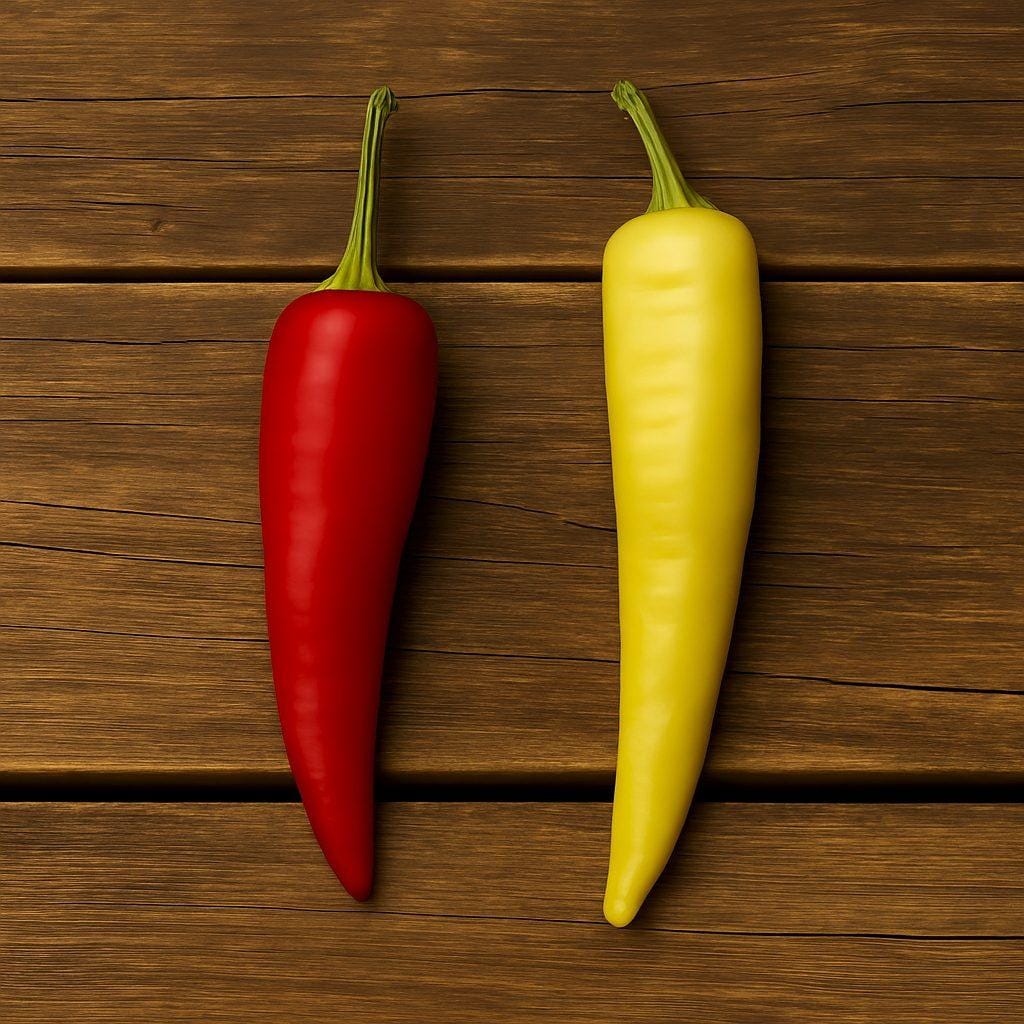
Description
Cultivar Name: Banana Pepper Seeds
Species: Capsicum annuum
Common Names: Banana Pepper, Yellow Wax Pepper, Banana Chili
Type: Heirloom
Origin & Lineage
Geographic Origin: South and Central America; selectively bred in the U.S. from Hungarian Wax Pepper mutations
Development History: Banana peppers are believed to have originated in South America, particularly in regions like Peru and Bolivia, where indigenous peoples cultivated early Capsicum annuum varieties. In the 20th century, the Corneli Seed Company introduced a mutation of the Hungarian Wax Pepper to the U.S. market, selectively breeding it for sweetness, mild heat, and curved fruit shape. This new cultivar was named for its resemblance to a banana in both shape and color.
Cultural Significance: Banana peppers have become a staple in American, Mediterranean, and Eastern European cuisines. Their mild heat and tangy flavor make them ideal for pickling, stuffing, and garnishing. They are frequently found on pizzas, sandwiches, antipasto platters, and in relishes. Their versatility and low pungency have made them a gateway pepper for heat-sensitive consumers.
Lineage / Hybridizer History:
While not attributed to a single breeder, banana peppers descend from Hungarian Wax and other annuum-type cultivars. The sweet banana variant was stabilized for uniform shape, early maturity, and low heat. Today, cultivars include Early Sweet Banana, Long Sweet Yellow, and Hot Banana, each tailored for specific culinary and climatic needs.
Heat Profile
Scoville Rating (SHU): 0–500 SHU
Perceived Heat: Sweet to very mild—often described as a gentle warmth
Heat Characteristics: The heat is subtle and localized near the seeds and placental tissue. Most sweet banana peppers register little to no burn, making them ideal for raw consumption and pickling. Hot banana variants deliver a sharper kick, especially when fully ripe. Cooking or pickling tends to mellow the heat further.
Flavor Profile
Tasting Notes:
Banana peppers offer a crisp, tangy sweetness with hints of apple, citrus, and green bell pepper. Their acidity is balanced by natural sugars, especially when ripe. Pickled banana peppers intensify the tang and add a bright, vinegary snap.
Aftertaste / Finish:
The finish is clean and refreshing, with lingering sweetness and a touch of acidity. Roasting enhances caramel notes, while stuffing absorbs savory richness.
Ideal Pairings:
- Pickled rings on sandwiches and pizzas
- Cheese-stuffed appetizers
- Banana pepper salsa and relishes
- Grilled meats and vegetables
- Bloody Mary garnishes and antipasto platters
Pod Review: https://www.youtube.com/watch?v=exdwMwOeQnI
Fruit Characteristics
- Shape: Elongated, curved, banana-like
- Size: 5–8 cm long, 2–3 cm diameter
- Color Stages: Immature: green → Ripe: yellow → Overripe: orange to red
- Wall Thickness: Medium
- Texture & Skin: Smooth, glossy, slightly waxy
Plant Details
- Growth Habit: Upright and bushy
- Plant Height & Width: 60–90 cm tall, 45–60 cm spread
- Foliage: Light green, lanceolate leaves
- Flower Color: White
- Days to Maturity: 60–80 days from transplant
- Yield: High – 40–60 pods per plant under optimal conditions
Cultivation Information
- Seed Count per Pack: 5 or 10 seeds
- Germination Time: 7–14 days (Germinating Chilli Seeds)
- Optimal Germination Temp: 22–28°C (Essential guide to ideal temperatures and humidity for chilli seed germination)
- Light Requirements: Filtered sun (minimum 6–8 hours/day)
- Soil Preferences:
- pH: 6.0–6.8
- Well-draining loam enriched with compost (Easy DIY soil mixes)
- Mulch to retain moisture and suppress weeds
Storage Tips: Store Banana Pepper seeds in airtight containers in a cool, dry place. Refrigeration with desiccants can extend viability up to 3 years.
Notable Compounds
Capsaicinoid Content:
Volatile Flavor Compounds:
- Limonene (citrus)
- Vanillin (sweetness)
- Beta-ionone (fruity)
Anthocyanins / Pigments: Yellow coloration due to carotenoids; red and orange hues develop as fruit matures
Culinary & Cultural Use
Traditional Uses: Banana peppers are widely used in American and Mediterranean cuisines. They are most commonly pickled and served as condiments, but also appear as stuffed peppers, grilled Peppers, or raw in salads. Their mildness makes them suitable for children and heat-sensitive eaters.
Raw vs Cooked Flavor: Raw peppers deliver crisp sweetness and tang. Roasting enhances sugars and adds depth. Pickling intensifies acidity and preserves texture. Stuffing absorbs savory flavors, while sautéing blends them into sauces and stir-fries.
Regional Dishes:
- Pickled banana pepper rings on subs and pizzas
- Cheese-stuffed banana pepper poppers
- Banana pepper salsa with tomato and jalapeño
- Mississippi pot roast with pickled banana peppers
- Banana pepper relish for burgers and hot dogs
Storage / Drying / Preserving Tips:
Pickling is the most popular method. Use vinegar, sugar, and spices for a balanced brine. For drying, slice and dehydrate at low temperatures. Freeze roasted or blanched peppers in airtight containers. Store fresh peppers in the crisper drawer for up to two weeks.



Reviews
There are no reviews yet.