
Description
Product Name: Paprika Pepper
- Cultivar Name: Paprika Pepper
- Species: Capsicum annuum
- Common Names: Spice Pepper, Sweet Hungarian Paprika, Pimiento Spice Pepper, Noble Sweet Pepper.
- Type: Heirloom
Origin & Lineage
Geographic Origin: While the Capsicum genus originated in Central and South America, the Paprika Pepper was extensively cultivated, selected, and refined across Central Europe—most notably in the Kalocsa and Szeged regions of Hungary, as well as the Extremadura and Murcia regions of Spain. Following its introduction to Europe via sixteenth-century trade routes, the pepper adapted seamlessly to the warm continental summers and mineral-rich alluvial soils of the Carpathian Basin. Today, heirloom paprika seeds are prized globally by home gardeners and spice artisans seeking authentic, sun-ripened flavor.
Cultural Significance: Few culinary ingredients are as deeply woven into national identity as the Paprika Pepper is in Hungarian and Spanish gastronomy. In Hungary, paprika is revered as “red gold,” forming the essential aromatic backbone of national dishes and peasant stews. Historically, harvested pods were hand-strung into long, vibrant garlands known as füzér (or ristras in Spanish-speaking traditions) and hung beneath the eaves of rural cottages to cure in the autumn sun. Beyond its culinary dominance, the pepper was historically used in folk remedies to stimulate circulation and digestion, and it remains a symbol of hospitality, warmth, and agricultural heritage during annual autumn harvest festivals.
Lineage / Hybridizer History: The traditional Paprika Pepper is an open-pollinated heirloom lineage that has been stabilized over centuries by dedicated European farmers and regional agricultural institutes. Early introductions of pungent Capsicum annuum landraces from the Americas via the Ottoman Empire were systematically selected by Hungarian growers to reduce aggressive capsaicinoid heat while maximizing sugar content, thin-walled drying efficiency, and deep carotenoid pigmentation. Because this variety is strictly open-pollinated rather than an F1 hybrid, true-to-type seeds can be reliably saved from mature, isolated fruits year after year.
Heat Profile
- Scoville Rating (SHU): 250 – 1,000 SHU
- Perceived Heat: Mild
- Heat Characteristics: The gentle warmth delivered by the Paprika Pepper is subtle, welcoming, and exceptionally well-rounded. Rather than producing a sharp, stinging burn on the tip of the tongue, the minimal capsaicinoids create a soft, lingering glow across the back of the palate. Moreover, the heat level can be modulated by the grower and cook; removing the inner placental ribs and seeds yields a completely sweet, zero-heat profile, whereas retaining the pith introduces a delicate, warming tingle that enhances savory dishes without overwhelming sensitive palates.
Flavor Profile
- Tasting Notes: Freshly harvested pods offer a crisp, bright, and distinctly fruity sweetness reminiscent of sun-warmed red bell peppers, accented by subtle notes of ripe plum and mild earthiness. Once the fruits are dehydrated and milled into powder, the flavor profile deepens dramatically, revealing rich layers of toasted nuttiness, sweet hay, dried tomato, and delicate floral undertones.
- Aftertaste / Finish: The finish is remarkably clean, velvety, and gently sweet, leaving a warm, savory resonance on the palate without any lingering bitterness or harsh astringency.
- Ideal Pairings:This versatile pepper pairs effortlessly with a wide range of culinary staples. In particular, its natural sweetness and vibrant pigment elevate:
- Braised meats such as slow-cooked beef, pork shoulder, chicken, and wild game.
- Dairy and egg preparations, including sour cream sauces, deviled eggs, creamy scrambled eggs, and aged cheeses.
- Hearty root vegetables and legumes, especially potatoes, sweet onions, cabbage, chickpeas, and white beans.
- Aromatic companions like roasted garlic, caraway seeds, black pepper, smoked sea salt, and rich olive oil.
Fruit Characteristics
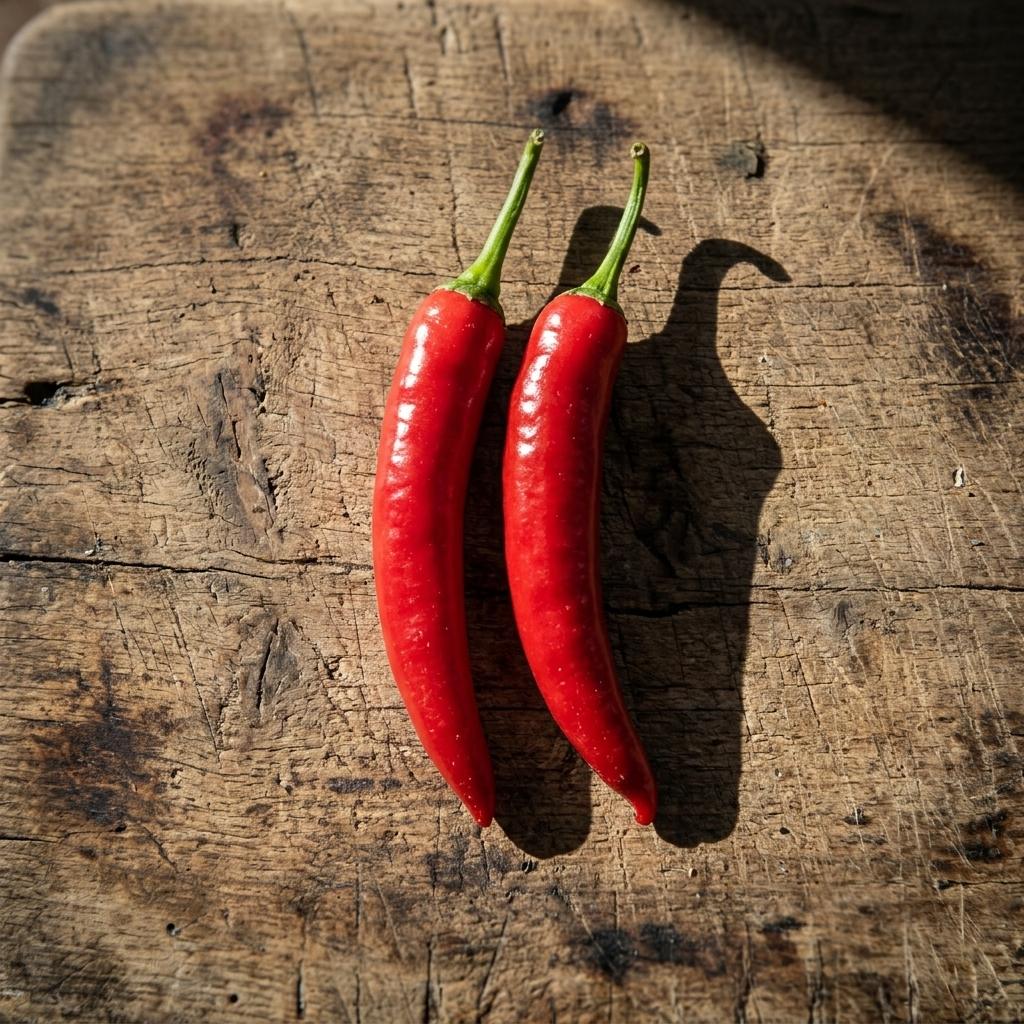
- Shape: Elongated, conical, and gently tapering to a blunt or slightly pointed tip, frequently hanging in a pendent position along the branches.
- Size: 10–14 cm long, 2.5–3.5 cm diameter at the shoulder.
- Color Stages: Immature: deep glossy green → Intermediate: mottled bronze or rusty orange → Ripe: brilliant, saturated crimson red.
- Wall Thickness: Thin to Medium (approximately 2–3 mm, specifically prized for rapid, even dehydration without spoiling).
- Texture & Skin: Smooth and glossy when freshly picked, developing slight longitudinal wrinkles as the pods reach peak ripeness and begin to naturally lose moisture on the vine.
Plant Details
- Growth Habit: Bushy and upright, forming a sturdy, well-branched central stem capable of supporting heavy clusters of pendent pods without sprawling.
- Plant Height & Width: 60–85 cm tall, 45–60 cm wide.
- Foliage: Lush, medium-to-dark green leaves with smooth, glabrous surfaces and lance-shaped blades that provide natural sunscald protection for the developing fruits.
- Flower Color: Pure, crisp white with five to six delicate petals and pale yellow-green anthers.
- Days to Maturity: 75–90 days from germination to full crimson harvest.
- Yield: High – typically producing 15 to 25 uniform, richly pigmented pods per healthy plant under optimal growing conditions.
Cultivation Information
- Seed Count per Pack: 5 or 10 seeds (Presoaking Chilli Seeds)
- Germination Time: 10–30 days depending on temperature and substrate (Germinating Chilli Seeds)
- Optimal Germination Temp: 22–28°C (Essential guide to ideal temperatures and humidity for chilli seed germination)
- Light Requirements: Filtered sun
- Soil Preferences: Prefers humus-rich, well-drained soil with a pH of 6.0–7.0. Compost-enriched substrates are ideal (Easy DIY soil mixes)
- Storage Tips: Store seeds in airtight containers in a cool, dry environment. Avoid exposure to humidity and direct sunlight to preserve viability for up to 3 years.
Notable Compounds
- Capsaicinoid Content: Contains trace to low concentrations of natural capsaicinoids, led primarily by capsaicin and dihydrocapsaicin , with minor fractions of nordihydrocapsaicin. Unlike fiery chili varieties, these compounds are restricted almost entirely to the internal placental glands, leaving the outer pericarp sweet and aromatic.
- Volatile Flavor Compounds: Over 120 volatile organic compounds contribute to the complex bouquet of fresh and cured Paprika Peppers. Fresh green pods are dominated by 2-methoxy-3-isobutylpyrazine (bell pepper pyrazine), which imparts a crisp, vegetal aroma. As the fruit ripens to crimson and undergoes gentle drying, concentrations of fruity esters, terpenoids such as limonene and linalool , and sweet aldehydes like (E)-2-hexenal increase significantly, creating the signature warm, sweet, and subtly floral spice aroma.
- Anthocyanins / Pigments: While this cultivar does not express purple anthocyanin foliage or fruit coloration, it is renowned for its extraordinary concentration of lipophilic carotenoids . Specifically, the mature pericarp is packed with capsanthin and capsorubin —two unique xanthophyll pigments exclusive to the Capsicum genus that account for up to 60% of the total carotenoid profile and deliver the spice’s unmistakable deep crimson hue. Alongside these red pigments, high levels of beta-carotene , zeaxanthin , and beta-cryptoxanthin provide potent antioxidant activity and rich provitamin A nutrition.
Culinary & Cultural Use
- Traditional Uses: Historically and culturally, the primary role of the Paprika Pepper is the production of freshly milled, aromatic paprika powder. Beyond dry spice blends, whole dried pods are rehydrated into velvety pastes for slow-simmered stews, infused into warm cooking oils to create vibrant crimson finishing drizzles, or coarsely crushed into rustic flakes for curing artisanal sausages and charcuterie.
- Raw vs Cooked Flavor: When eaten raw, the thin walls deliver a crisp, juicy crunch with bright vegetal sweetness and mild peppery notes. However, gentle cooking transforms the pepper’s chemistry; sautéing fresh slices or blooming ground paprika briefly in warm fat (such as lard, butter, or olive oil) unlocks the fat-soluble carotenoids and volatile esters, releasing a deeply savory, sweet, and toasted aroma. Care must be taken never to scorch paprika over high heat, as high temperatures rapidly caramelize its natural sugars into bitter compounds.
- Regional Dishes:Paprika Peppers serve as the indispensable centerpiece in numerous iconic dishes worldwide:
- Hungarian Chicken Paprikash (Csirkepaprikás ): Tender chicken pieces braised in a rich, velvety sauce of sweet onions, generous amounts of crimson paprika, and tangy sour cream.
- Traditional Beef Goulash (Gulyás ): A hearty Central European meat and vegetable stew where blooming sweet paprika in rendered fat creates both the signature ruby broth and foundational flavor.
- Hungarian Lecsó : A rustic, comforting summer vegetable ragout simmered from fresh sweet peppers, ripe tomatoes, onions, and ground paprika.
- Spanish Paella and Chorizo : Used both as a cured spice rub for artisanal pork sausages and as an essential aromatic base alongside saffron and garlic in coastal rice dishes.
- Storage / Drying / Preserving Tips: Drying should be done in a well-ventilated area at low temperatures to preserve flavor and color. Once dried, pods can be ground into powder or stored whole. For pickling, use a vinegar-based brine with herbs and garlic to enhance flavor.


Reviews
There are no reviews yet.