
Description
Product Name: Cubanelle Pepper
Cultivar Name: Cubanelle Pepper
Species: Capsicum annuum
Common Names: Cuban Pepper , Ají Cubanela , Italian Frying Pepper , Italian Sweet Frying Pepper
Type: Heirloom
Origin & Lineage
Geographic Origin: Although the ancestors of the Cubanelle Pepper were originally domesticated in South and Central America thousands of years ago, the modern cultivar was developed and stabilized primarily within the Caribbean—specifically in Cuba, Puerto Rico, and the Dominican Republic—as well as in Italy following the Columbian Exchange. Consequently, Spanish and Portuguese explorers carried early Capsicum selections across the Atlantic during the fifteenth and sixteenth centuries, where European farmers selectively bred them for thin walls and sweet flavor before seeds returned to the Caribbean and eventually entered commercial cultivation in the United States in 1932. Today, the Dominican Republic serves as the primary global exporter of this cherished open-pollinated cultivar, while home gardeners worldwide prize the variety for its reliable performance across warm and temperate growing zones.
Cultural Significance: Across the Hispanic Caribbean, the Cubanelle Pepper —affectionately called ají cubanela —functions as an indispensable cornerstone of daily criollo cooking and household culinary identity. Moreover, families pass down traditional recipes that rely on the bright, aromatic essence of this pod to build foundational flavor bases, symbolizing hospitality and home-cooked comfort in Cuban, Puerto Rican, and Dominican kitchens. Similarly, in southern Italian and Italian-American traditions, the cultivar is celebrated as the classic Italian Frying Pepper, where it is routinely blistered in olive oil or stuffed for Sunday family gatherings and summer street festivals.
Lineage / Hybridizer History
Parentage: Because the Cubanelle Pepper is an ancient open-pollinated heirloom rather than a modern F1 hybrid, no single commercial breeder or laboratory holds credit for its creation. Instead, generations of smallholder farmers in Italy and the Greater Antilles carefully saved seeds from productive plants that exhibited elongated pods, thin flesh, and gentle sweetness, naturally stabilizing the open-pollinated genetics over centuries. Furthermore, while modern seed companies occasionally release F1 frying-type hybrids inspired by its morphology, true heirloom Cubanelle seeds remain genetically stable and will grow true to type when isolated from other Capsicum annuum varieties.
Heat Profile
Scoville Rating (SHU): 100 to 1000 SHU
Perceived Heat: Mild
Heat Characteristics:
Unlike pungent chili varieties that deliver an immediate burn, the Cubanelle Pepper offers a remarkably gentle, fleeting warmth that barely registers on the palate. In fact, most pods taste entirely sweet and refreshing, though occasional fruits grown under high summer temperatures or slight water stress may exhibit a whisper of pleasant peppery zing along the inner placental ribs. Therefore, this approachable heat profile makes the cultivar ideal for cooks who desire authentic chili aroma without overwhelming spice.
Flavor Profile
Tasting Notes:
Fresh Cubanelle Peppers deliver a crisp, grassy, and delicately sweet flavor profile that features far greater aromatic complexity and lower water content than standard blocky bell peppers. When harvested at their traditional yellowish-green stage, the pods express bright herbal notes balanced by subtle honey-like sweetness. However, once the fruits are left on the plant to ripen fully into shades of orange and crimson, their natural sugars intensify dramatically, producing a rich, fruity, and deeply nuanced sweetness.
Aftertaste / Finish:
The finish is clean, crisp, and lightly vegetal with a lingering hint of garden-fresh sweetness and zero bitterness. Furthermore, because the flesh contains less moisture than thick-walled sweet peppers, the flavor concentrates cleanly on the palate rather than tasting watery.
Ideal Pairings: Cubanelle Peppers harmonize effortlessly with extra-virgin olive oil, roasted garlic, sweet yellow onions, fresh cilantro, culantro (recao), oregano, and ripe tomatoes. Additionally, their savory sweetness complements mild cured meats, Italian sausage, pigeon peas, black beans, white rice, sharp aged cheeses such as Pecorino Romano, and melted mozzarella
Fruit Characteristics
Shape:
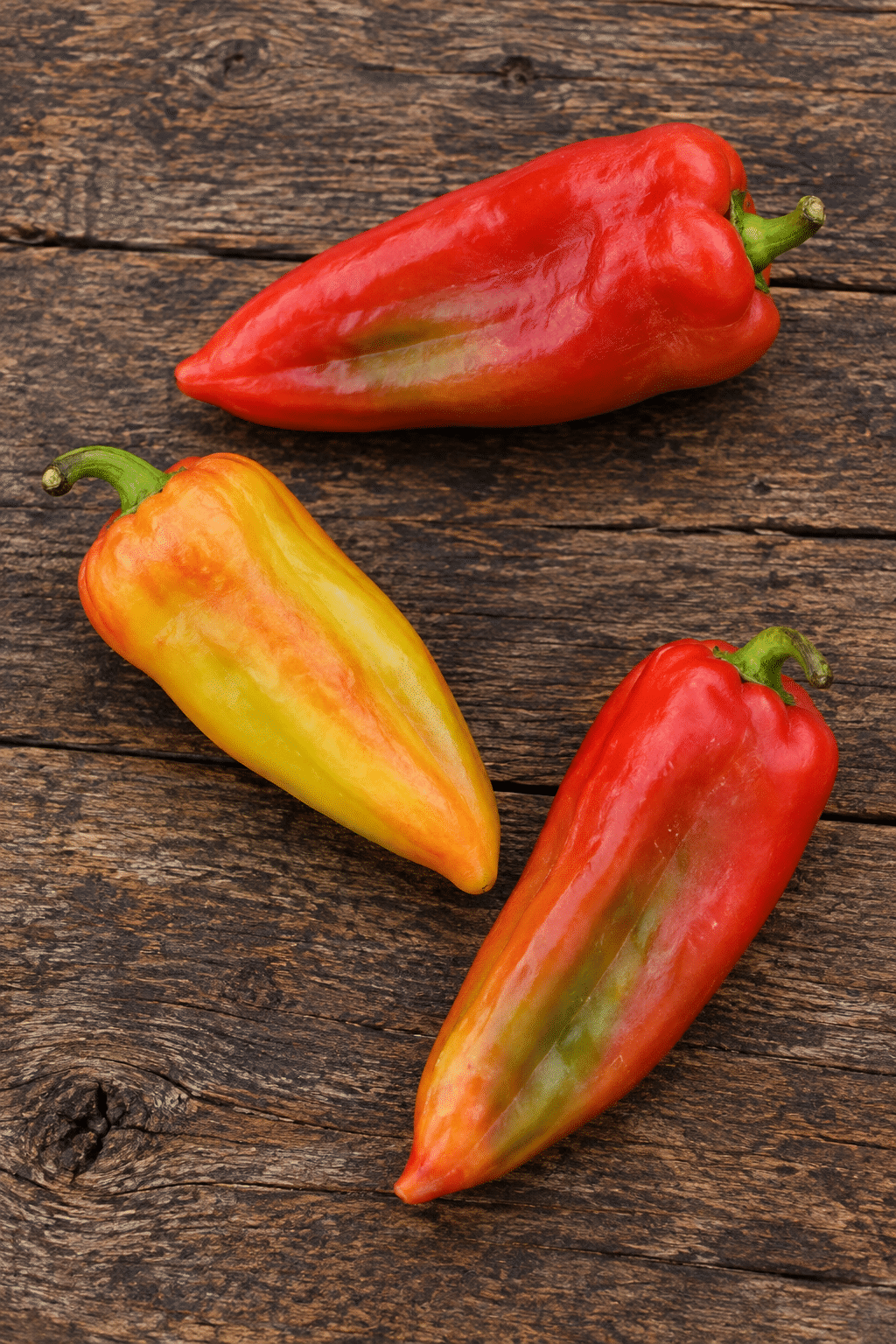
Elongated, conical, and slightly irregular with two to three distinct lobes, broad shoulders, and a gently tapered tip that frequently develops a charming subtle curl.
Size:
12–18 cm long and 5–6 cm in diameter at the shoulders.
Color Stages: Immature: pale yellowish-green to bright chartreuse green → Intermediate: golden yellow to vibrant orange → Ripe: deep, glossy crimson red
Wall Thickness:
Thin
Texture & Skin:
Smooth, glossy, and waxy on the surface, yet displaying gentle longitudinal creases and a slightly wrinkled or undulating contour along the length of the pod. Because the skin is delicate and the walls are thin, the fruit offers a crisp, tender snap when raw and blisters rapidly under high heat without requiring peeling.
Plant Details
Growth Habit:
Compact to moderately bushy upright branching habit with sturdy green stems capable of supporting heavy clusters of elongated fruit.
Plant Height & Width:
60–90 cm tall and 45–60 cm wide under optimal garden conditions.
Foliage:
Smooth, glabrous, ovate-lanceolate leaves in an attractive medium to light-emerald green hue that provides gentle canopy shade to protect developing pods from sunscald.
Flower Color:
Pure white, five- to six-petaled star-shaped blossoms borne singly or in small clusters at the branch nodes.
Days to Maturity:
65–80 days from transplanting to the first harvestable yellowish-green pods, or approximately 80–95 days for fully ripened red fruits.
Yield:
typically producing 15 to 25 full-sized pods per healthy plant across a continuous harvest window, especially when immature green peppers are picked regularly to stimulate ongoing flowering.
Cultivation Information
Seed Count per Pack: 10 seeds
Germination Time: 7–14 days (Germinating Chilli Seeds)
Optimal Germination Temp: 24–30°C (Essential guide to ideal temperatures and humidity for chilli seed germination)
Light Requirements: Filtered sun
Soil Preferences:
• pH: 6.0–6.8
• Rich, well-draining loam (Easy DIY soil mixes)
• Benefits from compost and potassium-rich feeding
Watering:
Maintain consistent moisture without waterlogging. Mulch to retain soil moisture and suppress weeds.
Fertilization:
Apply balanced NPK fertilizer every 4–6 weeks. Avoid excess nitrogen to prevent leafy growth at the expense of fruiting.
Pruning:
Remove lower leaves and non-productive branches to improve airflow and light penetration.
Storage Tips:
Store seeds in a cool, dry place. Refrigeration at 4–8°C extends viability. Avoid humidity and direct light.
Notable Compounds
Capsaicinoid Content:
Traces of capsaicin and dihydrocapsaicin are synthesized in minuscule concentrations within the epidermal glands of the placental tissue. Because total capsaicinoid levels remain exceptionally low compared to pungent Capsicum annuum cultivars, the Cubanelle Pepper delivers gentle digestive stimulation and antioxidant benefits without triggering intense pain receptors.
Volatile Flavor Compounds:
The signature fresh, green aroma of unripe Cubanelle pods is driven largely by 2-methoxy-3-isobutylpyrazine alongside green-leaf aldehydes such as hexanal and (E)-2-hexenal. As the fruit matures, esters, monoterpenes such as limonene, and carotenoid-derived compounds like β-ionone increase, contributing subtle fruity and floral nuances to the finished flavor.
Pigments:
Unripe pods owe their bright yellowish-green coloration to high concentrations of chlorophylls a and b paired with yellow xanthophylls such as lutein and violaxanthin. During ripening, chlorophyll breaks down while the plastid carotenoid pathway synthesizes rich orange and red pigments, primarily β-carotene, β-cryptoxanthin, capsanthin, and capsorubin, without expressing purple anthocyanin genes.
Culinary & Cultural Use
Traditional Uses:
In Caribbean households, fresh Cubanelle Peppers are finely pureed or minced to form the aromatic backbone of sofrito, recaito, and criollo stews, beans, and seasoned rice dishes. Meanwhile, in Italian cooking, whole or sliced pods are pan-fried in olive oil, roasted over open flames, stuffed with savory fillings, or simmered into rustic tomato sauces.
Raw vs Cooked Flavor:
When eaten raw in salads, sandwiches, or fresh salsas, the Cubanelle Pepper provides a crisp crunch and a bright, grassy, slightly sweet taste. Conversely, applying heat through sautéing, grilling, or roasting transforms the thin walls into a silky, tender texture while caramelizing natural sugars and bringing forward rich, smoky, honey-like undertones. Unlike thick-walled bell peppers that can become watery when cooked, Cubanelles hold their concentrated flavor and tender bite beautifully.
Regional Dishes: Puerto Rican Sofrito & Arroz con Gandules: Fresh ají cubanela is blended with garlic, yellow onion, cilantro, recao (culantro), and ají dulce to create traditional Puerto Rican Sofrito, which seasons classic Puerto Rican Rice with pigeon peas.
Italian Sausage & Peppers Sandwich: Sliced Cubanelle Peppers are sautéed in olive oil with sweet onions and garlic to top grilled Italian sausages served on crusty rolls.
Stuffed Cubanelle Peppers: Whole hollowed pods are filled with seasoned Italian sausage, Arborio rice, fresh parsley, Pecorino Romano, and mozzarella before being baked in marinara sauce, as featured in classic Stuffed Cubanelle Peppers.
Cubanelle Pepper Rice Pilaf: Diced pods are sautéed in butter or olive oil with onions and simmered with long-grain white rice and broth for an aromatic Cubanelle Pepper Rice Pilaf
Storage / Drying / Preserving Tips:
• Best enjoyed fresh, roasted, or pickled
• Can be frozen whole or sliced for later use
• Suitable for drying due to thinner walls



Reviews
There are no reviews yet.