
Description
Product Name: Fish Pepper Orange
Cultivar Name: Fish Pepper Orange
Species: Capsicum annuum
Common Names: Fish Pepper
Type: Heirloom
Origin & Lineage
Geographic Origin: The beautiful Fish Pepper Orange tracks its deepest ancestry back to the tropical Caribbean region. From there, the parent genetics were introduced to the Chesapeake Bay and Mid-Atlantic regions of North America during the late 18th century or early 19th century. It was heavily grown in Maryland and Pennsylvania.
Cultural Significance: The Fish Pepper Orange is deeply interwoven with African-American culinary history and urban foodways. Enslaved gardeners and free Black caterers meticulously cultivated these crops in the 19th century around Baltimore. The young, creamy-white pods became highly prized because they were added to sophisticated oyster and crab house cream sauces to inject necessary spice without staining or discoloring the elegant white presentations. Folklore also reports that the leaves and fruits were historically utilized by early food historians and herbalists to address common internal ailments.
Historical Preservation: The Fish Pepper Orange nearly vanished in the early 20th century due to urbanization and loss of oral culinary traditions. It was saved from extinction by Horace Pippin, a celebrated African American folk painter from Pennsylvania. In the 1940s, Pippin bartered a handful of fish pepper seeds to beekeeper H. Ralph Weaver in exchange for bee sting therapy to treat his arthritis. The seeds remained in the Weaver family freezer for over 50 years until William Woys Weaver, Ralph’s grandson and a food historian, reintroduced them to the public via the Seed Savers Exchange in 1995.
Lineage / Breeder History
Parentage: The Fish Pepper Orange selection is a naturally stabilized, distinct color variation of the standard historic Fish Pepper, which originally arose as a striking albinism mutation within the Serrano pepper family. The preservation of this rare heirloom lineage is credited to the African-American folk artist Horace Pippin. In the 1940s, Pippin traded his garden seeds to a local Philadelphia-area beekeeper named H. Ralph Weaver in exchange for bee-sting therapy sessions to soothe his severe arthritis. These precious seeds were subsequently frozen in baby food jars for half a century by the Weaver family. In 1995, the historic collection was rediscovered by his food historian grandson, William Woys Weaver, who transferred them to the Seed Savers Exchange to ensure public availability. The Orange selection isolates the magnificent transitional orange phase of the ripening pod into a stunning standalone crop
Hybridizer:
None; stabilized through traditional seed saving and heirloom preservation
Selected Traits:
• Cone-shaped pods with variegated striping
• Ripening sequence: white → green → orange → red
• Variegated foliage with white, green, and speckled leaves
• Medium heat with citrus and earthy undertones
• High ornamental and culinary value
Stabilization Status:
Stable heirloom. Expresses consistently across generations. Minor variation in pod striping and foliage variegation may occur.
Heat Profile
Scoville Rating (SHU): 5,000–30,000 SHU
Perceived Heat: Medium-hot
Heat Characteristics: A rapid, front-of-the-mouth burn is generated by the Fish Pepper Orange, which mimics the sudden bite of a robust serrano or light cayenne pepper. The pungency hits quickly but fades cleanly without a long, agonizing throat burn
Flavor Profile
Tasting Notes: Tangy, vibrant, and refreshingly crisp with a distinct, subtle underlying sweetness that sets it apart from the classic red phase. It possesses a peppery, bright flavor with no overwhelming bitterness
Aftertaste / Finish: A clean, fruity finish is left behind, accompanied by a mild, lingering warmth on the palate.
Ideal Pairings: Fresh oysters, blue crabs, cream-based chowders, citrus salsas, white fish fillets, and summer coleslaws.
Fruit Characteristics
Shape: Elongated, pendant, and slightly curved pods that taper elegantly down to a sharp point.
Size: 4–5 cm long, 2 cm diameter
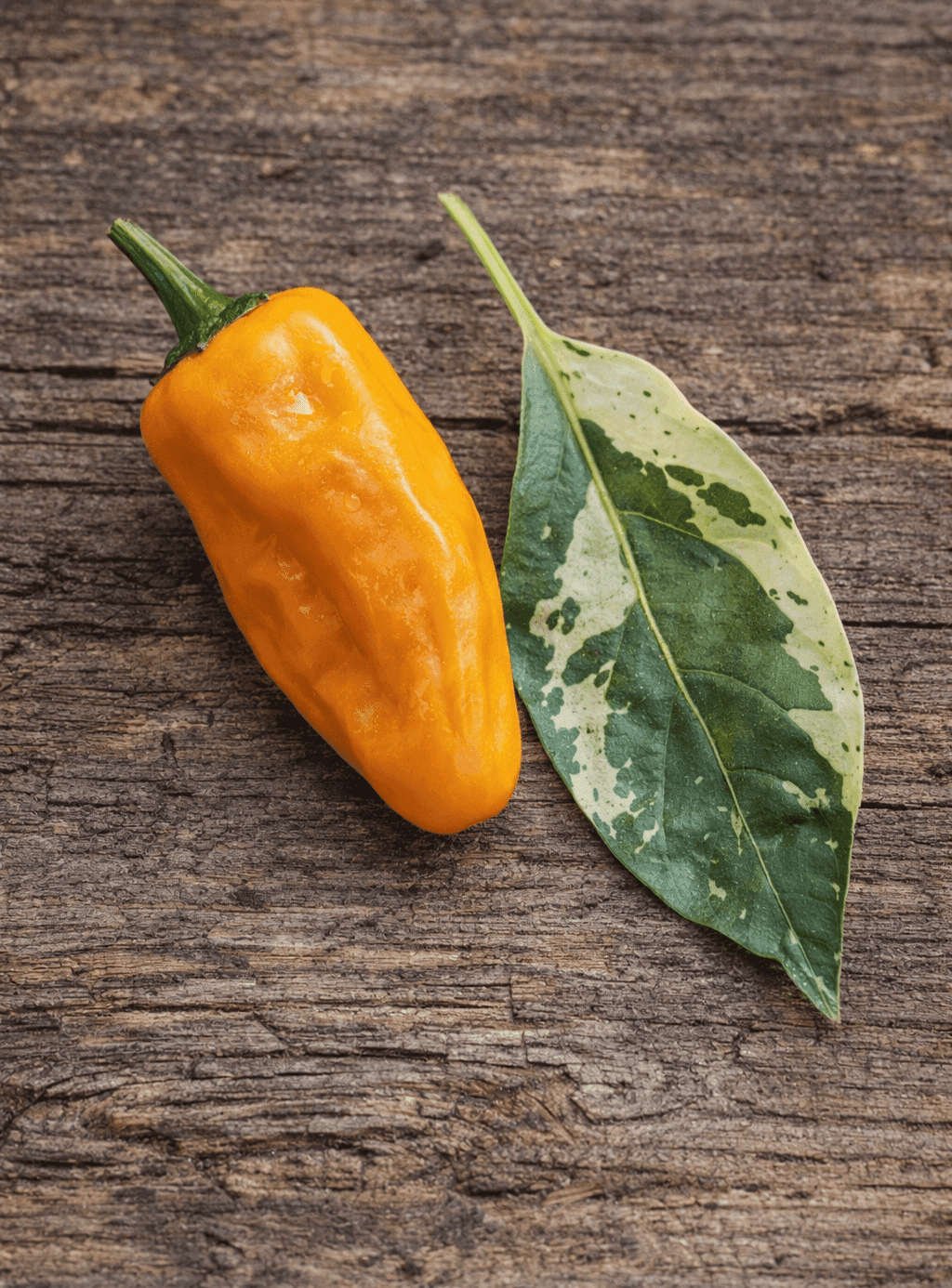
Color Stages: Immature: green with creamy white striations → Ripe: vibrant, brilliant orange with subtle rusty brown stripes that occasionally fade to solid orange.
Wall Thickness:
Medium
Texture & Skin: Smooth, firm, and noticeably crunchy skin that offers a satisfying snap when bitten.
Plant Details
Growth Habit: Bushy, dense, and slightly sprawling, which makes it perfect for patio pots.
Plant Height & Width:
Height: 60 cm, Width: 45 cm
Foliage: Highly variegated leaves that display asymmetrical patches, specks, and dramatic stripes of stark white and dark green.
Flower Color: White with occasional light green striping on the petals
Days to Maturity:
80–100 days from transplant
Yield:
Moderate to high — typically 60–100 pods per plant under optimal conditions. Fish Pepper orange plants are ideal for container gardening, raised beds, and ornamental borders. Their striking foliage and colorful fruit make them a favorite among heirloom collectors and edible landscapers.
Cultivation Information
Seed Count per Pack: 10 seeds
Germination Time: 10–20 days (Germinating Chilli Seeds)
Optimal Germination Temp: 26–30°C (Essential guide to ideal temperatures and humidity for chilli seed germination)
Light Requirements: Filtered sun
Soil Preferences:
• pH: 6.0–6.8
• Rich, well-draining loam or compost mix (Easy DIY soil mixes)
• Benefits from calcium and potassium supplementation
Watering:
Maintain consistent moisture. Avoid waterlogging. Mulch recommended.
Fertilization:
Apply balanced NPK fertilizer every 2–3 weeks. Supplement with magnesium and calcium during fruiting.
Support:
Staking optional; canopy remains compact
Pruning:
Pinch growing tips to encourage branching. Remove lower leaves to improve airflow.
Storage Tips:
Store Fish Pepper Orange seeds in a cool, dry place. Refrigeration at 4–8°C extends viability. Avoid humidity and light exposure.
Notable Compounds
Capsaicinoid Content:
Highly rich in capsaicin and dihydrocapsaicin, which create its swift, sharp pungency profile.
Volatile Flavor Compounds:
Limonene, pyrazines, and esters contribute to citrus and earthy aroma
Pigments:
Esters and green-note hexanal compounds dictate its crisp, apple-like, and tangy initial flavor signature.
Nutritional Value:
High concentrations of carotenoids (specifically beta-carotene) produce the rich orange hues, while a recessive mutation governs the striking albinism that causes the variegation across the foliage and unripened fruit
Culinary & Cultural Use
Traditional Uses: Authentic Mid-Atlantic seafood boils, regional cream pan-sauces, tangy house ferments, and bright summer salsas.
Raw vs Cooked Flavor: When eaten raw, a very sharp, sweet crunch is presented. Once cooked or lightly roasted, the natural sugars caramelize rapidly, mellowing the initial heat and releasing a rich, fruity undertone into hot dishes.
Regional Dishes: Classic Chesapeake Bay Crab Stew, Baltimore White Cream Fish Sauce, and Maryland Pickled Fish Peppers
Storage / Drying / Preserving Tips:
• Medium walls dry well for powder or flakes
• Pickles well in vinegar or brine
• Can be frozen whole or sliced
• Suitable for oil infusions and fermented sauces



Reviews
There are no reviews yet.