
Description
Product Name: Peppapeach
The Peppapeach chilli is rapidly becoming an absolute favorite among horticultural enthusiasts and culinary connoisseurs across the globe. This unique, rare pepper variety is celebrated for its incredible combination of sugary sweetness and manageable, approachable warmth. Cultivated primarily for its distinctively crunchy walls and stunning pastel appearance, the fruit brings a refreshing aesthetic brilliance to any garden patch or patio container. Whether eaten directly from the branch or carefully processed into complex hot sauces, a culinary experience unlike any other is reliably delivered by this exceptional cultivar.
Cultivar Name: Peppapeach
Species: Capsicum baccatum
Common Names: Peppapeach
Type: Hybrid
Origin & Lineage
Geographic Origin:
The historical roots of this magnificent pepper trace back directly to the fertile valleys of Wales, United Kingdom. It was officially isolated and stabilized inside a highly controlled greenhouse environment by a master gardener who is profoundly respected within the global pepper community.
Cultural Significance:
Lineage / Hybridizer History:
Species: Capsicum baccatum
Common Names: Peachadew, Pichadoo
Type: Heirloom
Heat Profile
Scoville Rating (SHU):
Estimated between 1,000 and 5,000 SHU.
Perceived Heat:
Mild (50 to 1000 SHU) to Medium (1000 to 15000 SHU), depending on growing conditions and ripeness.
Heat Characteristics:
Flavor Profile
Tasting Notes:
An explosion of complex, sugar-forward flavors is immediately unleashed when the crisp flesh is bitten into. The flavor profile is strongly reminiscent of a perfectly ripe, spicy Gala apple combined with subtle notes of tropical white peach and honeydew melon. A clean, bright citrus undertone balances out the sugary profile, completely steering clear of the heavy, bitter green flavors that plague immature bell peppers. Tiny hints of floral essence can also be detected by seasoned palates, adding an air of gourmet complexity to the entire sensory experience.
Aftertaste / Finish:
Ideal Pairings:
- This versatile pepper pairs exquisitely with soft, creamy cheeses such as goat cheese, cream cheese, and fresh ricotta. It is highly recommended for sweet-and-sour pickling brines infused with mustard seeds and coriander. Furthermore, it beautifully elevates grilled white fish, roasted chicken, fresh mango salsas, summer salads, and artisanal charcuterie boards.
Fruit Characteristics
Shape:
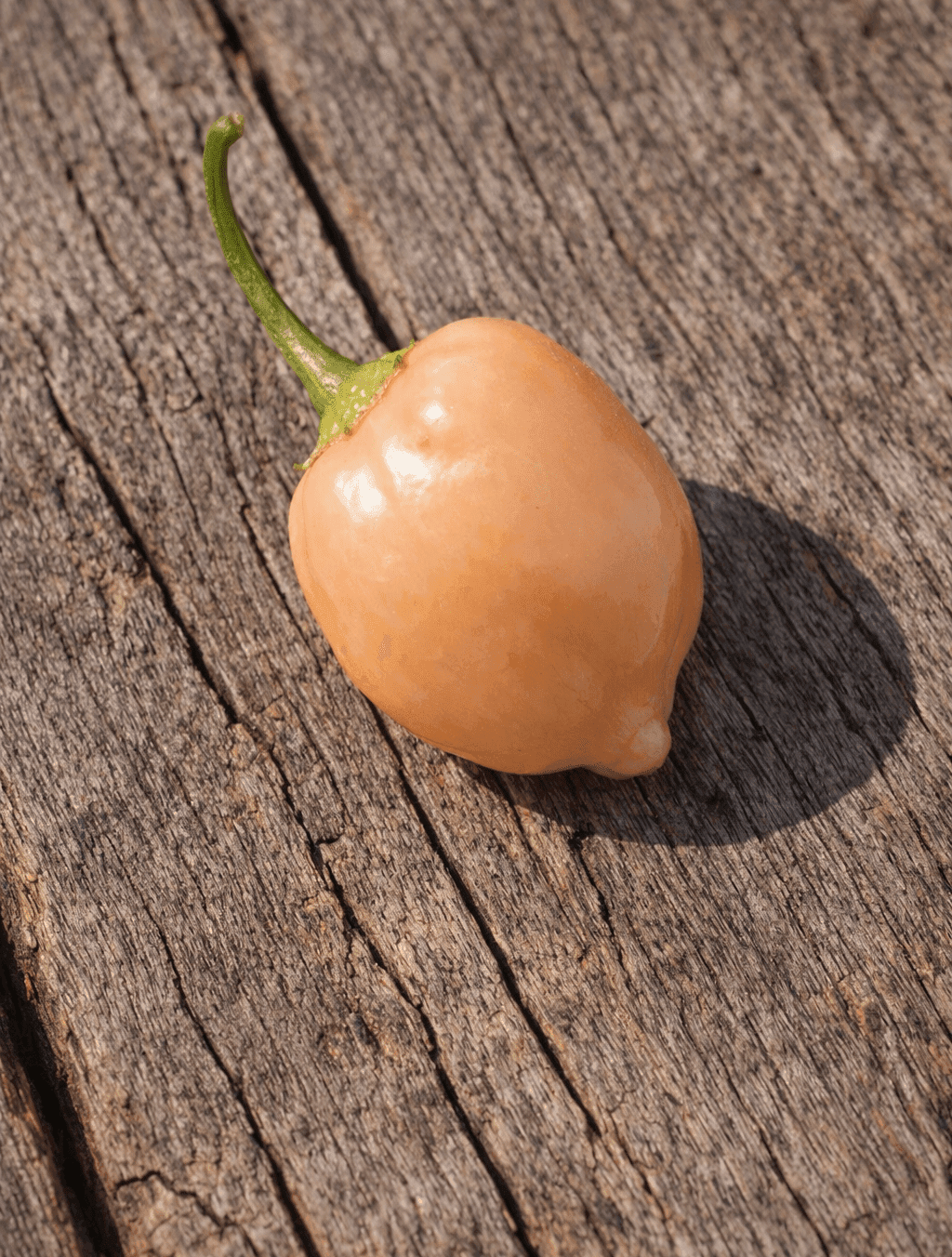
The pods are distinctly round, oblate, and heavily resemble miniature pumpkins or large gourmet cherry tomatoes, featuring a gently lobed and beautifully structural stem attachment.
Size:
3–4 cm long, 3–4 cm diameter
Color Stages:
Wall Thickness:
Thick
Texture & Skin:
The exterior skin is perfectly smooth, glossy, and taught, displaying an appealing translucent sheen when fully ripe. Underneath the skin lies a remarkably thick, succulent, and juicy flesh that delivers a jaw-dropping, apple-like crunch with every bite.
Plant Details
Growth Habit:
Tall and vine-like. The architectural structure of this plant is exceptionally robust, establishing massive base trunks to support extensive branching networks. Due to its sprawling, heavy vertical habit, heavy-duty staking, trellising, or external tomato cages must be utilized to prevent physical collapsing under the weight of ripening fruit.
Plant Height & Width:
Foliage:
The plant produces abundance of dark green, large, lance-shaped leaves that are completely smooth and form a dense canopy designed to shield the massive clusters of low-hanging pods from harsh solar radiation.
Flower Color:
White flowers featuring the classic, highly distinctive greenish-yellow throat spots that serve as the definitive botanical hallmark of the Capsicum baccatum species.
Days to Maturity:
Approximately 95–120 days from transplant
Yield:
High – an abundance of 80 to 120 pods can be realistically harvested from a single properly managed plant throughout a standard long summer season.
Cultivation Information
Seed Count per Pack:
5 or 10 seeds (Presoaking Chilli Seeds)
Germination Time:
7–14 days (Germinating Chilli Seeds)
Optimal Germination Temp:
25–30°C (Essential guide to ideal temperatures and humidity for chilli seed germination)
Light Requirements:
Filtered sun
Soil Preferences:
Prefers well-draining soil with a pH of 6.0–6.8, enriched with compost or organic matter (Easy DIY soil mixes)
Storage Tips:
Store Peppapeach seeds in airtight containers in a cool, dry place. Refrigeration is recommended for long-term viability. Avoid exposure to moisture and direct sunlight.
Notable Compounds
Capsaicinoid Content:
The chemical profile is dominated by a modest concentration of capsaicin and nordihydrocapsaicin, whereas the highly aggressive dihydrocapsaicin compound is notably absent, which accounts for the flat, comfortable, and smooth nature of the burn.
Volatile Flavor Compounds:
High levels of specific fruit esters and specific monoterpenes, including significant amounts of limonene and hexanal, are actively synthesized by the maturing pods, giving rise to the characteristic green-apple aroma and intense tropical sweetness.
Anthocyanins / Pigments:
The unique pastel-peach coloration of the mature skin is driven entirely by a complex genetic degradation of chlorophyll that unmasks high concentrations of beta-carotene, lutein, and specific non-cyclic carotenoids, while purple anthocyanin expression is completely absent in this specific cultivar.
Culinary & Cultural Use
Traditional Uses: Due to its relatively modern stabilization, traditional uses are primarily centered around advanced modern home preservation. It is widely utilized for crafting vibrant, sweet Ají-style table sauces, cold-blended summer ferments, tropical backyard salsas, and gourmet dehydrator-dried pepper flakes.
Raw vs Cooked Flavor:
When eaten raw, an ultra-crisp, refreshing juiciness is proudly showcased by the pepper. However, when it is subjected to quick roasting or pan-searing, the high natural sugar content undergoes rapid caramelization, which shifts the flavor profile toward a deep, smoky, honeyed confectionery sweetness.
Regional Dishes:
The pepper is commonly featured in modern European fusion cuisine, particularly in the United Kingdom and South Africa, where pickled Peppapeach poppers are stuffed with herbed cream cheese and wrapped in crispy pancetta.
Storage / Drying / Preserving Tips:
Due to its medium wall thickness, Peppapeach dries well in dehydrators or low-humidity environments. For fermentation, pods should be sliced and submerged in brine with fruit or aromatics. Freezing is also effective for short-term preservation without significant flavor loss.



Reviews
There are no reviews yet.