
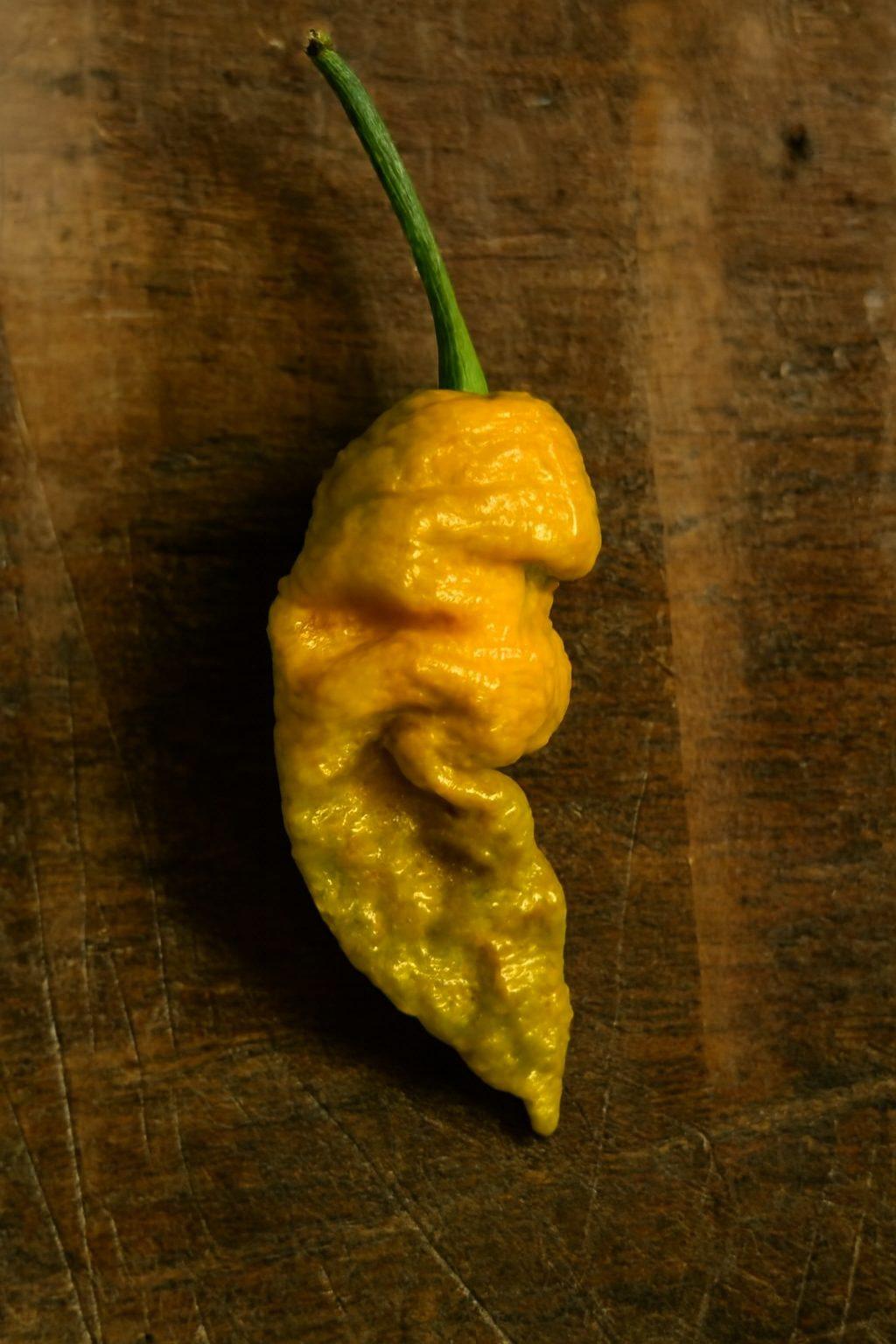
Description
Product Name: Golden Bhutlah Chilli Seeds
Cultivar Name: Golden Bhutlah
Species: Capsicum chinense
Common Names: Golden Bhutlah, SM Bhutlah.
Type: Semi-Stable Hybrid
Origin & Lineage
Geographic Origin: The Golden Bhutlah is possibly a natural color variation of the Bhutlah SM Chocolate, itself bred in Wisconsin, USA, by Chad Soleski. It descends from the legendary cross between Bhut Jolokia (Ghost Pepper) of Northeast India and the 7 Pot Douglah of Trinidad. This variation was stumbled upon by Tony Lague among his Bhutlah SM Chocolate plants.
Cultural Significance: The Bhutlah SM has earned a cult following among chili collectors, artisan sauce makers, and extreme heat challengers. Its appeal lies in a combination of:
- Wrinkled, blistered skin that signals intensity
- Bright mustard-yellow coloration that deepens as the pod matures
- Scorching heat, estimated between 1,500,000 and 2,000,000 Scoville Heat Units (SHU)
Though not tied to traditional cuisine, the Golden Bhutlah is frequently used in:
- Artisan hot sauces, such as Chocolate Plague and other small-batch blends that highlight its earthy, smoky undertones
- Fermented chili pastes, where its thick walls and high oil content contribute to depth and longevity
- Extreme eating contests, where its rapid-onset burn and lingering heat make it a formidable challenge
Its flavor profile—a mix of floral sweetness, earthy bitterness, and smoky fruitiness—is often compared to the Chocolate Habanero, but with significantly more intensity. The pepper’s dramatic appearance and mythic heat have made it a symbol of boundary-pushing horticulture, especially among growers who specialize in rare and experimental crosses.
Lineage / Hybridizer History: The Bhutlah pepper was first coined by Chad Soleski, who crossed the Bhut Jolokia with the 7 Pot Douglah to create a new class of superhot with enhanced pungency and pod structure. The chocolate variant—which ripens from green to deep brown—was later stabilized by Steven McLaurin, whose initials mark the SM designation.
McLaurin’s breeding efforts focused on:
- Pod consistency—teardrop shape with a pointed tail
- Color stability—rich chocolate hue at full maturity
- Heat uniformity—maintaining peak SHU levels across generations
The cultivar remains semi-stable, meaning some variation in pod shape and size may occur, especially in early generations. However, by F4–F6, most plants exhibit reliable traits, and the SM line is now considered one of the most consistent chocolate Bhutlah variants available
Heat Profile
Scoville Rating (SHU): 1,500,000–2,000,000 SHU (estimated)
Perceived Heat: Superhot to Hyperhot
Heat Characteristics: Immediate and aggressive. The burn hits fast and spreads across the palate, throat, and sinuses. It’s sharp, long-lasting, and not recommended for casual consumption. Gloves and ventilation are advised during processing.
Flavor Profile
Tasting Notes: Earthy, floral, and slightly fruity. The flavor is rich and complex, with undertones of cocoa and dried fruit.
Aftertaste / Finish: Smoky and bitter with a lingering floral heat. The finish is intense and persistent.
Ideal Pairings:
- Fermented sauces with tamarind or molasses
- Dark fruit chutneys and relishes
- Extreme hot sauces for collectors
- Infused oils and vinegars
- Powdered blends for heat-forward rubs
Fruit Characteristics
Shape: Elongated, blistered pods with irregular lobes
Size: 5–7 cm long, 2–3 cm diameter
Color Stages:
- Immature: Green
- Ripe: Bright golden mustard
- Overripe: May deepen to almost yellow
Wall Thickness: Medium
Texture & Skin: Deeply wrinkled and blistered; leathery and firm
Plant Details
Growth Habit: Bushy and compact
Plant Height & Width:
Height: 60–90 cm
Width: 50–70 cm
Foliage: Dark green, slightly crinkled leaves
Flower Color: White
Days to Maturity: 120–150 days from transplant
Yield: Moderate – typically 30–50 pods per plant under optimal conditions
Cultivation Information
Seed Count per Pack: 5 or 10 seeds
Germination Time: 10–14 days (Germinating Chilli Seeds)
Optimal Germination Temp: 26–32°C (Germinating Chilli Seeds)
Light Requirements: Filtered sun
Soil Preferences:
- pH: 6.2–6.8
- Rich, well-draining loam (Easy DIY soil mixes)
- Benefits from compost and potassium-rich feeding
Storage Tips: Store Golden Bhutlah seeds in a cool, dry place. Refrigeration at 4–8°C extends viability. Avoid humidity and direct light.
Notable Compounds
Capsaicinoid Content: Extremely high capsaicin and dihydrocapsaicin; heat concentrated in placenta and seeds
Volatile Flavor Compounds: Limonene, vanillin, and esters contribute to the earthy aroma
Anthocyanins / Pigments: Chocolate coloration driven by high levels of capsorubin and carotenoids; minimal anthocyanin expression
Culinary & Cultural Use
Traditional Uses: Not used traditionally due to extreme heat. Primarily grown for artisan sauces, fermentation, and heat challenges.
Raw vs Cooked Flavor: Raw Golden Bhutlah pods are pungent and bitter with floral sweetness. Cooking enhances earthiness and reduces sharpness. Fermentation adds depth and complexity.
Regional Dishes:
- Artisan superhot sauces
- Caribbean-style pepper mashes
- Southeast Asian sambals with tamarind
- Mexican-style mole-inspired blends
Storage / Drying / Preserving Tips:
- Ideal for fermentation and sauce-making
- Can be dried whole or sliced
- Powdered form retains color and heat for seasoning blends



Reviews
There are no reviews yet.