
Description
Blau Zimmer Micro Dwarf Tomato Seeds
Cultivar Details
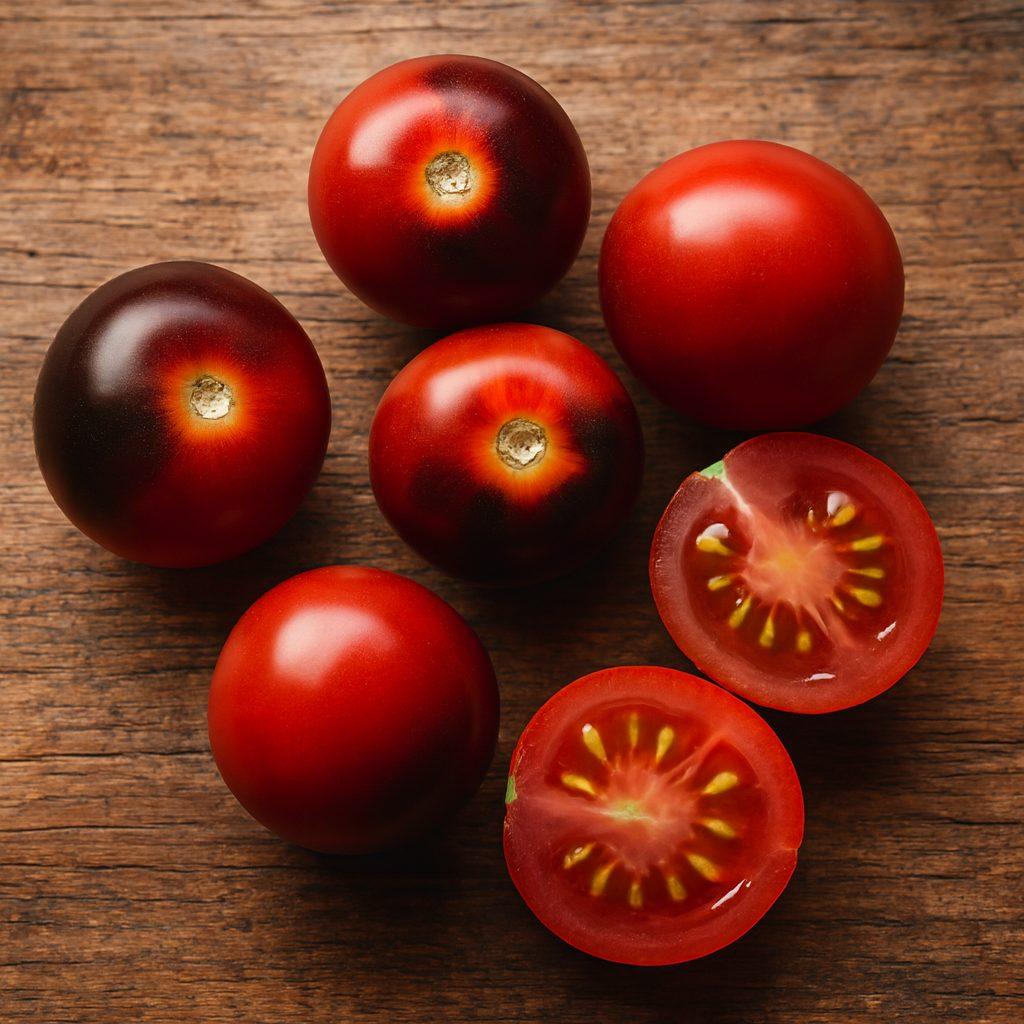
Blau Zimmer micro dwarf tomato(also known as Zimmertomate Blau or Blue Room Tomato) is a striking cherry tomato cultivar prized for its compact growth habit and ornamental appeal. Plants remain extremely small—perfect for windowsills, balconies, and container culture—yet produce abundant clusters of jewel-like fruits. The tomatoes ripen through a dramatic colour shift: starting green with anthocyanin-blue shoulders, then maturing to deep red with purple-black hues. Fruits are juicy, sweet, and fruity, making them ideal for fresh eating and decorative plating.
Origin and Lineage
Blau Zimmer Micro Dwarf Tomato originates from German breeding programs focused on ultra-compact “room tomatoes” suitable for indoor and small-space cultivation. It is an open-pollinated, determinate micro dwarf variety, preserved by seed houses and enthusiasts for its unique anthocyanin pigmentation and reliable container performance.
Flavor and Culinary Profile
The fruits are cherry-sized (20–25 g) with a juicy, sweet, and mildly fruity flavour. Their anthocyanin shoulders add a subtle earthy note. Perfect for salads, snacking, garnishes, and colourful tomato platters. They also perform well in light cooking, where their sugars caramelize quickly, but they are most celebrated fresh for their vibrant appearance.
Plant Characteristics
- Growth habit: Micro dwarf, determinate
- Height: 20–40 cm (8–15 inches)
- Leaves: Regular leaf type
- Fruit size: ¾–1¼ inch round, 20–25 g each
- Fruit colour: Ripens from green-blue to red with antho-purple shoulders
- Days to maturity: 65–78 days
Seed Pack Details
- Seed Type: Open-pollinated Blau Zimmer micro dwarf tomato seeds
- Pack Size: 10 seeds
- Intended Use: Container growing, indoor culture, balcony gardens, decorative edible plantings, and fresh snacking
Germination and Propagation
Sow Blau Zimmer Micro Dwarf Tomato seeds in small pots or trays, 1/8 inch deep. Germination occurs in 7–14 days under warm conditions. Transplant seedlings into 4–6 inch pots or directly into final containers once true leaves appear. Because plants are determinate and compact, they do not require staking.
Soil and Water Requirements
Blau Zimmer Micro Dwarf thrives in well-drained, fertile potting mixes with good aeration. Maintain consistent moisture but avoid waterlogging. Balanced nutrition supports steady fruiting; excessive nitrogen should be avoided to prevent lush foliage at the expense of fruit.
Light and Climate Requirements
Prefers full sun but adapts well to bright indoor light or balcony conditions. Suitable for temperate climates and indoor year-round culture. Anthocyanin pigmentation intensifies under strong sunlight.
Crop Calendar and Days to Harvest
- Maturity: 65–78 days from sowing
- Succession planting: Possible indoors for continuous harvest
- Seasonality: Spring to autumn outdoors; year-round indoors with sufficient light
Yield and Harvest Notes
Despite its small stature, Blau Zimmer Micro Dwarf Tomato produces heavy clusters of cherry fruits. Harvest regularly to encourage continued flowering and fruit set. Fruits detach easily when ripe and should be consumed fresh for best flavour.
Pests, Diseases and Management
Subject to common tomato pests such as aphids and whiteflies. Indoor culture reduces pest pressure. Use integrated pest management: good airflow, clean containers, and companion herbs like basil or chives.
Companion Planting and Ecological Use
Pairs well with basil, parsley, and edible flowers in balcony pots. Its compact size makes it ideal for decorative edible arrangements.
Culinary, Medicinal and Nutritional Uses
Rich in anthocyanins, lycopene, and vitamin C, Blau Zimmer tomatoes provide antioxidant benefits. Their colourful skins make them attractive for salads, garnishes, and children’s snacks.
Preservation and Storage
Best consumed fresh. Short-term storage in cool conditions preserves flavour. Fruits can be halved and dried or frozen for later use.
Notable Compounds and Chemistry
Blau Zimmer Micro Dwarf Tomato accumulates anthocyanins (responsible for the purple-blue pigmentation) alongside lycopene and carotenoids. These compounds contribute to antioxidant activity and nutritional value.


Reviews
There are no reviews yet.